




Over the past few months, companies have faced significant challenges as their sales teams have transitioned into remote workforces. Managing productive sellers working out of home or remote offices is not a new concept, but how you approach the art and science of coaching must if you’re to develop and maintain productive sales activity that has shifted entirely online.
28%…that’s how much you can improve revenues through effective sales coaching.
While onboarding and business reviews are key components of sales enablement, coaching is arguably the most important – and the most difficult – to implement for the following reasons:
- Ongoing – While onboarding focuses on providing new information to reps, coaching reinforces and builds on this foundation with additional information through continual daily and weekly sessions.
- Individualized – Whereas business reviews are vital for ensuring alignment on company and financial goals, coaching is tailored to the needs of an individual rep accounting for their strengths, challenges, and areas for improvement.
- Behavioral – Coaching is behavior-based and focuses on correcting a rep’s unfavorable behaviors and habits while reinforcing effective ones.
This begins with clearly defining the benefits for your organization for developing a coaching culture. Coaching just to say you coach isn’t enough. You need to understand your audience and the benefits of setting up an ongoing meeting between manager and rep. Especially in today’s separated workforce, regular meetings over the phone or video conference are essential for developing rapport and learning from others.
Here are useful tips for developing a successful coaching strategy.
Tip 1: Understand the needs of your organization
- Develop a plan that outlines the needs of the organization, and more importantly, the needs of your sales team. For example, younger sales reps will benefit more by learning from others, while experienced reps will relate to knowledge and content in more of a self-paced environment.
- Figure out where you want the program to go and identify what results and goals you have for this program. This begins with understanding the strengths, skills gaps and areas of improvement which will be useful for developing KPI benchmarks. Ultimately, you’ll want to be able to measure, follow-up and share these findings throughout the program.
Tip 2: No person is an island (though it feels like that sometimes)
- While coaching is a two-way street so is the process for getting buy-in from managers and reps. You’ll need to “educate” both sides on how coaching sessions benefit their professional and financial goals.
- When developing expectations, seek and (as needed) integrate manager and rep feedback. This provides insight into what programs are working as well as a channel for additional topical ideas.
Tip 3: Professional development roads lead to compensation
- Money talks, and this can be an effective way to ensure everyone participates and actively engages in the program. For example, withholding commission until all training is completed (or achieving an 80% or higher passing rate), including coaching is not uncommon in some organizations.
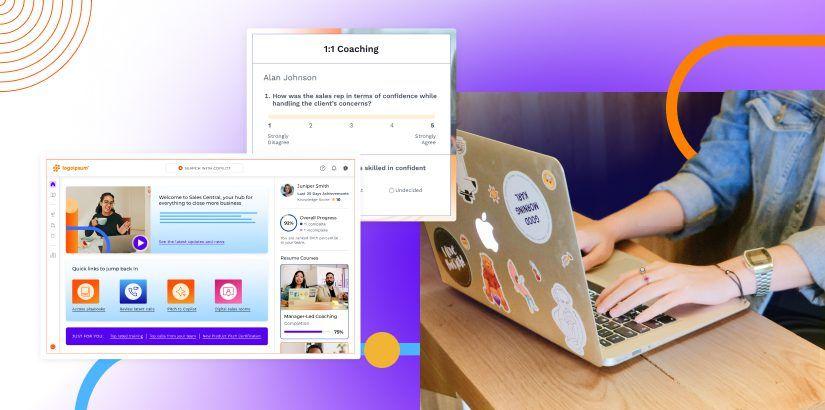
- For coaches, setting evaluation parameters that tie closely to reps’ KPIs (industry/domain knowledge, communication style, and accuracy) ensure reps meet their goals. They can be specific to an initiative, such as “Did the rep determine definitive next steps at the end of the call?”, or more interpretive, such as “Could the rep speak to the client’s use case, industry, and/or market?” Evaluation parameters help guide ongoing skills development as coaches and sales administrators can track progress over time to ensure reps are improving, or if not, develop training to address their needs.
Tip 4: Coach the coaches
- The practice of effective coaching relies as much on the coaches as it does on the participants. Develop a program that enables your coaches with best practices before beginning a coaching program. Coaches are key allies in facilitating change management by creating a positive experience for reps, while build buy-in for managers.
- Best practices for coaches include:
- Communications: Coaches need to have regular cadence for communications with reps that promotes engagement and reinforces the message of the opportunity to improve.
- Feedback: Comprehensive written feedback can benefit reps significantly and should include constructive assessments, encouraging comments, action items and next steps. Not only will the rep benefit by incorporating this feedback into his/her next conversations, but the coaches can then reference their feedback during the next coaching session to ensure the rep is improving.
Tip 5: Measure what you sow
- Coaching can be viewed under two primary categories: hard skills and capabilities; and soft skills and performance. Your coaching program should take these categories into consideration and align them to the strategic objectives of your business and to the day-to-day activities of the reps.
- For reps:
- Engagement – completed sessions and average score
- Progression – overall scores and competency
- Soft Skills – rate of speech, demeanor/rapport, use of filler words, persuasiveness
- KPI Comparison – improvement over time, impact specific to the skillset
- For coaches:
- Total completed sessions and disapproved sessions
- Adherence to coaching sessions, number of coaching sessions scheduled and completed over a daily, weekly and monthly basis
For more detailed information on these tips as well as how to create your own coaching structure for your remote workforce, download our checklist for effective remote coaching
Take your sales coaching program to the next level
Ready to see Mindtickle’s complete sales readiness platform in action?