





Sales enablement teams invest time and resources into creating sales training programs. But here’s the problem: B2B sales reps forget 70% of the information they learn within a week of training. 87% is lost within a month.
Why? Because traditional sales training is mostly passive – think presentations, videos, or PDFs. It’s not designed for long-term retention or real-world application.
That’s why leading revenue organizations are turning to AI Role Play to bridge the gap between learning and sales performance.
Sellers are embracing them. Reps that use AI Role Plays practice 4-6 times before they submit. And this practice is driving real business impact – including a 31% increase in average deal size.
In this blog, we’ll dive into how AI Role Plays work, the benefits they deliver, and how you can build and scale them as a core part of your sales enablement strategy.
What is an AI sales Role Play?
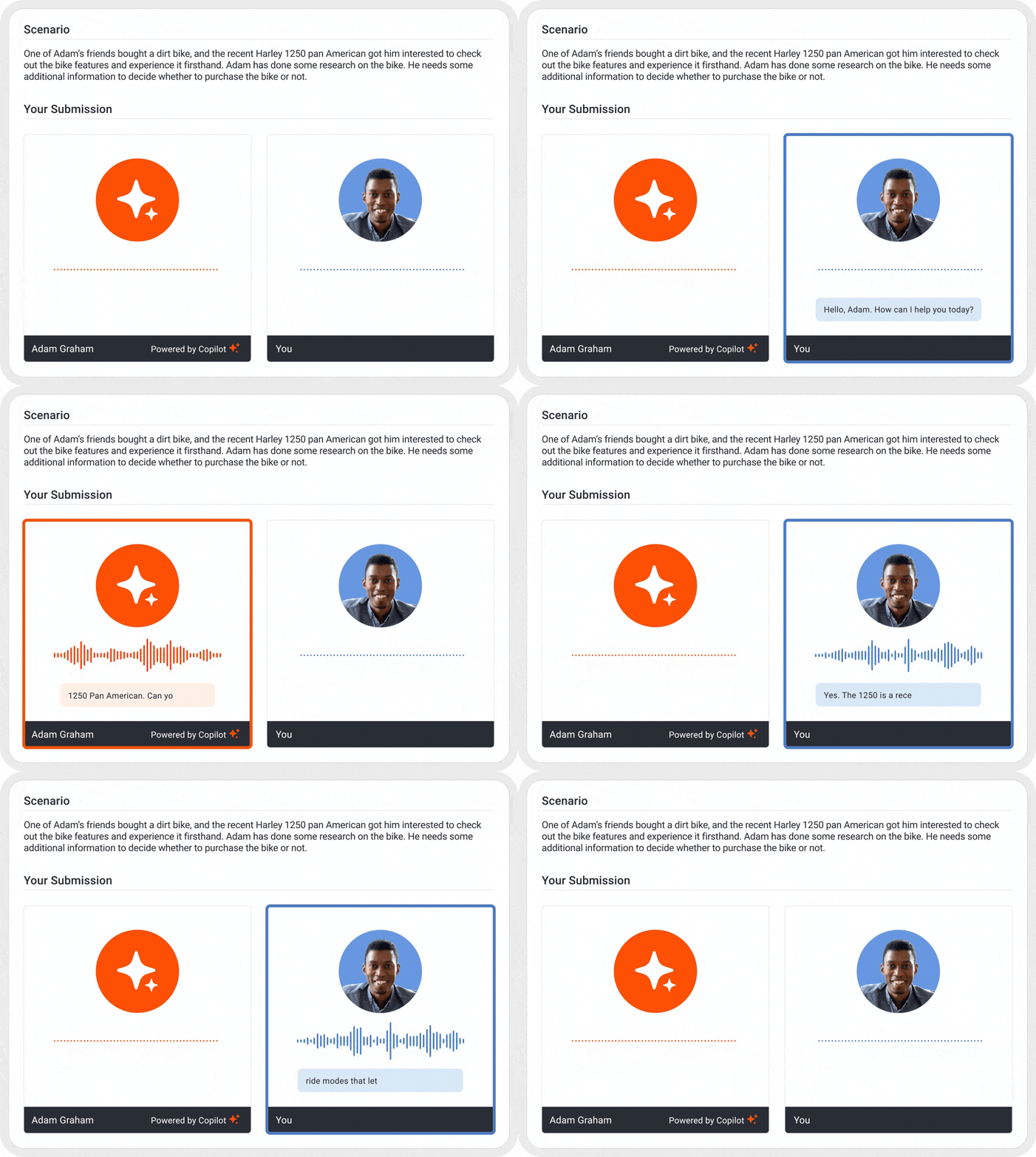
Traditionally, sellers do Role Plays with their managers in person in a pre-defined scenario. Add AI to the mix, and AI can don multiple hats. While there are a few different flavors of AI Role Plays available in the market today, Mindtickle Role Plays use Copilot extensively in three distinct roles:
What are the benefits of AI Sales Role Plays for sales training and coaching?
AI-powered practice tools transform sales training, offering opportunities for sellers to hone their sales skills, boost deal sizes, and streamline Role Plays. Here are some of the top benefits:
#1. Safe space to practice for sellers
When sellers Role Play with their boss or sales leader, it can be a high-pressure situation that does not always yield the best results. But when sellers practice with an AI buyer, the pressure is off, and they can focus on mastering the sales pitch.
#2. Unlimited practice
Sellers can practice as often as they like with AI because AI doesn’t have any meetings to run, unlike their sales manager. We see sellers practice several times before they submit their Role Play. Practice, not perfection, is the goal.
#3. Immediate feedback
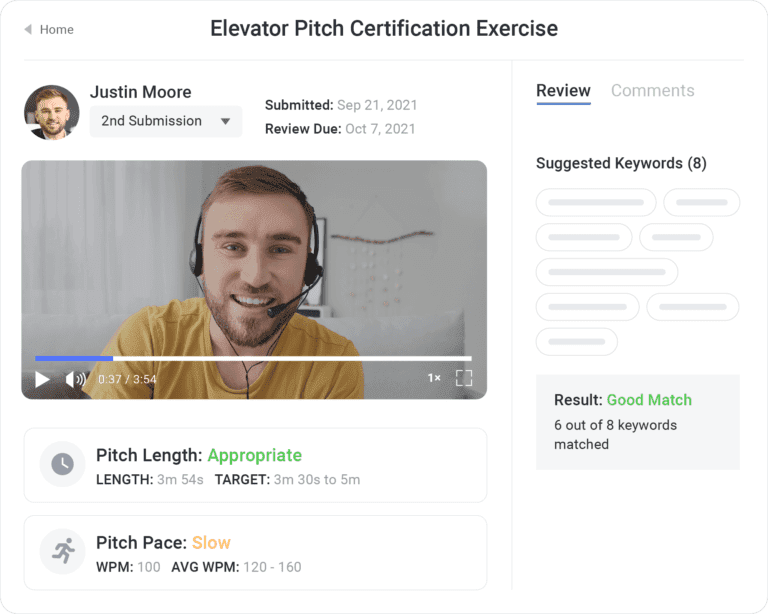
Unlike in old-school Role Plays where constructive feedback may be given in passing or not at all, Copilot gives sellers immediate qualitative and quantitative feedback and even suggests areas for improvement. Copilot assesses your rep’s sentiment, pace of speech, filler words used, and much more.
The scores create a gamified environment in which sellers want to keep trying until they have a scorethey’re satisfied with. This gamification works well for sellers who are, by nature, competitive.
#4. Increased deal sizes
Cisco held the largest pitch contest in its history for its security product line using Copilot and saw some fantastic results such as:
#5. Scalable Role Plays
Most enablement practitioners love Role Plays and see their value, but they find extensive exercises across large organizations extremely challenging to execute. It involves coordinating with several sales managers and getting their time to review the recorded Role Plays.
AI can be extremely handy here because it removes this dependency on sales managers. It grades Role Play submissions for you in a matter of minutes and has none of the bias that real managers may have.
Cisco saved 38 weeks of manager time by using AI to review Role Plays from 3,500 sellers.
Test the Role Play
Once you have built out the Role Play, send it to a few internal testers to ensure everything works just how you want it to. These could be folks within the sales enablement team or a few friendly sellers willing to give you feedback.
Allow reps to practice
Once you are happy with the initial results, you can roll this out to your field and allow them to practice the scenario as often as they like.
Examples of AI Role Plays
One of the best things about AI Role Plays is that they’re flexible. You can tailor them to fit a wide range of scenarios, from onboarding new reps to launching new products.
Here are a few real-world examples of how companies are using AI Role Plays to elevate their sales enablement programs and initiatives.
AI Role Play example #1: Discovery call practice
Scenario: Early-stage conversation with a new lead
Goal: Enable sellers to practice asking open-ended questions to reveal pain points and uncover what really matters to the buyer.
What it looks like: The AI buyer responds based on a defined role – such as the Chief Marketing Officer. AI scores the rep based on factors like talk-to-listen ratio, clarity, and number of questions asked and answered.
AI Role Play example #2: Competitive differentiation practice
Scenario: A prospect that is currently using a competitor’s solution.
Goal: Help reps navigate competitive deals by highlighting differentiators without resorting to badmouthing the competition.
What it looks like: The AI buyer expresses loyalty to a competitor. The seller must ask thorough questions to uncover dissatisfaction and position your product’s advantages.
AI Role Play example #3: Objection handling
Scenario: A mid-funnel prospect raises concerns about factors like pricing, product capabilities, or ROI.
Goal: Prepare sellers to tackle tough objections and keep the deal moving forward.
What it looks like: The AI buyer pushes back on things like timing, pricing, or product capabilities. AI provides feedback to the seller on how well they navigated the objections, how persuasive their tone was, and whether they used the right messaging.
AI Role Play example #4: Onboarding new sellers
Scenario: A new sales rep practices introducing your company’s value proposition to a prospective buyer.
Goal: Help new reps build their confidence early on so they can start contributing to revenue growth sooner.
What it looks like: The AI buyer is curious, but skeptical, and responds with common objections and follow-up questions. The seller practices delivering their pitch confidently and learns to pivot depending on where the conversation goes.
These are just a few examples of how AI Role Plays can simulate important moments from real sales cycles. Whether your team is launching a new product, facing a tough competitor, or just looking to sharpen core selling skills, AI Role Plays can be tailored to meet your goals.
Suited to different roles and verticals
Mindtickle’s AI Role Plays serve different personas ranging from BDRs, sellers, and partners to customer success managers. Our customers have used AI Role Plays for a range of use cases such as:
- Onboarding new reps
- Cold calling practice
- Discovery calls
- Objection handling
- Competitive displacement and much more…
It can also be hyper-specialized to your vertical whether you are in pharmaceuticals, med devices, financial services or cyber security. The AI adapts to your industry and products seamlessly.
As you move forward, consider how AI can be integrated into your sales enablement strategy to meet and exceed your training goals. Embracing this technology empowers your team, optimizes performance, and makes reps more productive.
FAQs
1. What is an AI sales role play?
An AI sales role play is a training tool that lets a salesperson practice a sales conversation with a smart, AI “buyer.” This AI-powered buyer has a human-like voice and personality, allowing the rep to practice realistic scenarios without depeneding on a manager. The AI also gives qualitative and quantitative feedback after the role play.
2. Why is this better than just practicing with a manager?
Sales managers are often busy and do not have time to role play with each member in their team on a regular basis. AI role play solves for that. It provides a safe, no-pressure, judgement-free space for reps to practice as many times as they like. It’s also available 24/7 for unlimited practice, and it gives immediate, objective feedback. This makes it far more scalable than traditional role plays.
3. What kind of feedback does the AI coach give?
It provides instant feedback on both what you said and how you said it. It analyzes your performance on things like sentiment, pace of speech, and use of filler words, then gives you specific suggestions for improvement say around your introduction, discovery skills, and value selling.

This blog post was originally published in August 2024 and was updated in July 2025.