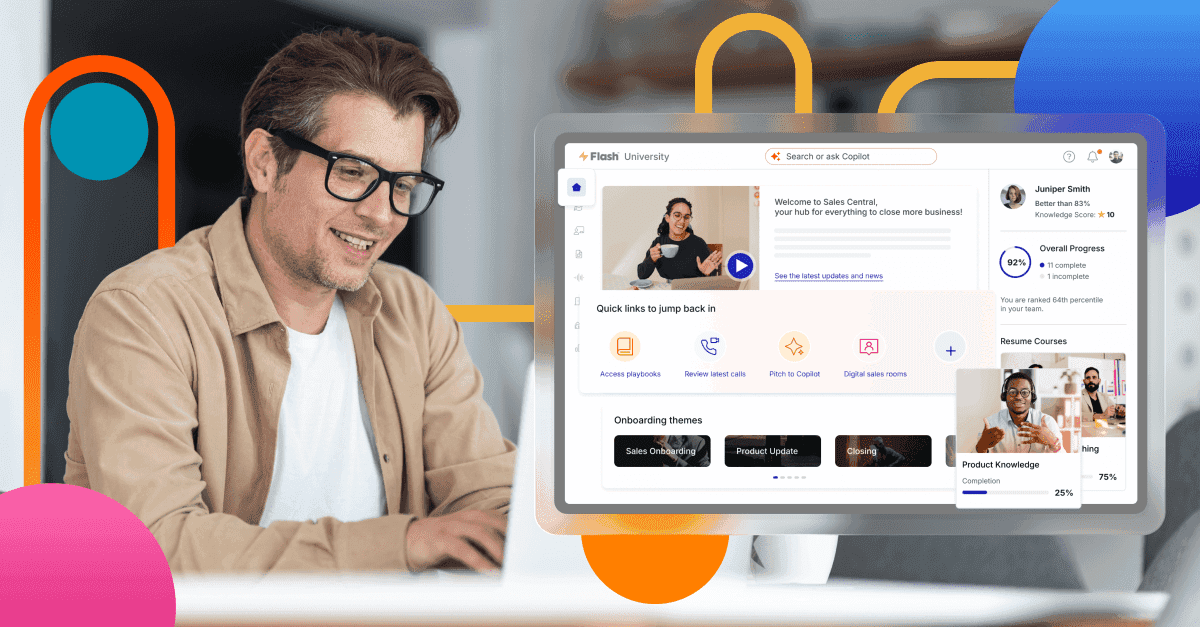







When sales enablement is done well, we know it gets results. Research shows that orgs with sales enablement achieve a 49% win rate on forecasted deals, compared to 42.5% for those without.
Win rates for orgs
Win rates for orgs
But there’s still a disconnect.
According to CSO Insights, only 27.5% of stakeholders feel that sales enablement initiatives meet or exceed their expectations
A well-designed sales enablement strategy can provide the necessary tools, resources, and support to empower sales teams and drive revenue growth.
In this guide, we will explore:
- What sales enablement is
- Why it is important
- How to implement a sales enablement strategy
- Best practices to consider
- How to find the best sales enablement platform
What is sales enablement?
Sales enablement is the training, tools, and resources provided to sales reps to help them successfully close more deals. The goal of sales enablement is to equip salespeople to be indispensable consultants to their buyers, build long-term customer loyalty, and drive profits for the organization as a whole.
With an effective sales enablement program, reps are better equipped to provide their customers with valuable information and offer insight that guides buyers into optimal purchasing decisions. Salespeople, therefore, become trustworthy resources that buyers rely on for the long haul.
Why is a sales enablement strategy important?
With a clearly defined sales enablement strategy, sales enablement practitioners can continually drive revenue and achieve key business objectives like quota attainment.
A sales enablement strategy encompasses a range of tactics and initiatives aimed at empowering sales teams with the necessary tools, knowledge, and support to drive success.
The importance of a sales enablement strategy lies in its ability to address common obstacles faced by sales teams, streamline processes, and maximize the potential of every salesperson. By aligning marketing and sales efforts, optimizing training and development, and providing the right resources, a sales enablement strategy can have a profound impact on an organization’s bottom line. Here are just a few hard-to-ignore benefits of sales enablement:
#1 Onboard new salespeople faster
Sales enablement is critical for organizations to onboard new salespeople faster, ensuring they are equipped with the knowledge and skills to contribute quickly. In fact, our 2022-2023 Sales Enablement Outlook Report found that almost a quarter (23%) of C-level sales executives said onboarding was a top priority in 2023. By reducing ramp-up time, organizations can accelerate the time it takes for new hires to become productive members of the sales team, resulting in increased revenue generation.
#2 Enable salespeople to spend more time selling
Almost 65 percent of a salesperson’s time is spent on tasks that don’t generate profits, such as administrative work or data entry. Effective sales enablement programs help an organization identify processes that waste time so reps can be more efficient and profitable. Some sales enablement technology can also automate CRM data entry and other repetitive, manual processes so reps can spend more time selling.
#3 Help retain sales talent and boost revenue
Sales enablement ensures that salespeople have the support and resources they need to succeed. This not only increases job satisfaction and reduces turnover but also helps drive revenue growth by equipping sales teams with the necessary skills and knowledge to close deals. Enablement driving more revenue means more sellers are meeting or exceeding their quota. In addition, an enablement strategy that encompasses sales coaching ensures a more positive relationship between sales reps and their managers, also reducing churn and turnover.
#4 Effectively meet next year’s increased quotas
An organization’s plans to increase sales quotas can be a stress point for sales managers. While most of the top salespeople will be ready for the higher requirements, many of the C- and B-players will need to be coached up to prepare. Sales enablement mitigates this challenge by using bespoke training processes that shorten sales cycles and boost sales rep performance.
#5 Maintain a long-term strategy in seasons of high growth
As the business grows, organizations experience new customer expectations, unexpected employee challenges, and other growing pains. When company leadership gets caught up in these urgencies, they’re usually focused on the here and now rather than long-term strategies and future growth. This approach, albeit understandable, leads to unpreparedness over time.
Effective sales enablement programs help organizations conduct effective sales training and coaching to prepare reps for future growth even while other priorities dominate leadership’s attention.
Naturally, all of these benefits work to achieve the most important goal of any sales team: driving revenue. Sales enablement empowers reps to become more knowledgeable, maximally efficient, and capable of building profitable client loyalty that the competition can’t match.
How to implement a sales enablement strategy
Because every organization is different, there isn’t just “one right way” to implement a sales enablement program. There are, however, a few important pillars to keep in mind. Here are a few non-negotiables:
Sales enablement best practices
With a solid sales enablement foundation in place, you can now build on it. These best practices will help boost the effectiveness of any sales enablement program.
How to find a sales enablement platform and what to look for
When researching sales enablement platforms, begin with a list of must-have features based on your needs and nice-to-have features. Consider some of these table stakes capabilities when creating this list.
Getting started with your sales enablement strategy
Now that you’ve learned the importance of enablement, how to structure a strategy, and how to implement that strategy it’s time to start driving revenue for your organization.
Sales Enablement in Mindtickle
Request a demo to learn more about how the Mindtickle data-driven sales enablement platform can help your sales teams close more deals.
This post was originally published in January 2020, updated in June 2023, and again in January 2024.