




What is Enterprise Sales, and What are Some of the Best Enterprise Sales Software Options?

Focusing on enterprise sales can be a great way to grow your revenue. After all, enterprise sales drive a lot of value. Adding those big logos to your customer roster is a great way to build credibility and grow sales.
But it isn’t easy.
Sales reps going after enterprise deals must be ready to navigate complex selling scenarios. In addition, they must be equipped to address the needs of large buying committees throughout the (often lengthy) sales cycle.
Enterprise sales isn’t for the faint of heart. And just because a sales rep is skilled at closing SMB or mid-market deals, it doesn’t mean they have what it takes for enterprise sales.
In this post, we’ll explore what enterprise sales is and how it differs from other types of sales models and sales methodologies. The right technology is key to enterprise sales, so we’ll also look closely at some of the best software that winning organizations use to power their success.
What is enterprise sales?
You’re not alone if you’re not sure what enterprise sales is. Luckily, it’s a very straightforward concept.
It’s selling products and services to large companies, also known as enterprises. Sometimes, enterprise sales is referred to as “complex sales.” That makes sense, as enterprise sales tend to be more complex than other types of sales – a topic we’ll explore in more detail later.
The stages of enterprise sales
While enterprise sales is complex, it can be broken down into four distinct stages. Those four stages are discovery, diagnosis, design, and delivery. Each stage is essential to a successful enterprise software sales strategy.
Let’s take a closer look at these four stages.
Key benefits of enterprise sales
Closing enterprise deals isn’t easy. The most successful organizations know that these deals require significant time and resources.
However, enterprise sales also provide big opportunities to organizations. The following are just a few:
Revenue growth
Enterprise deals are typically larger than small or mid-market deals. That means you can grow revenue with far fewer deals than if you focused on SMB. In addition, if an enterprise signs a multiyear contract, you’ll have recurring revenue.
Strengthened reputation
Having large, well-known brands on your customer list is a great way to build your reputation – and your credibility. With a strengthened reputation, you’re better positioned to close future enterprise deals.
Long-term relationships
The enterprise sales cycle can take a significant amount of time. This gives sellers plenty of time to build trust with buyers. When a buyer trusts a seller, they’re more likely to renew. In addition, they’re more open to upsells and cross-sales.
Furthermore, if you build a strong relationship with a customer, they may be willing to serve as a reference. When that customer moves on to a new company, they may also be willing to advocate for your brand.
How is the enterprise sales model different from other sales models?
Sales reps aim to solve their customers’ challenges. That’s the case whether they sell to a small or large business.
However, enterprise sales does differ from other sales models – including small to medium business (SMB), midmarket, and self-service – in some key ways, including:
- Deal size
- Sales cycle
- Number of decision-makers
That means the sales playbook you build for one type of sales may not be practical for another type.
Let’s take a closer look at how enterprise sales differ from other common sales models.
Enterprise sales vs. SMB sales
One of the biggest differences between enterprise sales and small to medium business (SMB) sales is the size of the deals. Enterprises are large companies with more resources and more employees. As such, the dollar value of enterprise deals are often much higher.
Generally, SMB sales are much more straightforward than enterprise sales. That means the sales cycle is shorter. A seller may be able to close an SMB deal in days or even weeks. On the other hand, the enterprise sales cycle can take months, quarters, or even an entire year.
Buying committees are also much smaller in SMB sales. When selling to a small or medium-sized business, it’s not uncommon for a sales rep to meet with just one or two people throughout the entire sales cycle. Typically, these people have the authority to make purchase decisions. For example, if a sales rep sells a POS system to a restaurant with a single location, they’re likely to pitch their solution directly to the owner.
On the other hand, enterprise sales often involve a large buying committee. According to the Gartner B2B Buying Report, the average enterprise B2B buying group includes between five and 11 stakeholders – representing an average of five distinct business functions.
The average enterprise B2B buying group includes up to
A sales rep may start with one point of contact at an enterprise, but that person may not have purchasing authority. Instead, they bring in others throughout the sales cycle – each sharing their concerns and requirements.
Enterprise sales vs. mid-market sales
Mid-market companies (also referred to as small and medium-sized enterprises – or SME) are larger than SMBs but smaller than enterprises. As such, the complexity of mid-market sales falls between SMB and enterprise sales.
Mid-market deals typically have a higher value than SMB – but lower than enterprise deals. Usually, multiple stakeholders are involved in decision-making, which is a key reason the sales cycle takes longer than SMB sales.
That said, mid-market sales don’t require the same level of time and complexity as enterprise sales.
Enterprise sales vs. self-service sales
As the name suggests, self-service sales involve a customer purchasing a product independently. There’s no sales rep involved in the process. This is much different from enterprise sales, where the sales rep is responsible for consulting buyers and adding value throughout the sales cycle.
With self-service sales, the customer does their research on their own. They can navigate to a pricing page to see a list of product offerings and corresponding sales. Then, they can purchase their chosen product right on the pricing page with a credit card.
On the other hand, enterprise deals involve a sales rep. Often, the sales rep uses consultative selling or solution selling to get familiar with the prospect’s challenges – and develop a solution to solve them.
As we’ve covered, enterprise deals are typically high-value. Self-service sales, on the other hand, are typically low value.
However, there are many advantages to offering a self-service product. For starters, the sales cycle is short, so you can close many deals quickly. In addition, self-service sales don’t require the involvement of a sales rep, which means your teams can focus on higher-value deals.
What are the best enterprise sales tools?
To be successful in enterprise sales, your sales reps must possess certain skills and competencies. In addition, it involves a number of moving pieces. You also need the right tools to manage these factors.
Let’s take a closer look at some of the best tools available.
Mindtickle
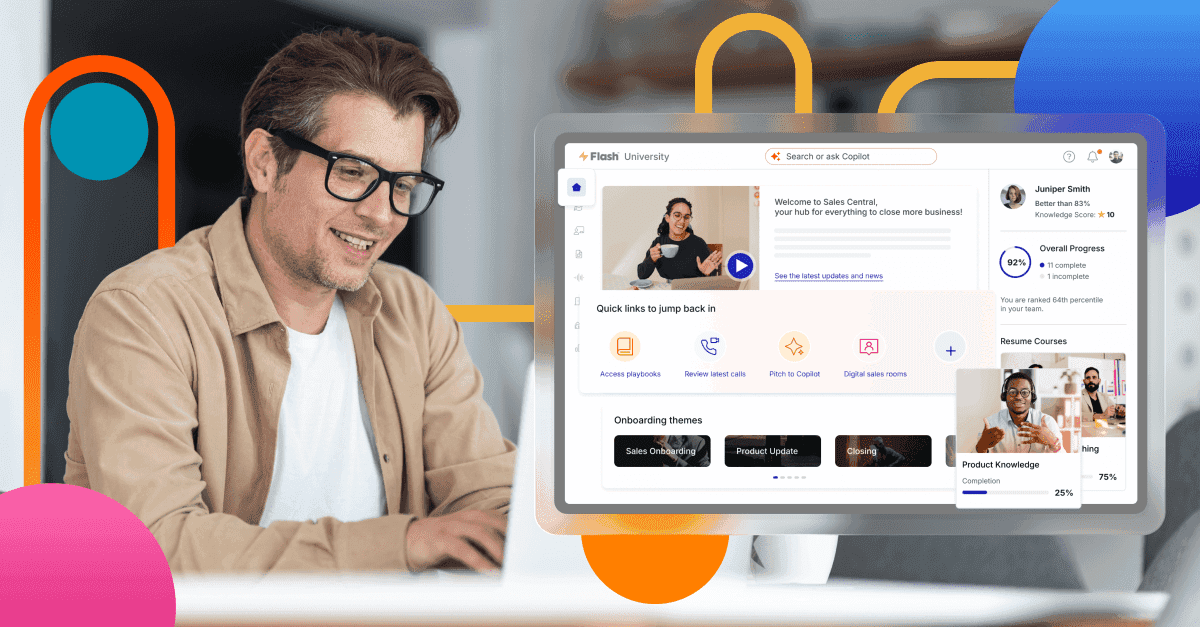
Mindtickle is an integrated revenue productivity platform that enables enterprise sales teams to execute on open deals. But how?
Enterprise sales reps require a certain set of skills and behaviors to be successful. Those skills vary from company to company.
With Mindtickle, revenue teams can build profiles that outline the skills reps need to be successful. Revenue teams can measure each rep against these profiles to identify gaps. Then, managers and enablement teams can deliver sales training and enablement that addresses the unique needs of each rep.
Of course, completing enterprise software sales training doesn’t guarantee success in the field. Mindtickle also incorporates conversation intelligence, enabling sales managers to understand whether their reps apply what they’ve learned while interacting with buyers. Sales managers can use these insights to provide customized coaching to improve behaviors and outcomes.
Mindtickle also incorporates content management capabilities. That means reps can always find the right content at the right time.
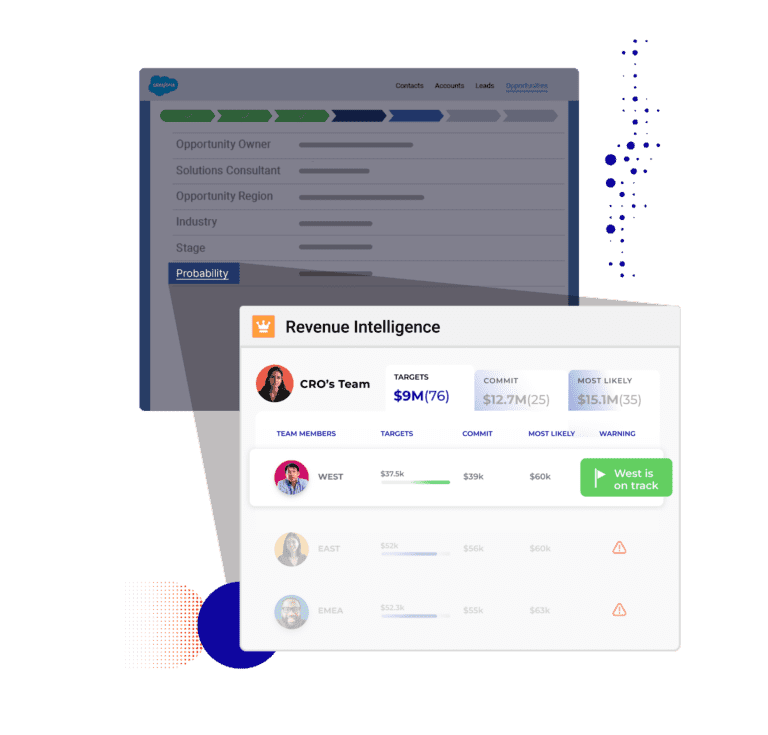
What’s more, Mindtickle includes revenue intelligence capabilities, making it easy for sales reps and managers to gain a holistic view of deal outlook. This visibility fuels more accurate forecasting. It also enables sales managers to know when a deal is at risk so they can support their reps to improve outcomes.
Other top enterprise sales tools


Some other top software includes:
- Salesforce: Salesforce is a powerful customer relationship management (CRM) platform enabling sales teams to manage the many details of every deal. For example, a sales rep can refresh their memory of what was discussed during their last conversation with a prospect. Sales reps can also pinpoint exactly where each deal is in the sales cycle.
- Hubspot: Hubspot is another example of business sales software used to manage enterprise sales. Hubspot incorporates many rich features that boost reps’ productivity and empower them to develop relationships and grow sales.
- LinkedIn Sales Navigator: One of the biggest challenges is connecting with the right people. LinkedIn Sales Navigator enables enterprise sales reps to tap into LinkedIn’s network to connect to the right people at the right companies.
- Gong: Gong is a platform that helps shed light on what’s happening during customer conversations. Gong takes these insights to make recommendations for improving outcomes and closing more deals.
Start closing more enterprise sales deals with Mindtickle
Enterprise sales require a significant investment of time and effort. However, these deals also deliver a ton of value to revenue organizations who get it right.
Reps must have the right skills and the right tools for success.
With Mindtickle, your teams can access the training, enablement, coaching, and content they need to be ready for any enterprise sales deal – all from a single platform. Furthermore, sales managers have insight into what’s happening in the field. They can use these insights to deliver coaching that improves the outcome of a specific enterprise sale – and the sales rep’s future success.
More Enterprise Sales with Mindtickle
Ready to see how Mindtickle can empower you to boost effectiveness and efficiency across your entire enterprise sales team?