





What G2 Reviews Reveal About DSR in 2026: 5 Surprising Insights

Summarize this article with AI
What G2 Reviews Reveal About DSR in 2026: 5 Surprising Insights
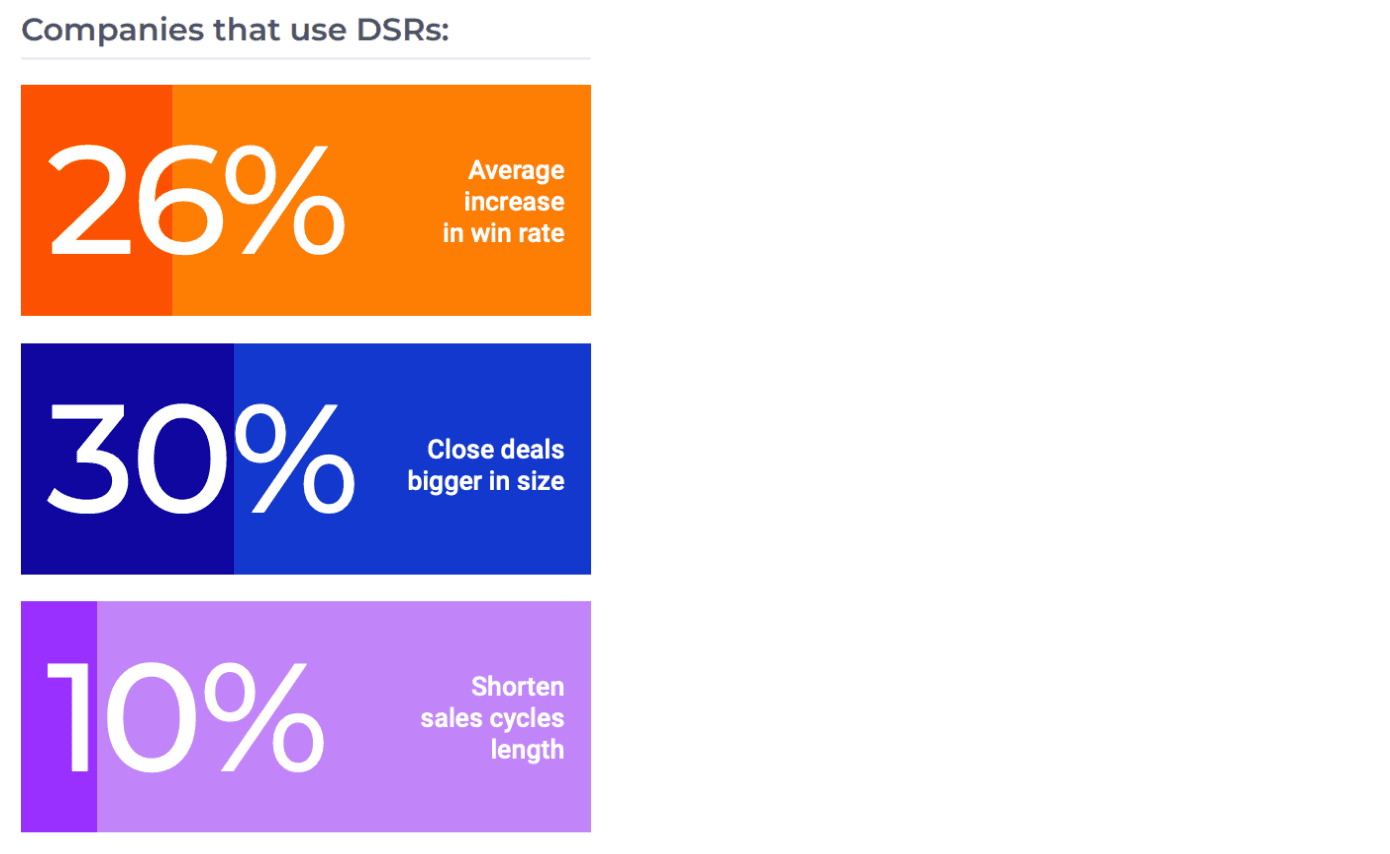
The data on Digital Sales Rooms (DSR) is hard to ignore. Across Mindtickle's customer base of 400+ companies and 1.2M users, deals with an associated DSR show a 26% higher win rate, close 30% bigger deals, and shorten sales cycles by 10%, according to the 2025 State of Revenue Enablement Report (SORE).
GoTo’s results are even more striking. It saw a 35% win rate on deals where reps used DSRs, compared to 12% on deals where they didn't. Tara Medeiros, former Senior Director of Sales Enablement at GoTo, put it plainly, "We had three deals that were really on the line, totaling just under two million ACV. All three of those deals cited the Digital Sales Room as being a competitive advantage."
So the ROI case is settled. What isn't settled is why so many sales teams still underuse DSRs, or use them in ways that leave the upside on the table.
To answer that, we went through Mindtickle’s G2 reviews over the past two years, focusing specifically on reviewers who mentioned DSRs meaningfully in their responses. What we found was a story about the gap between what DSRs can potentially do and what most sellers actually do with them.
Here are five things those reviews reveal.
1. DSRs work best when they are built early in the deal and used consistently.
The most enthusiastic DSR reviews come from sellers who have made it a default part of their workflow, not an occasional tactic. One reviewer described the impact directly, "The ability to engage with buyer intent for every opportunity I run." Another put it in terms of personal sales philosophy, "I love that I'm able to collect all follow-up material for a prospective customer in one place. I pride myself on being organized and being easy to buy from. This allows me to collect my materials and answers as I have them and put them in one convenient and shared space. I'm a fan."
“I love that I'm able to collect all follow-up material for a prospective customer in one place. I pride myself on being organized and being easy to buy from. This allows me to collect my materials and answers as I have them and put them in one convenient and shared space. I'm a fan.”
— G2 reviewer (Verified User in Financial Service)
The pattern in positive DSR reviews is early use across deals, especially long-drawn ones. Treating DSRs as an afterthought or using them selectively in late-stage opportunities is not their best use.
Let’s compare that to the reviewers who describe friction. Their complaints—too many clicks, navigation isn't intuitive, features feel disconnected—are almost always from people using DSRs intermittently. The tool rewards reps who build rooms early and use them as the primary channel for buyer communication. Used as an add-on, it adds work without adding much return.
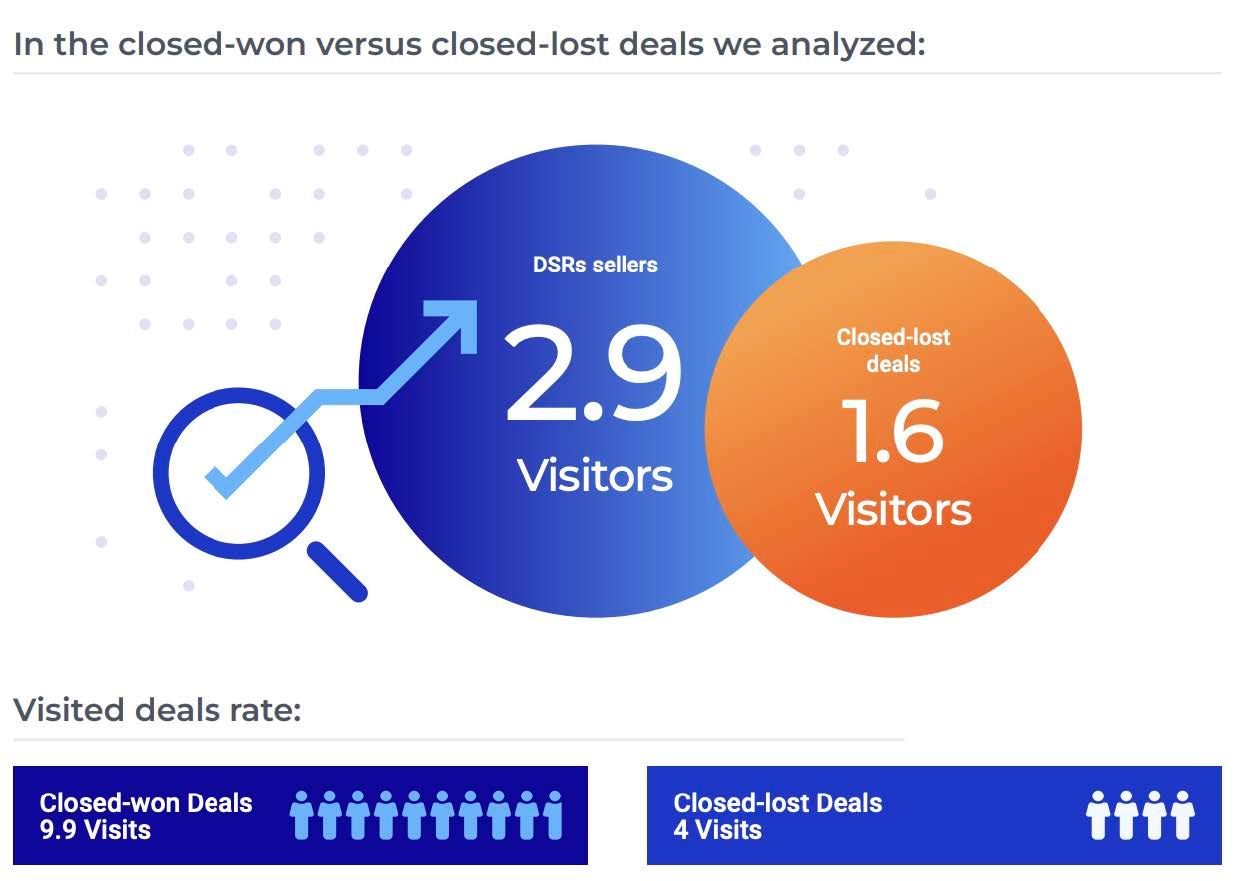
The 2025 SORE report reinforces this. Closed-won deals averaged 9.9 room visits from 2.9 unique visitors. Closed-lost deals averaged 4 visits from 1.6 visitors. The engagement difference between won and lost deals suggests that rooms generate more buyer activity because sellers are launching them early and updating them, which eventually produces better outcomes. That doesn't happen when room creation is an afterthought.
💡Mindtickle Tip: Build the room before the first follow-up, not after the third. The SORE report recommends creating rooms early in the deal cycle and giving access to all champions and influencers, not just the main contact. A room the economic buyer has never seen isn't working for you.
Read More: 6 Proven Tips to Help Reps Win More Deal with DSR
2. Rooms built for the buyer’s experience (not the seller’s convenience) are successful.
This is the tension hiding beneath the positive reviews. Sellers love DSRs because they solve a seller problem, namely everything in one link, no more digging through sent email. That's the real value. But several reviewers surfaced a different problem that buyers aren't always engaging with the room the way sellers expect.
One reviewer gave the clearest articulation of this gap, "Since this is a newer concept, I don't see a lot of clients actually using the room. They prefer that I send them PDFs of what's in the room (even though it's very easy to download them).”
“Since this is a newer concept, I don't see a lot of clients actually using the room. They prefer that I send them PDFs of what's in the room (even though it's very easy to download them).” — G2 reviewer(Verified User in Real Estate)
That review describes a buyer behavior problem that sellers haven't solved yet. The room exists but the buyer defaults to their comfort zone. The seller is stuck explaining why the link is better than the attachment.
Buyers who don't understand what a DSR is or who land on a room that looks like a generic file dump, will ask for the PDF every time.
💡Mindtickle Tip: As admin, provide your reps with pre-loaded templates for specific deal types so the content is already curated before the room goes live. This way, there’s more likelihood of the room being buyer-focused. In fact, our data notes that top-performing teams brought down their program launch time by 75% (from 2024 to 25) by using more prebuilt templates.
Read More: How DSR Helps Reps Win More Deals
3. Lack of DSR Engagement is a meaningful signal too.
DSR analytics are a genuine differentiator. One reviewer described how they use the data, "You can see what pieces of content people are looking at most, for how long, and do some analysis to see which content pieces are part of deals that close more often." Another was more direct about the operational value, "Everything is kept in one spot and I get notified when my prospects are reviewing follow-up material, no more wondering if they're looking at what I send. Some are, some are not, but at least I know."
That last sentence is important. Knowing that a prospect isn't engaging with your room is a signal too. It tells you the room isn't working — either the content is wrong, the right people don't have access, or the buyer has mentally moved on.
💡Mindtickle Tip: Remember DSR engagement data is a useful signal, not a definitive record. Treat it as one data point alongside what you're hearing on calls. Basing your deal decisions solely on room engagement data can be catastrophic. If a rep decides not to follow up on a proposal because analytics show zero views — and the prospect did actually look at it — that's a real business cost.
4. Room design can make or break the buyer’s trust.
Multiple G2 reviewers raised design and aesthetics as a meaningful gap and they weren't complaining idly. They were describing something that affects how buyers perceive the seller on the other end of the room.
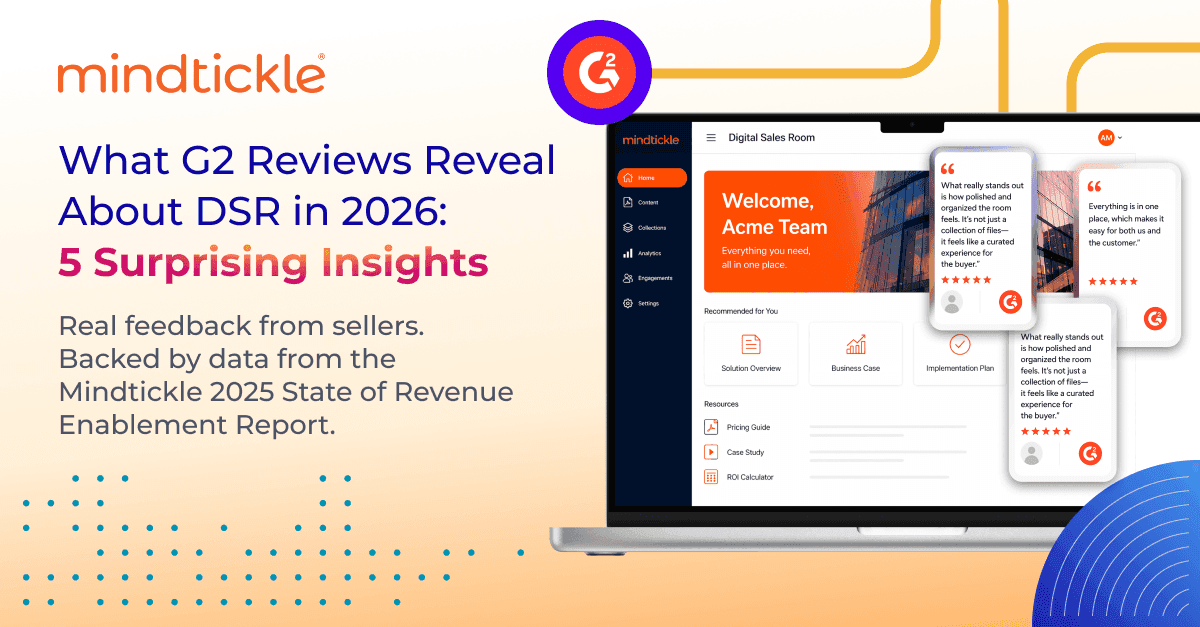
One reviewer framed it precisely, “What really stands out is how polished and organized the room feels. It’s not just a collection of files, it feels like a curated experience for the buyer. We’re able to tailor it to each account, and that makes a big difference in how prospects engage with the content.”
Another reviewer points out, “It gives us a much more professional way to present everything to the customer. Instead of sending multiple emails and attachments, we can guide them through a clean, well-structured space that feels tailored to their needs.”
Both reviewers echo the same thought: a room that looks generic signals a seller who didn't invest in the experience. In competitive deals, that impression is hard to undo. A buyer who sees a polished, on-brand room from one vendor and a default-template room from another is drawing conclusions about which company pays attention to detail.
The reviewers who describe this are also among those selling to more sophisticated buyers like financial services, health, technology. Those buyers notice.
💡Mindtickle Tip: Spend a few minutes on room presentation before sharing the link. Add a custom banner, a brief welcome message that names the buyer's company and the specific problem you discussed on the call, and remove any content that isn't relevant to this particular deal.
5. The biggest DSR failure is lack of follow-up from sellers.
One pattern stands out clearly across reviews. Engagement doesn’t happen automatically, it’s driven by how consistently the room is used.
As one reviewer notes, “We’ve found the most success when we keep bringing the room into every interaction. It becomes the central place for the deal, and prospects naturally go back to it as things progress.”
A room went out but the buyer didn't engage. And now the seller doesn't know what to do next. This is the most common DSR failure pattern. A room gets created, a link goes in the follow-up email, and then nothing. No mention on the next call. No nudge to the buyer. No update to the room content. By the time the seller checks the analytics, the buyer has moved on to other priorities and the room has gone stale.
Our deal data on closed-won versus closed-lost deals makes the contrast clear. Won deals average nearly ten visits. That doesn't happen passively. It happens because the seller references the room on calls, updates it with new content as the deal progresses, and treats it as the live channel for buyer communication—not as a one-time delivery mechanism.
💡Mindtickle Tip: Mention the room on every call. Ask the buyer directly what they've looked at and what questions it raised. Update the room after each conversation with anything that came up. We recommend centralizing all content sharing and communications within the room so everyone knows where to go for important information. That only works if the seller actively maintains it. A room the seller stops caring about is a room the buyer stops visiting.
The pattern across all five observations is the same.
DSRs work when sellers treat them as a buyer communication channel that requires active maintenance. They underperform when sellers treat them as a delivery vehicle — build it, send it, wait.
The 30% deal size lift and the 26% win rate improvement we witnessed aren't the result of creating a room. They're the result of what happens when a room is built early, kept current, shared with the right people, and referenced throughout the deal. The reviews from sellers who see those outcomes describe exactly that behavior. The reviews from sellers who don't describe the opposite.
Data sourced from Mindtickle's 2025 State of Revenue Enablement report, based on activity from 1.6 million users across 400+ customers, and from 200+ G2 reviews submitted between May 2024 and February 2026 on Mindtickle’s page.
Ready to see DSR in action?
One secure, shared space for all content, communication, and deal planning.