




Active Listening in Sales: What it is and How to Master This Essential Skill


Sales success is built on meaningful conversations. Through great conversations, sales reps can earn prospects’ trust, help them overcome challenges, and ultimately, earn their business.
That’s why mastering sales call skills is essential.
While training is often focused on what a sales rep says on sales calls, how they listen is just as important. By practicing active listening in sales, reps gain a better understanding of their prospects’ needs and can offer tailored solutions that effectively address those needs.
But what is active listening in sales?
In this post, we’ll discuss what active listening in sales is, why it matters, and how it’s especially important for virtual sales. We’ll also share practical tips and best practices to improve active listening in sales – and start winning more deals.
What is active listening in sales?
It’s no secret that sales reps spend a significant portion of their time on sales calls. Collaborative phone calls help keep buyers engaged, make them feel heard and understood, and motivate them to take the next step in the sales process. On the other hand, one-sided sales calls tend to turn prospects off and push them towards other options.
Ideally, sellers should aim for more collaborative calls. In order to do so, they must master active listening in sales.
So, what is active listening in sales?
Active listening is sales is the practice of being fully engaged in a sales conversation so you can truly understand what a prospect is saying, respond appropriately, and recall key details later on. Active listening in sales isn’t just about letting a prospect speak and hearing the words they say. It’s about actively focusing on what’s being communicated (both verbally and non-verbally), asking clarifying questions to ensure understanding, and responding in a way that shows you’re truly listening to what they’re saying and where they’re coming from.
Why is active listening in sales important?
Now we have a clear understanding of what active listening in sales is. But why is it so important for organizations to ensure their sellers have mastered active listening skills?
Simply put, active listening drives sales success. By practicing active listening in sales, your reps can earn buyers’ trust, address their biggest pain points effectively, and ultimately, convert them to customers.
Let’s take a closer look at some of the top reasons why active listening in sales is so important.
Active listening earns prospects’ trust
By practicing active listening in sales, reps can build authentic connections with prospects. When buyers feel that sellers are truly listening and making an effort to understand their viewpoints, they’re more likely to trust those sellers.
Trust drives several positive business outcomes. In fact, Forrester research found that B2B buyers who trust a company are almost twice as likely to pay a premium to work with that company or recommend it to others.
B2B buyers who trust a company are
Active listening enables buyers to deliver effective solutions
Active listening in sales enables a rep to accurately identify the needs, preferences, and pain points of sellers. The rep not only hears the words the prospect is saying, but truly grasps the thoughts and emotions behind those words.
When a seller understands a buyer’s pain points, they can better craft and present a solution to accurately address them. And when a prospect is presented with a solution that actually meets their needs, they’re more likely to make a purchase.
Active listening accelerates deal cycles
B2B sales cycles are long. For some industries, the sales cycle can last months or even more than a year.
Active listening in sales helps drive alignment between the buyer and the seller throughout the sales cycle. When both parties are aligned, it helps reduce friction and can accelerate the sales cycle. That means your sellers can close more deals – faster.
How is active listening even more important in remote selling?
Active listening is crucial for every B2B sale. But these sales rep skills are especially important in remote selling scenarios.
A growing portion of B2B sales are struck remotely – a trend that accelerated at the start of the COVID pandemic. And it appears this shift is here to stay. Gartner predicts that by the end of this year, 80% of interactions between B2B buyers and sellers will occur via digital channels.
While there are many upsides of remote selling, it also comes with challenges. Chief among them is the ability to effectively capture and maintain prospects’ attention.
In remote meetings, multitasking is common. For instance, a buyer may split their attention between the call and a report they’re finishing up for their manager, while a seller could be distracted by frequent email and message notifications.
These aren’t exactly ideal conditions for uncovering pain points and building trust. But active listening in sales can help.
By practicing active listening, you’re showing the prospect they’re fully focused on the conversation, which will encourage the prospect to do the same. Asking clarifying questions and summarizing what you’ve heard shows you understand their needs and pain points. This will help you stand out from competitors, earn your prospects’ trust, and eventually, convert them to a customer.
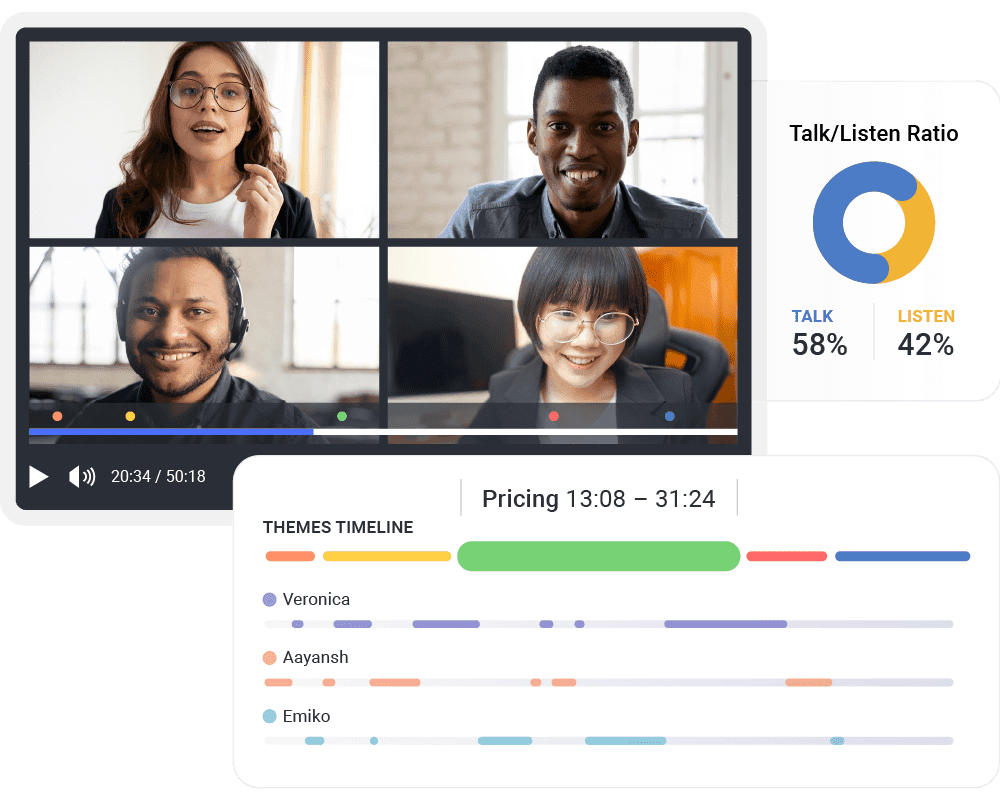
8 Tips to improve active listening in sales (+ active listening examples)
Active listening in sales enables your teams to engage buyers more effectively and close more deals. Whether selling remotely, in-person, or through a hybrid approach, it’s important for every seller to develop active listening skills and continually refine them.
Read on as we explore 8 practical, effective tips and best practices for improving active listening in sales and share some active listening examples.
Empower your teams to master active listening in sales
With active listening skills, your sellers can more effectively engage with buyers, earn their trust, and convert them to customers. It’s essential for every rep to learn (and continually refine) active listening skills in sales.
Mindtickle is an AI powered revenue enablement platform that equips sellers with the training, tools, resources, and insights they need to be active, engaged listeners.
See how Mindtickle stacks up against the competition:
-
Mindtickle vs Highspot-Seismic Merger Comparison
-
Mindtickle vs Seismic Comparison
-
Mindtickle vs Highspot Comparison
-
Mindtickle vs Allego Comparison
-
Mindtickle vs Showpad Comparison
Help Your Team Perfect Active Listening
Ready to see how Mindtickle can help your entire go-to-market team perfect active listening in sales?