




How to Create a Solid Client Engagement Strategy?


A great product might be enough to score you a meeting. But if your team can’t connect with buyers, earn their trust, and show they truly understand their needs, the deal is doomed.
A thoughtful client engagement strategy – paired with strong buyer enablement – makes all the difference. It helps your sellers stand out, build stronger relationships, close more deals, and foster long-term loyalty.
Read on to explore what client engagement is, why it’s critical to your bottom line, and how to build a client engagement strategy that empowers your team to build lasting relationships, accelerate the sales cycle, and win more business.
What is client engagement
If you’re asking yourself “what is client engagement?” you’ve come to the right place. Let’s start with the basics.
Client engagement, defined
Client engagement (also referred to as customer engagement) is the act of building and maintaining meaningful relationships with customers throughout every stage of the purchase journey. It includes every touchpoint between a company and a potential or existing customer – whether it’s a quick call, a casual conversation on LinkedIn, or a detailed product demo.
Client engagement has never been more important
In B2B sales, there are many touchpoints between a buyer and seller. Some studies suggest the average B2B sale involves more than 62 touchpoints.
And increasingly, these interactions aren’t happening face-to-face. Gartner predicts that by the end of this year, 80% of B2B buyer-seller interactions will take place via digital channels.
The way you show up across these interactions can make or break a deal. That’s why having a solid client engagement strategy is essential.
Sure, products will always play a major role in purchase decisions. But today, 88% of decision-makers say the experience they have with the company matters just as much as its products or service.
That’s what client engagement is all about. With the right client engagement strategy, your sellers can connect more effectively with modern buyers, meeting rising expectations, and stand out in a crowded market.
Next up, we’ll take a closer look at why client engagement is so critical to long-term success.
Why client engagement matters for B2B organizations
Customer engagement isn’t just another buzzword. Instead, it’s one of the most powerful ways for your company to capture prospects’ attention, earn their trust, and drive real results.
Let’s take a closer look at why client engagement should be one of your top priorities.
It helps sellers close more deals, faster
When sellers take the time to get to know their prospects and understand their needs, they earn trust. Buyers are more likely to make a purchase from someone they trust.
There’s plenty of data to back this up.
The vast majority of B2B buyers (86%) are more likely to make a purchase if a company understands their goals. Yet, nearly 60% say most sales reps don’t take the time to understand them.
That’s a huge gap – and a big advantage for businesses that get customer engagement right.
As an added bonus, deals will move faster if buyers feel understood and supported, rather than pressured.
The bottom line? Customer engagement will empower your teams to close more deals, faster.
It helps sellers position themselves as trusted advisors
B2B buyers don’t want a seller to provide them with a laundry list of product features. Instead, they want insight and guidance that’s tailored to their unique needs.
In fact, 84% of buyers expect sellers to act as trusted advisors. But nearly three-quarters say most sales interactions feel transactional.
Client engagement can help bridge the gap.
When reps focus on building relationships, rather than simply making sales, they can position themselves as true partners. And when they provide the resources, insights, and guidance buyers need to make informed purchase decisions, they’re delivering true buyer enablement – helping customers navigate complexity and feel in control of the process.
It drives long-term retention
Client engagement shouldn’t stop once a deal is won. If that’s what happens, your newfound customers will be left to fend for themselves – and they likely won’t stick around come renewal time.
Buyers who have great experiences during and after the sale are more likely to stick around long term. This will boost your retention rates – and your bottom line.
It opens up cross-sell and up-sell opportunities
Your customers may be open to exploring new solutions and expanding their relationship with your business in the future. But only if they trust the person offering them those opportunities.
A strong customer engagement strategy builds that trust. This makes it easier for your sellers to introduce new products, services, or upgrades down the road.
It fuels brand advocacy and referrals
When companies have good experiences, they’re willing to talk about it – either by telling their peers, writing a review or testimonial, or agreeing to participate in a case study. In fact, 75% of decision-makers have recommended a brand based on excellent experiences.
B2B buyers trust feedback from their peers. It all starts with delivering great client engagement across every touchpoint.
How to create a solid client engagement strategy
Clearly, client engagement can have a large, measurable impact on your business. But a great client engagement strategy doesn’t happen by chance. It requires the right tools, the right content, and, most importantly, the right mindset across your entire go-to-market organization.
Let’s take a look at the steps to take to build a client engagement strategy that keeps your buyers engaged throughout every stage of their experience with your business.
1. Understand your customers inside and out
Every effective client engagement strategy is built on a foundation of rich customer insights. You need to understand how buyers are navigating the purchase journey, what’s important to them, how they prefer to engage, and where they tend to drop off the journey.
Don’t rely on guesswork. Instead, let quantitative and qualitative data guide you. For example, pull insights from your CRM and conduct win/loss analysis. Also, ask for feedback from both your sellers and your buyers.
The more you know, the more effective your sales engagement strategy can be.
2. Establish clear goals and KPIs
Once you understand your audience, you can set goals for what you want your customer engagement strategy to accomplish. These should be specific, measurable outcomes that are tied directly to your bottom line, like:
- Increasing conversion rates
- Improving customer retention rates
- Boosting customer lifetime value (CLV)
- Generating more referrals or reviews
By establishing KPIs upfront, you’ll be able to track what’s working and what’s not.
3. Align your teams around the customer
It’s easy to assume that buyer engagement rests solely on the shoulders of your sellers. But the truth is, it’s a company-wide effort.
From the moment a prospect clicks on a LinkedIn ad to when they download a resource from marketing, speak to a sales rep, or get handed off to customer success after making a purchase, every interaction matters. If teams aren’t aligned, it becomes apparent – and problematic – fast.
For example, marketing might push one message while sales delivers another. Or customer success might not be looped into the context of a specific deal. In both cases, customers experience friction, and it erodes trust.
Avoid that by:
- Scheduling regular cross-functional syncs
- Sharing goals and engagement data across teams
- Creating a feedback loop that spans departments
When teams are aligned, every touchpoint feels connected and consistent. The buyer experience improves, and so do your sales results.
4. Create and centralize content for every stage of the customer lifecycle
Modern B2B buyers rely on content to make informed purchase decisions. And sellers depend on it to boost client engagement throughout the sales cycle.
Be sure to create sales content that adds value every step of the way – whether a buyer is just starting to explore or actively evaluating their options. Centralize all assets in a sales content management solution so sellers can easily find the content they need, when they need it. Bonus points if that sales content management solution makes it easy for sellers to personalize content and leverages AI to help reps surface proven content for every scenario.
By sharing relevant content that delivers value, sellers can boost client engagement and encourage buyers to take the next step in their journey.
5. Equip your teams to engage with confidence
Even the best client engagement strategy will fail without proper enablement.
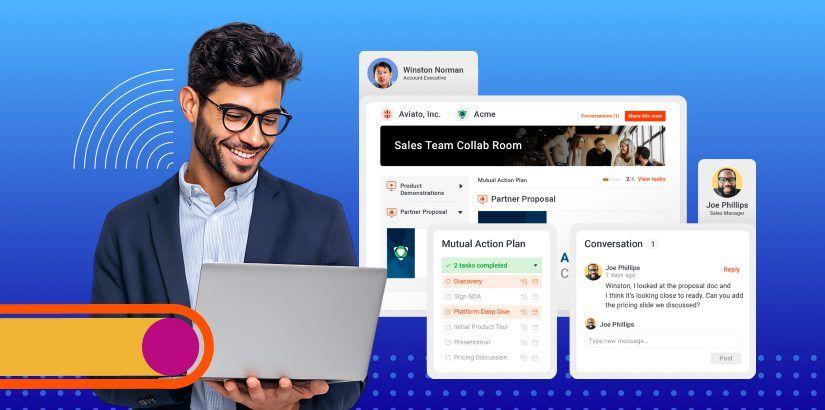
Be sure to give your sellers the training, tools, and support they need to confidently engage buyers throughout the customer journey. For example, deliver tailored learning paths to help reps build the knowledge and skills they need to master client engagement. Provide them with AI role-plays so they can practice their client engagement techniques and get real-time feedback for improving. And provide tools like digital sales rooms that centralize collaboration between buyers and sellers throughout the sales cycle.
More than three-quarters of B2B buyers say that their last purchase was very complex or difficult. With the right sales enablement initiatives, your sellers can more effectively navigate that reality.
6. Deliver seamless experiences across channels
We know B2B buyers are navigating a significant portion of the purchase journey online. But they’re not sticking to just one channel. According to research from McKinsey & Company, B2B buyers use an average of 10 channels in their buying journey.
Revenue organizations must meet buyers where they are. Support your buyers’ preferred platforms, and be sure your message is consistent across all of them. Consistency builds trust, and trust builds deals.
In addition, give your sellers visibility into buyer activity across all touchpoints. That way, sellers have the context they need to meet buyers where they are.
7. Measure and optimize regularly
Developing a client engagement strategy shouldn’t be a one time event. Buyer behaviors evolve, and you must adapt your approach accordingly.
Regularly review key client engagement metrics like:
- Conversion rates
- Sales cycle length
- Retention and churn
- Customer lifetime value
- Content performance
- NPS scores
Also, talk to your buyers and your sellers to understand what’s working and what’s not. You can use these insights to iterate, refine, and grow.
Improve your client engagement with Mindtickle
In today’s competitive marketplace, building a strong client engagement strategy is essential. It’s also critical to ensure your teams have the right buyer engagement tools to bring your client engagement strategy to life.
That’s where Mindtickle comes in.
Mindtickle is an AI-powered revenue enablement platform that equips go-to-market teams to deliver outstanding client engagement across every stage of the customer lifecycle. With Mindtickle, your teams have right tools and support to succeed, including:
- Training and coaching to build the knowledge and skills needed to meet buyer expectations and position themselves as trusted advisors.
- Practice opportunities, like AI role-plays, to sharpen skills and boost confidence.
- Relevant content for every customer, and the ability to quickly surface the assets that are proven to work.
- Tools like digital sales rooms to improve collaboration between buyers and sellers and make the purchase journey easier.
Ready to see how Mindtickle can power up your client engagement strategy? Reach out to see our AI-powered revenue enablement platform in action.

Subscribe to the blog
Get the latest sales enablement tips, guides, and industry best practices delivered to your inbox. Unsubscribe anytime.
Related Articles

Best Unified Revenue Enablement Platforms for Enterprise Teams in 2026

5 Top Sales Methodologies & Types of Selling: The Complete Guide for 2026