






Sales enablement content plays a large (and growing) role in the B2B path to purchase. Recent research found that 55% of B2B buyers rely on content to guide their purchase decisions more now than a year ago. And 62% of buyers engage with three to seven pieces of content before connecting with a sales rep.
When sellers have access to the right content at the right time, they can effectively and efficiently engage and nurture more buyers and close more deals.
But not all sales enablement content works. A recent Mindtickle analysis found that on average, 10% of sales content drives 50% of engagement. That means a large portion of sales is underused – or not used at all.
A solid sales enablement content strategy ensures you have the right mix of content that’ll resonate with sellers and buyers alike.
In this post, we’ll share tips and best practices for creating an effective sales enablement strategy that’ll empower your sales teams to confidently take on any deal that comes their way.
What is sales enablement content?
Sales enablement content is a powerful asset for new and veteran sellers alike. When sales reps have the right sales enablement content, they’re better able to attract, engage, and convert buyers.
But what is sales enablement content? Essentially, sales enablement content is any content asset developed to help a sales rep succeed in the field.
Some sales enablement content is developed for internal use. Typically, the goal of this content is to provide education to sellers. For example, some organizations create sales battlecards to help sales reps understand how they stack up against their competitors. Often, these sales battlecards are for internal use only.
Other sales enablement content is for external use. Members of the revenue team can share this sales enablement content with prospects as a way to convey or reinforce information about their products or services. For example, a sales rep might share a case study with a prospect to help them understand how a similar company overcame challenges by using a specific product or service.
What are some sales enablement content examples?
There are many different types of sales enablement content used by sales teams. Let’s take a closer look at some common sales enablement content examples.
Scripts
Often, sales organizations provide scripts to help sales reps scale their outreach while ensuring they stay on message. The organization may develop call scripts, including those for cold calls and demos. In addition, organizations may equip their sales reps with email templates that they can use as a starting point for their digital outreach.
Competitive battlecards
Per Semrush, 57% of all sales deals are competitive. That number is even higher in certain industries.
Sales battlecards are sales enablement content that helps sales reps understand how their solutions slack up against their competitors. Some sales battlecards compare a company’s offerings to a single competitor. Other sales battlecards compare a company’s solutions to multiple competitors. In addition, some sales battlecards are for internal use only, while others are developed to be shared with prospects.
Enablement collateral
Often, teams create various sales enablement content that sales reps can share with prospects throughout the sales cycle. Those assets might include sales presentations, one-pagers providing an overview of specific product offerings, ebooks, and case studies.
Marketing collateral
Some marketing teams develop assets including ebooks and whitepapers. Typically, these assets are designed to educate prospects on a specific industry issue or challenge; they’re not usually promotional. Ebooks and whitepapers can be great resources to share with prospects to demonstrate thought leadership and bolster trust.
Case studies and testimonials
Case studies are a common type of external sales enablement content. They tell the story of how your solution has helped other companies solve their challenges. Case studies provide social proof, which can be a powerful motivator for buyers. They are especially effective for prospects who are further along in the funnel.
Videos
Videos are a more interactive form of sales enablement content. Videos can be internal. For example, the sales enablement team may create a video series to educate sellers on a new product. Or, videos can be customer-facing. For example, the marketing team may develop a demo video for sales reps to share with prospects.
What is a sales enablement content strategy and why is it important?
All too often, organizations develop content that they think will help sales reps – and then hope for the best. The result is that teams spend valuable time creating these resources, but they end up sitting unused. In addition, new sales enablement content is created on an ad hoc basis.
It’s not surprising that this approach isn’t effective.
Instead, organizations need a sales enablement content strategy. But what is a sales enablement content strategy? And what are some sales enablement strategy examples?
A sales enablement content strategy is the foundation for success with sales enablement content. It ensures all stakeholders (including sales, marketing, sales enablement, customer success, and product – among others) are aligned on the organization’s content initiatives.
A documented sales content strategy spells out:
- What your goals are for your sales enablement content
- Who the audience is for your sales enablement content
- What types of content you’ll create to achieve your goals (including the sales enablement content examples we outlined earlier)
- How you’ll measure the success (or failure) of your sales enablement content
A solid sales enablement content strategy can help boost seller performance. A great sales enablement strategy helps ensure sellers have the information, knowledge, and resources they need. That means they’re more likely to be successful in the field.
In addition, a sales strategy can help improve the sales process. Today’s buyers do plenty of research before reaching out to a buyer. A sales enablement strategy ensures sellers can share content that adds value and goes beyond the basic information buyers can easily uncover on their own.
How to create a sales enablement content strategy
Creating a great sales enablement content strategy can boost seller performance and improve customer experiences. But creating a sales enablement content strategy can seem overwhelming, especially if you’re used to a more random approach to sales enablement content development.
Creating a sales content strategy doesn’t have to be a daunting process. Here are some proven tips you can use to make the process easier.
Sales enablement content best practices
The right sales enablement content strategy can significantly impact sales outcomes. As you develop your strategy and assets, consider these best practices.
Collaborate cross-functionally
Sales enablement content shouldn’t be created in silos. If it is, your marketing team may be wasting their time creating sales enablement content that isn’t used or doesn’t resonate with buyers.
Instead, sales enablement content must be collaborative among key teams, including sales, marketing, and sales enablement. That way, marketing spends its time on content that sellers will actually use, and enablement teams provide the proper support to ensure reps know how to use the content.
Help sellers surface the right content at the right time
Sales reps have a limited amount of time. But often, they spend too much time hunting down content, or even creating their own.
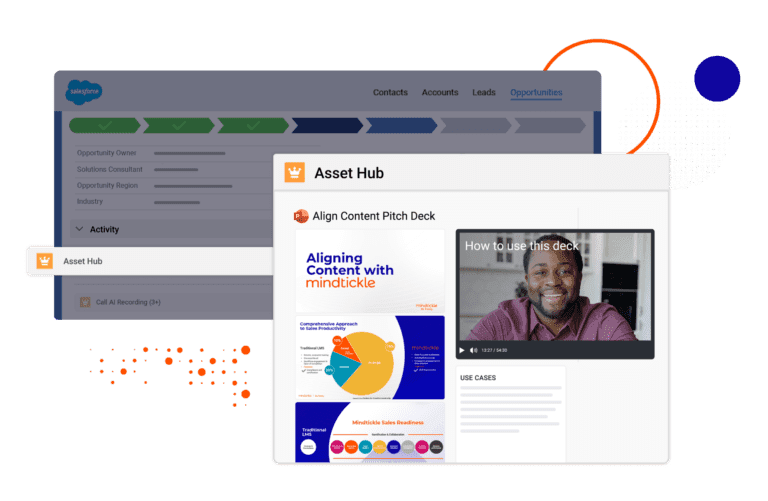
Ensuring sellers can easily surface the right content at the right time is essential. With the right sales content management system, you can organize and tag your content to make it easy for sellers to find what they need. If you leverage artificial intelligence, your sellers can even get content suggestions based on the buyer’s engagement and data about what content has worked in the past.
Share content via digital sales rooms
Often, sales reps share content via email. But this can get complicated when multiple people are on a buying committee—and each cares about different things.
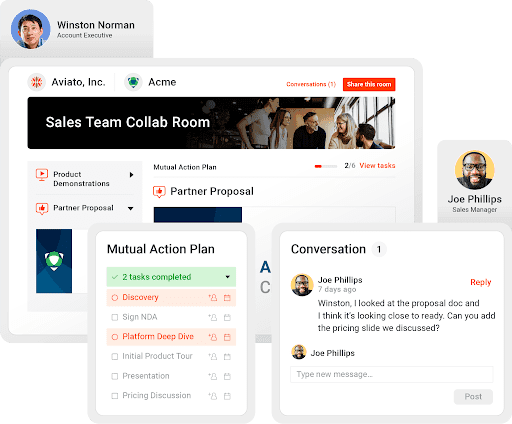
A better way to share content is through a digital sales room, a portal for buyers and sellers to exchange content and collaborate throughout a deal. A DSR enables sellers to get the right content in front of the right members of the buying committee. In addition, sales reps can track how each person engages with the content they share. That way, sellers can adapt their strategy accordingly.
Measure content engagement and impact
While some sales enablement content will resonate with buyers and help move deals forward, others will fall flat. It’s important to determine which is which.
Be sure to measure whether sellers use content and how (and whether) buyers engage with it. In addition, track how each content asset impacts deal outcomes.
Measure content engagement and impact
While some sales enablement content will resonate with buyers and help move deals forward, others will fall flat. It’s important to determine which is which.
Be sure to measure whether sellers use content and how (and whether) buyers engage with it. In addition, track how each content asset impacts deal outcomes.
The top 10% of orgs update content every
In addition, don’t be afraid to eliminate some content. If it’s not being used, having it doesn’t make sense.
Take your sales enablement content strategy to the next level with Mindtickle
Great sales enablement content helps sellers confidently navigate every deal that comes their way. A solid sales enablement strategy is foundational.
But creating a sales enablement content is just the first step. Sales organizations must also ensure their sellers know what sales enablement content is available, where to find it, and how to use it.
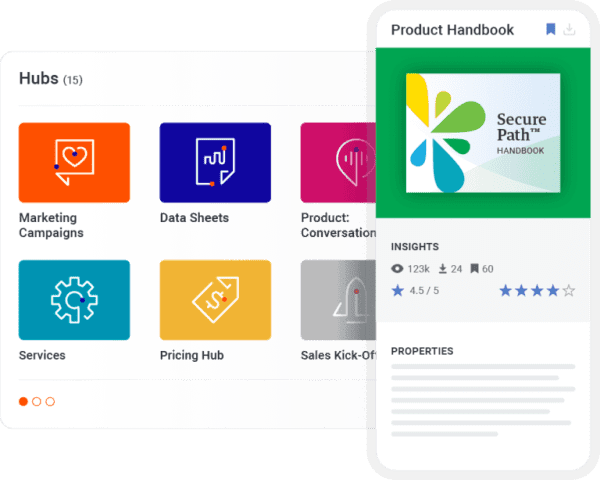
Mindtickle’s sales enablement content management capabilities allow reps to quickly and easily find the right content for each sales scenario. In addition, sales enablement teams can deliver training and enablement to ensure sales reps know how to use the content that’s available to them. Finally, sales leaders can measure the effectiveness of each sales enablement content asset. They can see whether the asset is being used – and whether it’s improving seller performance and deal outcomes. These insights can help ensure organizations prioritize their time on sales content that’s proven to work.
Sales Content Management in Mindtickle
Ready to see how Mindtickle can equip your sellers with the sales content, training, and insights they need to close more deals?
This post was originally published in December 2023 and was updated in September 2024.