







Given how much investment companies make in coaching sales reps, it’s not great to know that, commonly, 20% of sellers generate 80% of sales.
Can you imagine the ROI that could be achieved if every seller were empowered to reach their monthly sales quota?
This is why you’ve invested in sales enablement.
Simple calculations aren’t enough to determine if your investment in sales enablement has been worthwhile. To get a real grasp on sales enablement ROI, you’ll need a comprehensive look at the impact sales enablement has on your company.
3 best practices to get a holistic view of your sales enablement ROI
Traditional ROI calculations don’t give the full picture of how sales enablement impacts your profit.
That’s because sales enablement creates an ecosystem that impacts different stages of the sales cycle, which all have different effects on ROI.
From the performance of sales content to the quality of deal negotiations or the ramp-up time of new sales hires, sales enablement provides insights and tools that streamline processes and optimize practices to continually improve sales results.
Listed below are metrics that affect the ROI of your sales enablement tool.
Sales and performance metrics
About a quarter of organizations measure the impact of sales enablement using productivity metrics and milestones. But to calculate the ROI of sales enablement with sales and performance metrics, you first need to understand how sales enablement improves these metrics.
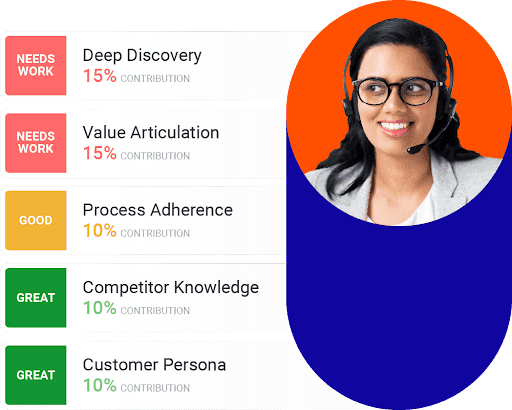
Sales enablement improves performance metrics by enabling insights and seller development. These platforms use data from past deals to provide insights into what aptitudes and selling approaches generate the highest number of wins.
In turn, sales reps are able to use these insights to concentrate on developing skills that impact their sales quotas and improve overall ROI.
Measure the following to understand the ROI of your sales enablement platform:
To continually improve your sales enablement performance metrics, invest in your team’s skill development to create stronger sellers that meet the qualities outlined by your IRP and reach sales quotas. This snowball effect of leads’ learning and developing produces a sales team that is optimized against market changes and agile enough to learn new skills that benefit the company’s profitability.
Content metrics
Half of all prospect engagement is generated by just 10% of content. And sales enablement is the tool that helps you pinpoint and magnify that 10%.
With sales enablement, your content ROI increases as it tracks content engagement and performance. In turn, you can replicate selling material and improve content conversion metrics continually.
For the best ROI, you need quality sales leads that convert into customers. And to convert leads, you need to optimize content with personalization and engaging features. You need sales enablement for both, and those features affect the health of your sales.
Content metrics you should be tracking are:
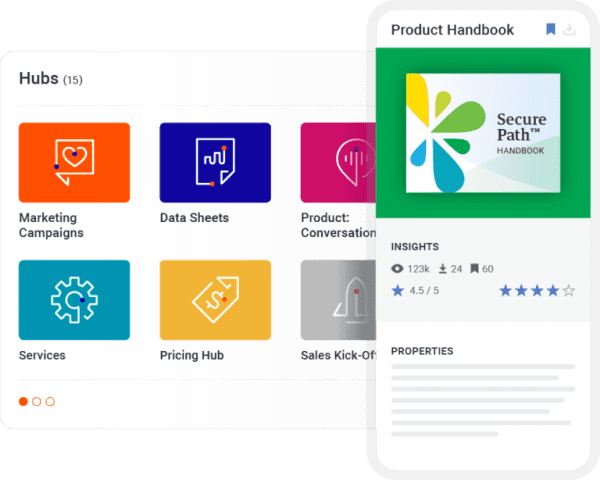
Sales enablement platforms help improve these content ROI metrics by providing a centralized hub for sales and marketing to share and distribute materials. As such, each piece of content generates its own analytics to track performance and engagement.
Customer highlight
Within months of launching, the Menemsha Group completely overhauled its go-to-market strategy with Mindtickle, training hundreds of reps at a time rather than a few dozen at most. The business has evolved from one-off workshops to a fully-transformed SaaS model that provides onboarding, training, and ongoing enablement. Using conversation intelligence and coaching, Menemsha Group enables companies to track rep engagement and how knowledge is being applied in the field—packaged up in one efficient program.
Staff onboarding and adoption metrics
It’s clear that time is money and when it comes to ramping up new hires to their full sales capacity, the faster a new sales hire is able to capture new leads, the quicker ROI will be reached.
Sales enablement catalyzes ROI by decreasing onboarding time by 40-50%, which generates revenue faster. The amount of time saved, and revenue generated, must be taken into account when measuring the ROI of a sales enablement platform.
With sales enablement platforms that offer proper onboarding, new hires will strengthen the skills needed to succeed in their roles, and future sales quota attainment will be impacted. Reports show proper tools will improve win rates by 7%.
To calculate your ROI, take into consideration these onboarding metrics:
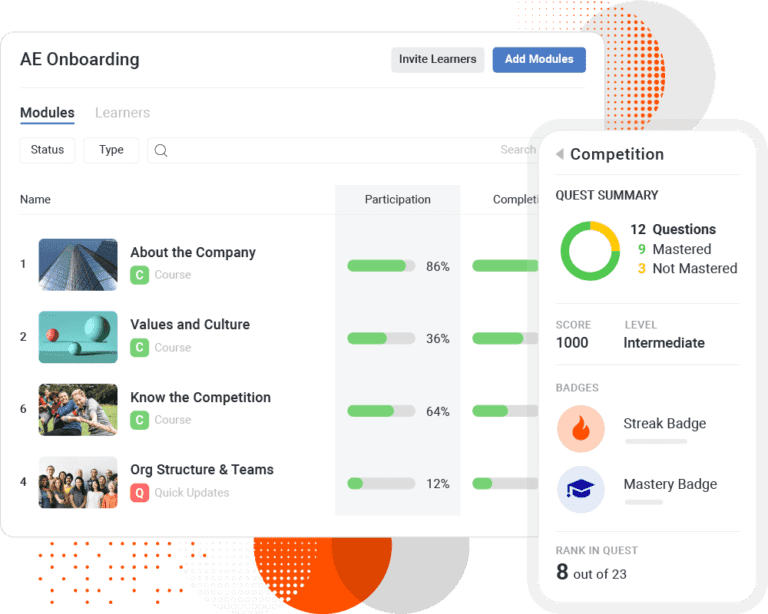
Sales enablement platforms help improve these metrics by providing new hires with real-life examples and best practices. Moreover, by comparing their attributes to those of an IRP, sellers can work toward the skills and practices with the highest win rates.
You can improve your sales enablement platform’s ROI with a personalized onboarding program and deal coaching to develop a sales team that meets your company’s standards and expectations. Moreover, with constant career development and support, sales reps are more likely to be engaged and remain in your company for longer.
Rethink your sales approach
ROI is an insightful metric to understand which procedures and tools are positively or negatively affecting your company’s bottom line. It helps you understand if strategy and content could be improved.
The ability to attribute which measures directly influence the success of a sales strategy is a powerful tool that allows you to continually optimize your sales force for the better. In terms of sales enablement, the precise insights and data will help you understand which areas of your sales enablement strategy need improvement.
Measuring every aspect that contributes to sales enablement ROI gives a clear path to reaching quarterly KPIs and objectives. The data pinpoints what content needs to be updated and which skills need to be developed to reach that quota.
Not all benefits can be measured in terms of ROI
There are certain factors that, by nature, aren’t as easy to include in the ROI calculation. However, it’s important to keep them in mind, as they benefit the health of a sales cycle and quota achievement.
Now that you know your sales enablement ROI, here’s what to do next
Once you measure your ROI, the real strategy begins. It’s important to keep an eye on all the metrics that contribute to ROI every month to be able to improve or test new strategies continually.
Use the data from sales enablement to pinpoint what skills need development, what content needs to be repurposed, or how to switch up the sales strategy. You will need to be able to compare monthly data to understand what improvement looks like.
Not only that, but improving your sales enablement ROI will also mean improving onboarding, content management, and sales strategies to maintain goals and improve ROI in the future.
How are you measuring sales enablement?
Mindtickle can help you better measure your sales enablement efforts and impact on revenue.
This post was originally published in November 2022, updated in September 2023, and again in June 2024.