



The Best Seismic Competitors and Alternatives



The best Seismic alternatives in 2026 are: Mindtickle, Highspot, Showpad, Allego, Bigtincan, Gong, Paperflite, Salesloft, and SalesHood. Each addresses a different slice of the revenue enablement challenge, from content management and rep coaching to sales engagement and conversation intelligence.
Choosing a Seismic alternative is harder than it looks, for three reasons.
- The category is broader than most buyers expect. Platforms like Gong solve for conversation intelligence, Salesloft for sales engagement, and Paperflite for content experience — none of which are direct replacements for a full enablement suite.
- Most vendors do not publish pricing, which makes true cost comparisons difficult until you are already deep in a sales process.
- The wave of consolidation in 2025 and 2026 means several platforms on this list are mid-merger, which adds its own layer of evaluation complexity.
This guide cuts through that. For each alternative, you will find an honest assessment of what it does well, where it falls short, who it is built for, and what it actually costs, so you can build a shortlist based on your team's real needs rather than vendor positioning.
Why explore Seismic competitors and alternatives?
Seismic earns its reputation. With a strong track record in content management, it is one of the most capable platforms in the revenue enablement category. For large organizations with mature enablement functions, deep Salesforce dependencies, and dedicated admin resources, it delivers real value.
But capability and fit are different things. A consistent set of friction points emerges across independent sources that push teams to look elsewhere.
The Seismic-Highspot merger changes the risk calculus. In February 2026, Seismic announced a definitive agreement to merge with Highspot. The combined entity will operate under the Seismic brand. For current customers and active evaluators, this raises a meaningful question: what does the next 18 to 24 months look like as two large platforms consolidate their product, pricing, and roadmaps? No pricing continuity commitments have been published. No integration timeline has been confirmed. For teams considering a multi-year contract, that uncertainty is not a reason to panic, but it is a reason to look carefully at the alternatives before signing.
Seismic's core strength is content management and guided selling. If your team also needs structured onboarding, skills-based coaching, AI role play, or a readiness framework that ties training directly to revenue outcomes, you will need additional tools to fill those gaps. For teams trying to consolidate their stack rather than expand it, that is worth weighing carefully.
There are also increasing concerns from multiple independent sources that finding the right asset in a large Seismic deployment requires more clicks and more precision than reps typically have time for in the flow of a deal.
None of these are reasons to dismiss Seismic outright. They are reasons to evaluate it honestly against the alternatives, and to understand clearly what problem you are trying to solve before committing to a sales enablement platform built primarily around one discipline.
9 Best Seismic alternatives in 2026
Let's take a detailed look at the top Seismic competitors mentioned above, along with their top features, pros, and cons.
1. Mindtickle
G2 rating: 4.7 out of 5
Price: Custom pricing based on team size and modules. Contact Mindtickle for a quote.
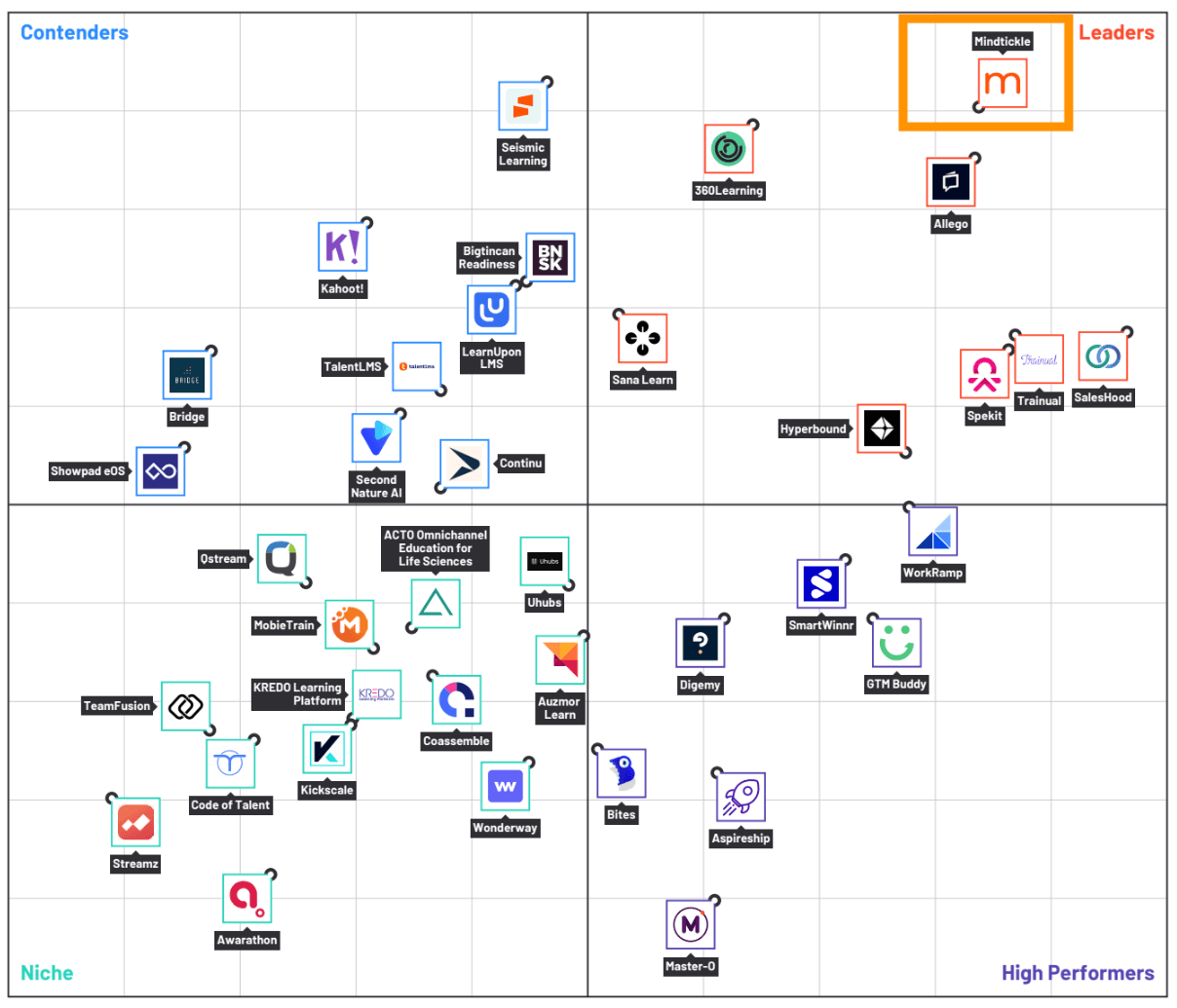
If you are evaluating Seismic alternatives in 2026, you are likely solving for one of three things: the uncertainty that comes with betting on a platform mid-merger, a readiness and coaching gap that content management alone cannot close, or the growing cost of running too many tools that were never designed to work together. Mindtickle addresses all three — not by adding features to an existing content platform, but by building from a fundamentally different premise.
Where Seismic starts with content and works outward, Mindtickle starts with the rep. The central question the platform is designed to answer is not "did we publish the right content?" but *"is this rep ready to win this deal, and how do we know?" *That difference in design philosophy shows up across every part of the product — from how training is structured to how coaching is delivered to how outcomes are measured.
The State of Agentic Revenue Enablement Report 2026 found that high-performing revenue teams treat AI as a core participant in daily workflows rather than a bolt-on tool. That distinction matters here. Mindtickle's AI is not a search assistant or a content tagging engine. It authors training scenarios, scores role play performance, surfaces deal risks, transcribes and analyzes sales conversations, and drafts rep communication — running across the full platform rather than sitting inside a single module.
For teams currently paying separately for a training tool, a coaching tool, and a conversation intelligence tool alongside Seismic, that consolidation has a real and calculable cost implication.
💡 Do you know
Mindtickle holds the number one position on G2 for sales training and onboarding across 26 consecutive quarters and ranks among the top three vendors in the Gartner Critical Capabilities for Revenue Enablement Platforms report. It rates higher than Seismic on ease of setup, which matters for teams that cannot afford a four-month implementation runway while their current contract winds down.
Standout features
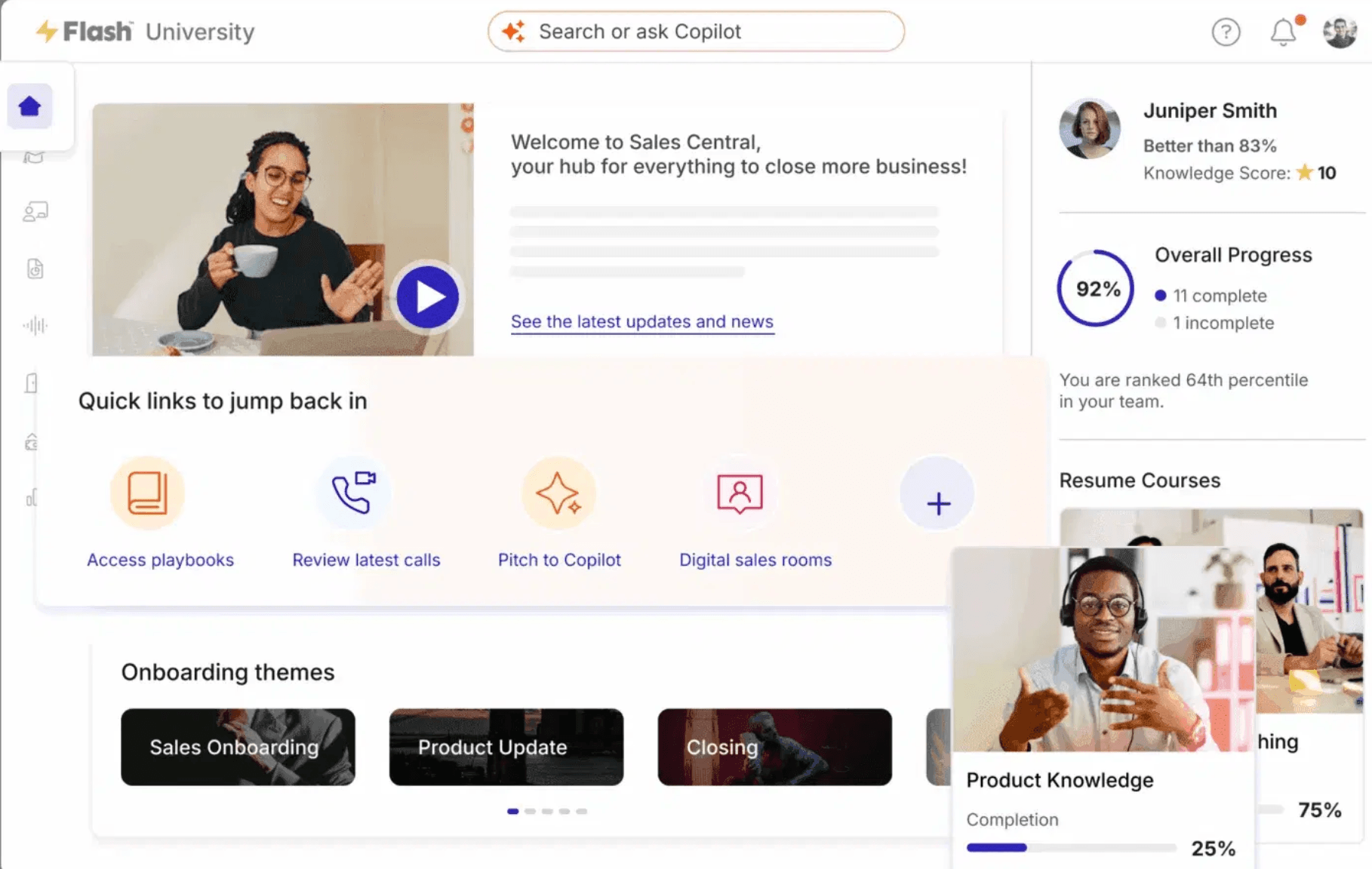
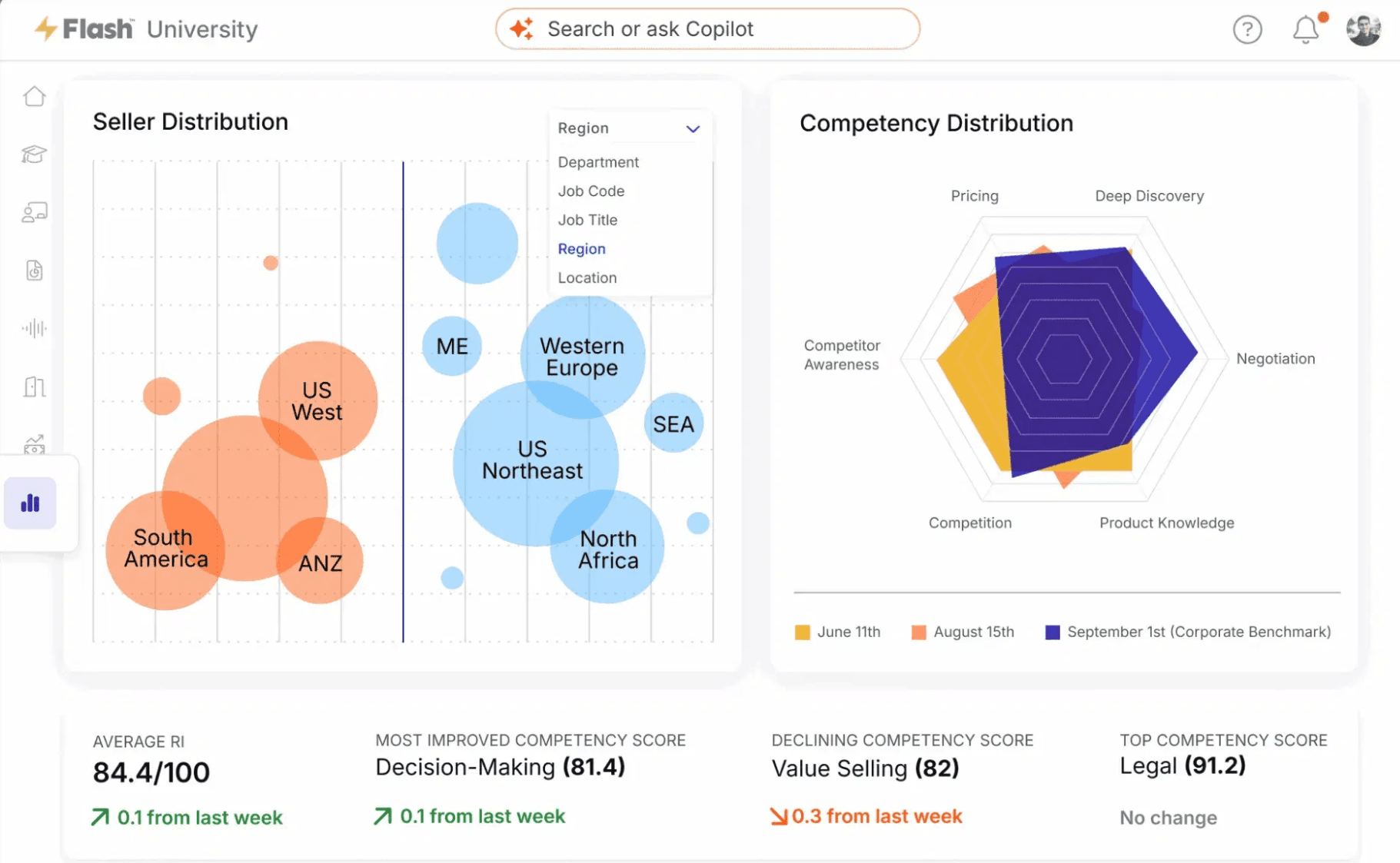
- Readiness Index: The most structurally distinctive capability on this list. Rather than measuring what reps completed, the Readiness Index defines the skills, competencies, and behaviors of top performers and maps every rep against that benchmark in real time. Managers can see exactly who is ready to carry quota, where gaps exist, and whether coaching is closing them, with the data tied directly to win rates and quota attainment rather than sitting in a separate analytics dashboard.
- AI Role Play: Reps rehearse real deal scenarios and receive structured, immediate feedback before going live with a buyer. Crucially, feedback does not depend on manager availability — which means practice scales across a distributed team without creating a bottleneck on the coaching side.
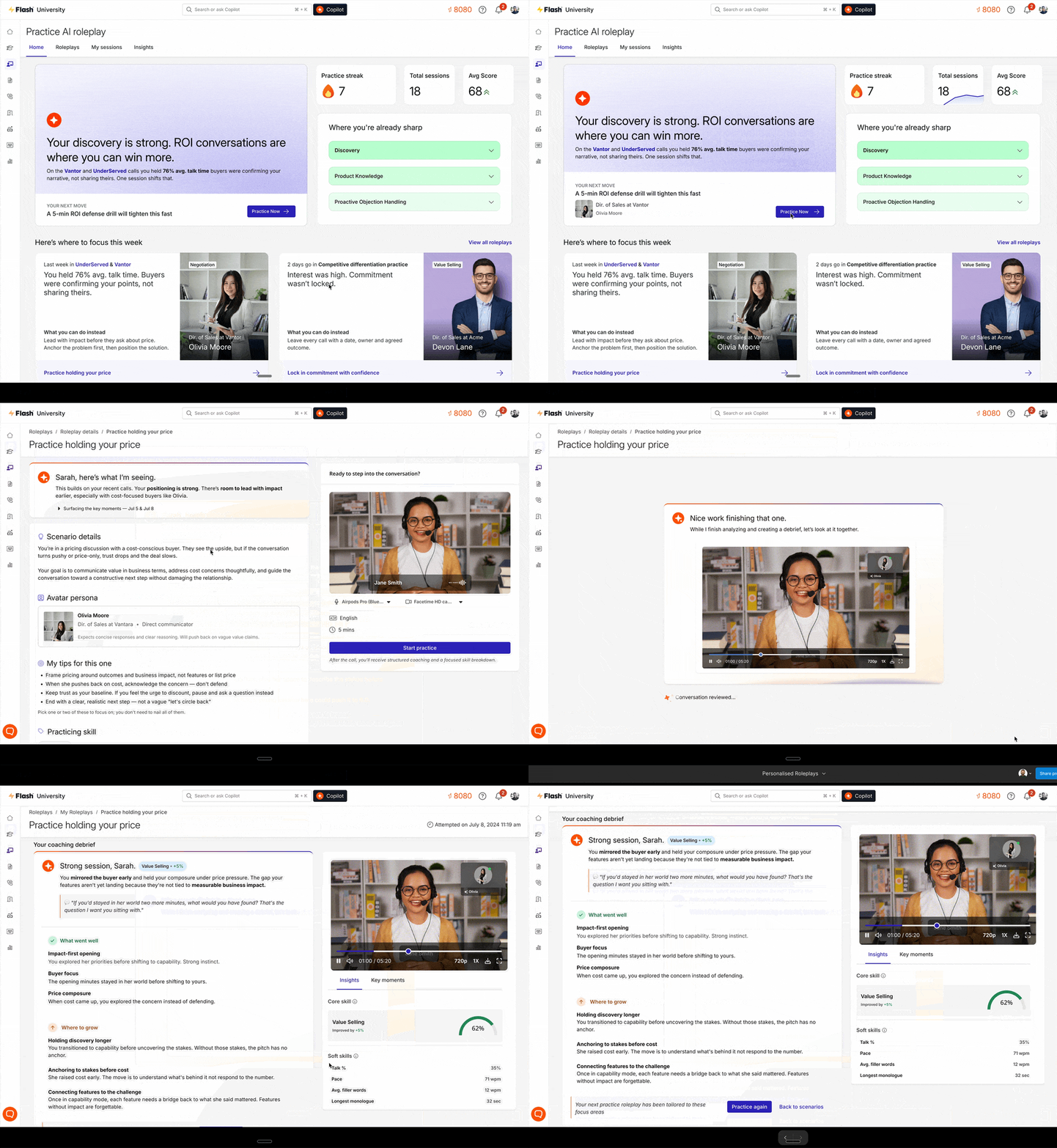
- Conversation intelligence: Recorded, transcribed, and analyzed natively within the platform. Managers get a pattern-level view of what is happening across the team's calls without toggling between tools, and reps get call-level insight they can act on before the next conversation.
- Copilot: Handles the administrative layer of selling — call prep, real-time question answering, note-taking, and follow-up drafting — so reps spend their time on conversations rather than the work that surrounds them.
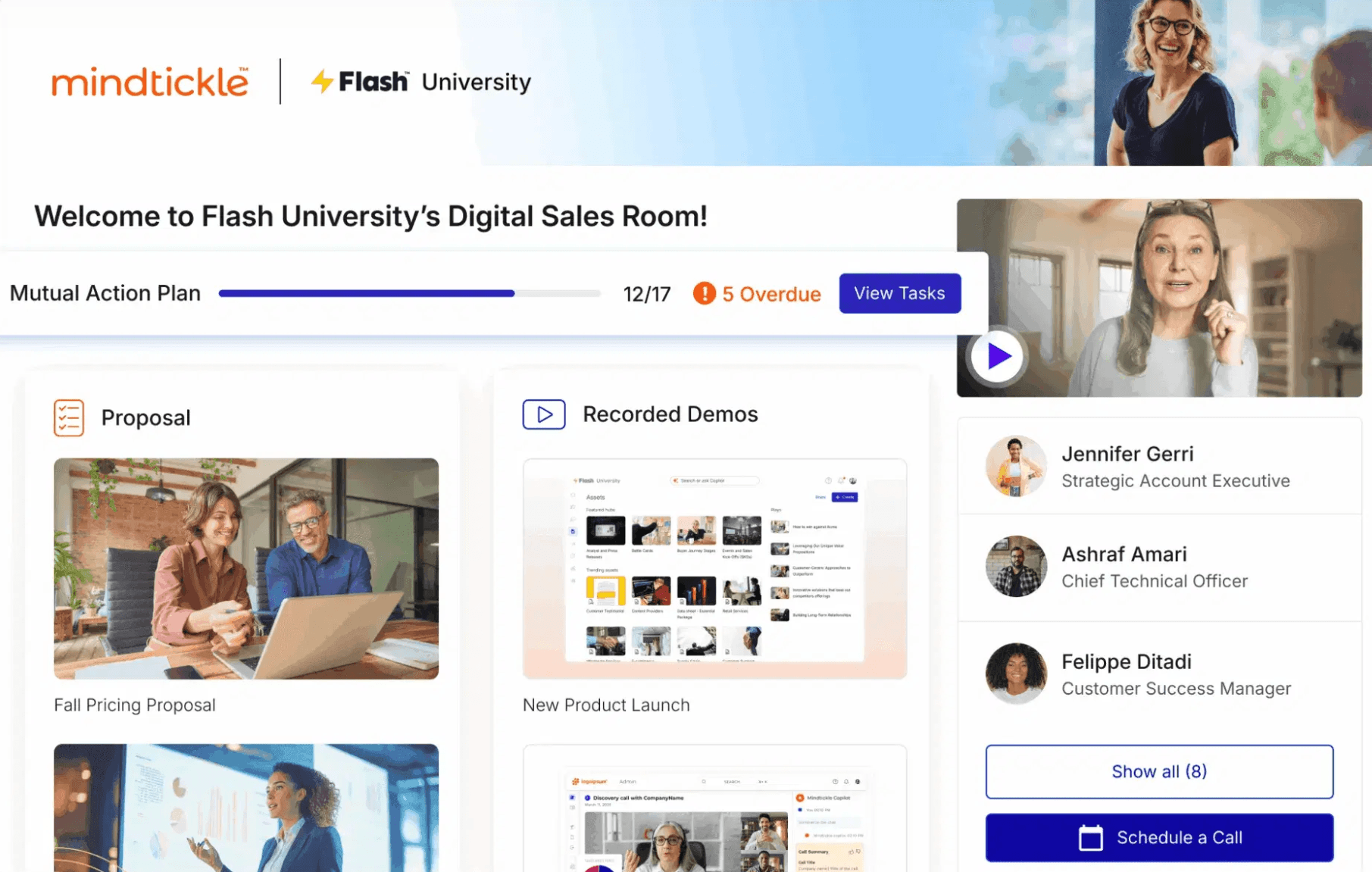
- Digital sales rooms: Deal-specific buyer environments where reps consolidate content, manage stakeholder communication, and track engagement signals. The engagement data connects back to coaching and content decisions within the same system.
- Sales coaching: Grounded in actual performance data rather than observation. Managers draw on role-play scores, call analysis, and readiness benchmarks to make coaching conversations specific, evidence-based, and trackable over time.
Notable drawbacks: Pricing requires a direct conversation with the sales team and no figures are published publicly. Teams without a dedicated enablement function may find the platform's breadth takes longer to operationalize than a narrower point solution.
🏆 Best for: Mid-market and enterprise revenue teams that are either re-evaluating their stack in the wake of the Seismic-Highspot merger, looking to close a meaningful coaching and readiness gap that content management platforms were never built to fill, or trying to consolidate multiple enablement tools into one system with a clear line of sight from rep activity to revenue outcomes.
2. Highspot
G2 rating: 4.7 out of 5
**Price:**Highspot does not publish pricing information. Contact the company for customized pricing information.
Acquired by Seismic, Highspot is another popular sales enablement platform that incorporates several components of sales enablement, including sales training, content management, and data and analytics – all in one solution.
Standout features
- Content management tools make it easy to store, organize, and access the right content at the right time.
- Robust data and analytics enable organizations to determine which assets are driving engagement and conversion.
- Seamless integrations with other technology, including popular CRMs, streamlines workflows.
Pros
Highspot often outperforms Seismic in many areas, including:
- Ease of setup
- Quality of support
- Content import and storage
- Content utilization analytics
Cons
Highspot users cite a number of downsides to the platform, including factors like:
- Steep learning curve
- Confusing platform
- Layout issues
- Challenges with platform updates
📌 Deep Dive: Mindtickle vs Highspot-Seismic Merger Comparison
3. Showpad
G2 rating: 4.6 out of 5
Price: Custom plans available though exact pricing is not published publicly.
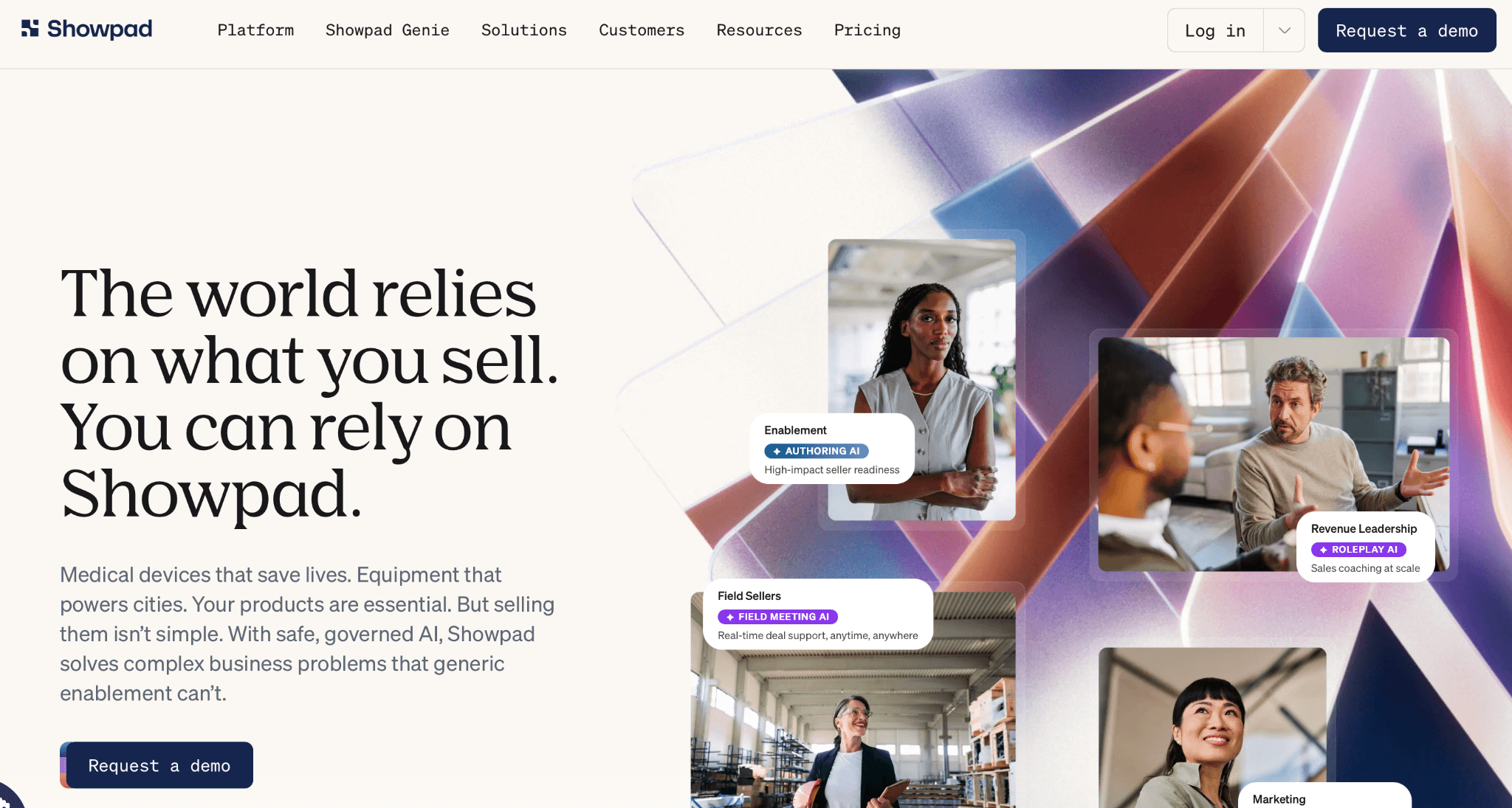
Showpad's 2026 architecture connects content management, sales readiness, buyer engagement, and revenue intelligence into a single AI-native system.
Standout features
- Reps rehearse real-world scenarios — handling objections, navigating multi-stakeholder conversations, pitching complex products — in a dynamic environment that adapts to how the seller responds.
- Branded, interactive deal rooms that serve as a single point of truth throughout the sales cycle.
- Centralized library with version control, permission management, and engagement analytics that show which assets influence deal progression.
Pros
Showpad often ranks higher than Seismic in areas including:
- Ease of use
- Ease of setup
- Product direction
- Content management
- ROI reporting
Cons
Showpad users cite certain downsides to the platform, including those related to:
- Limited features
- Poor search functionality
- Confusing platform that's not intuitive
📌 Deep Dive: Mindtickle vs Showpad Comparison
4. Allego
G2 rating: 4.6 out of 5
Price: Custom pricing. No public rates. Per-user, per-month model billed annually
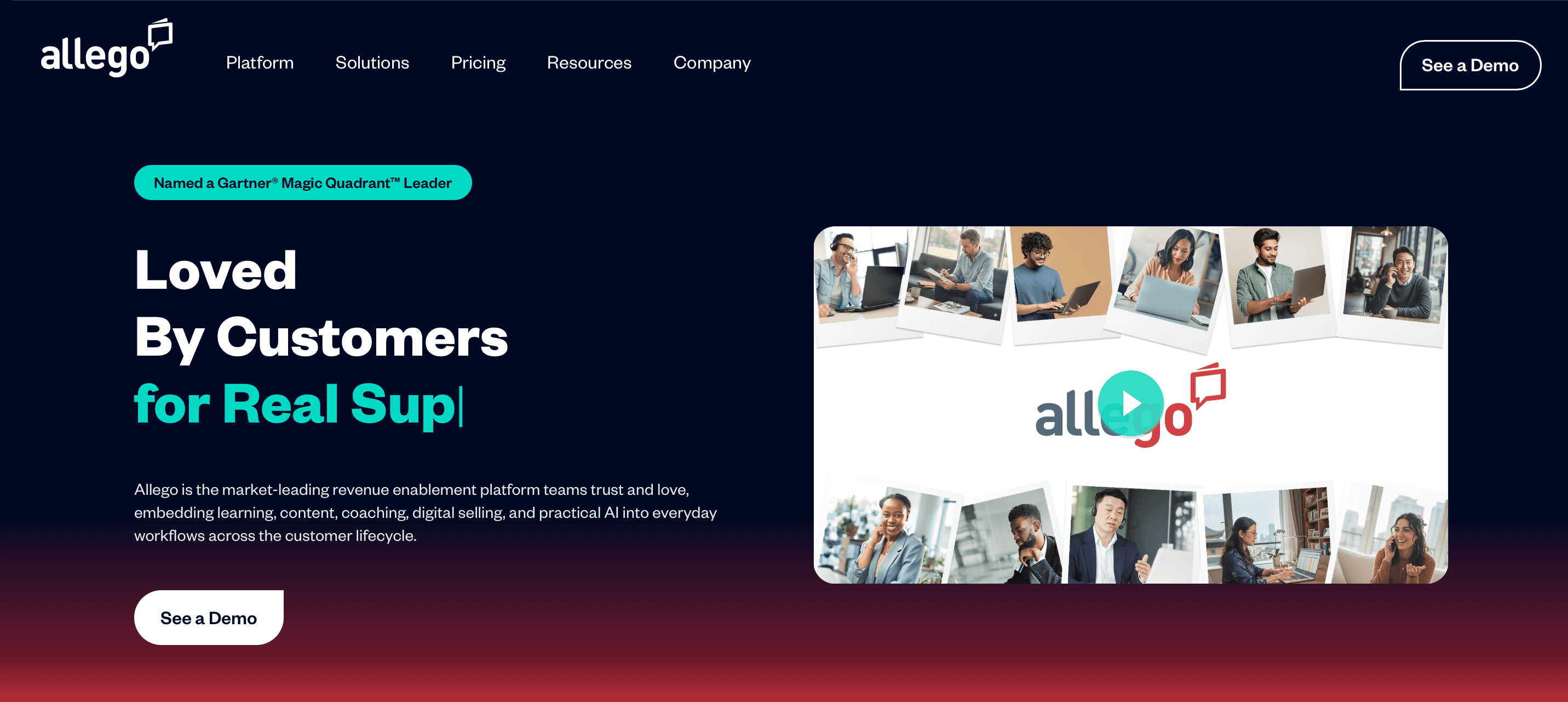
Allego is a revenue enablement platform that consolidates sales content management, AI coaching, conversation intelligence, and digital sales rooms into a single system.
Standout features
- Live Dialog Simulator and AI role play allows reps to practice against a lifelike AI avatar that adapts its responses dynamically based on how the seller engages.
- Flags at-risk opportunities and surfaces recommended next actions directly in the rep's existing workflow.
- Records, transcribes, and analyzes sales calls with domain-aware intelligence built for compliance-sensitive environments.
Pros
Per user reviews, Allego outperforms Seismic in a number of areas, including:
- Quality of support
- Product direction
- Content management and optimization
- Video emails
- Digital sales rooms
Cons
Some of the common downsides of Allego cited by users include:
- Steep learning curve for admins
- Limited customization options
- Integration challenges
- Extensive feature set, which can be overwhelming
- High pricing when compared to other sales enablement platforms like Seismic
📌 Deep Dive: Mindtickle vs Allego Comparison
5. Bigtincan (now Showpad)
G2 rating: 4.4 out of 5
Price: Custom pricing.
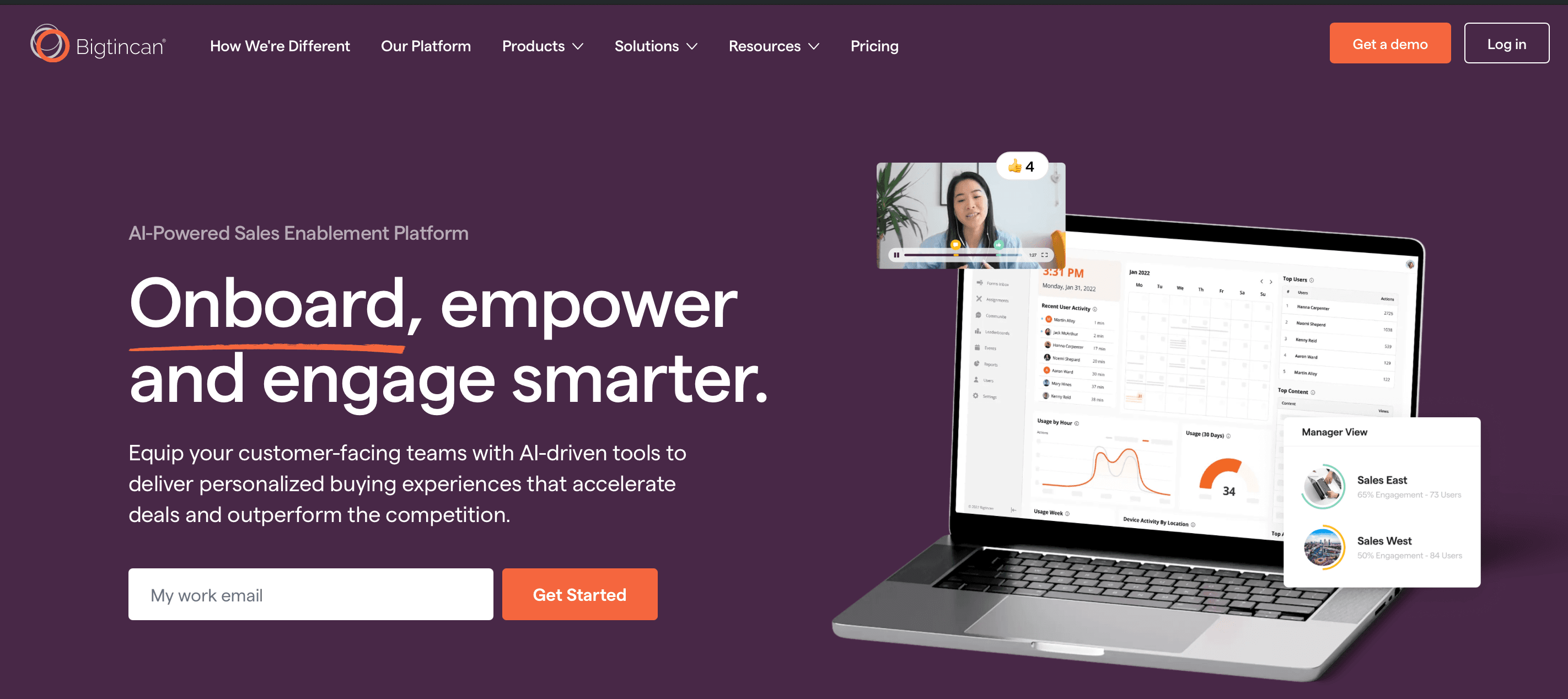
If you are considering Bigtincan as a Seismic alternative in 2026, here is the most important thing to know upfront: Bigtincan no longer exists as an independent platform. In April 2025, private equity firm Vector Capital acquired Bigtincan, then completed its acquisition of Showpad in October 2025.What Bigtincan specifically brought to the combined entity was its strength in sales readiness, training automation, and AI-powered content delivery — capabilities that Showpad's content management heritage did not previously cover in depth. That combination is now Showpad's core differentiation argument against Seismic.
💡 Do you know
Bigtincan-Showpad merger is the third significant consolidation event in the revenue enablement market in less than 12 months. Salesloft (also listed below) merged with Clari. Seismic announced its merger with Highspot. And Bigtincan merged with Showpad. The pattern matters for any buyer evaluating these platforms, because consolidation under private equity ownership consistently introduces the same set of risks: pricing pressure at renewal, slower product innovation during integration, and roadmap uncertainty while two engineering teams become one.
Standout features
- Supports AR, VR, and 3D product demonstrations for field reps selling complex or physical products. Useful for industries where static content does not adequately represent what is being sold.
- Customizable dashboards that combine content engagement, readiness, and CRM data.
- Native offline capability for field teams operating without reliable connectivity.
Pros
There are certain factors where Bigtincan may outshine Seismic, including:
- Real-time coaching
- Better mobile experience
- Flexible content creation and customization tools
- Simple implementation process
- AI-powered content recommendations
Cons
Bigtincan also has some notable downsides, especially when compared to Seismic.
- Less intuitive platform
- Difficult to navigate, especially for new users, which can hinder adoption
- Less comprehensive sales content management tools
- Training and enablement tools aren't as robust as Seismic's offerings
- Less advanced analytics tools, especially in terms of content use and sales performance
- Integrates with fewer technologies than Seismic
6. Gong
G2 rating: 4.8 out of 5
Price: Custom pricing. No public rates.
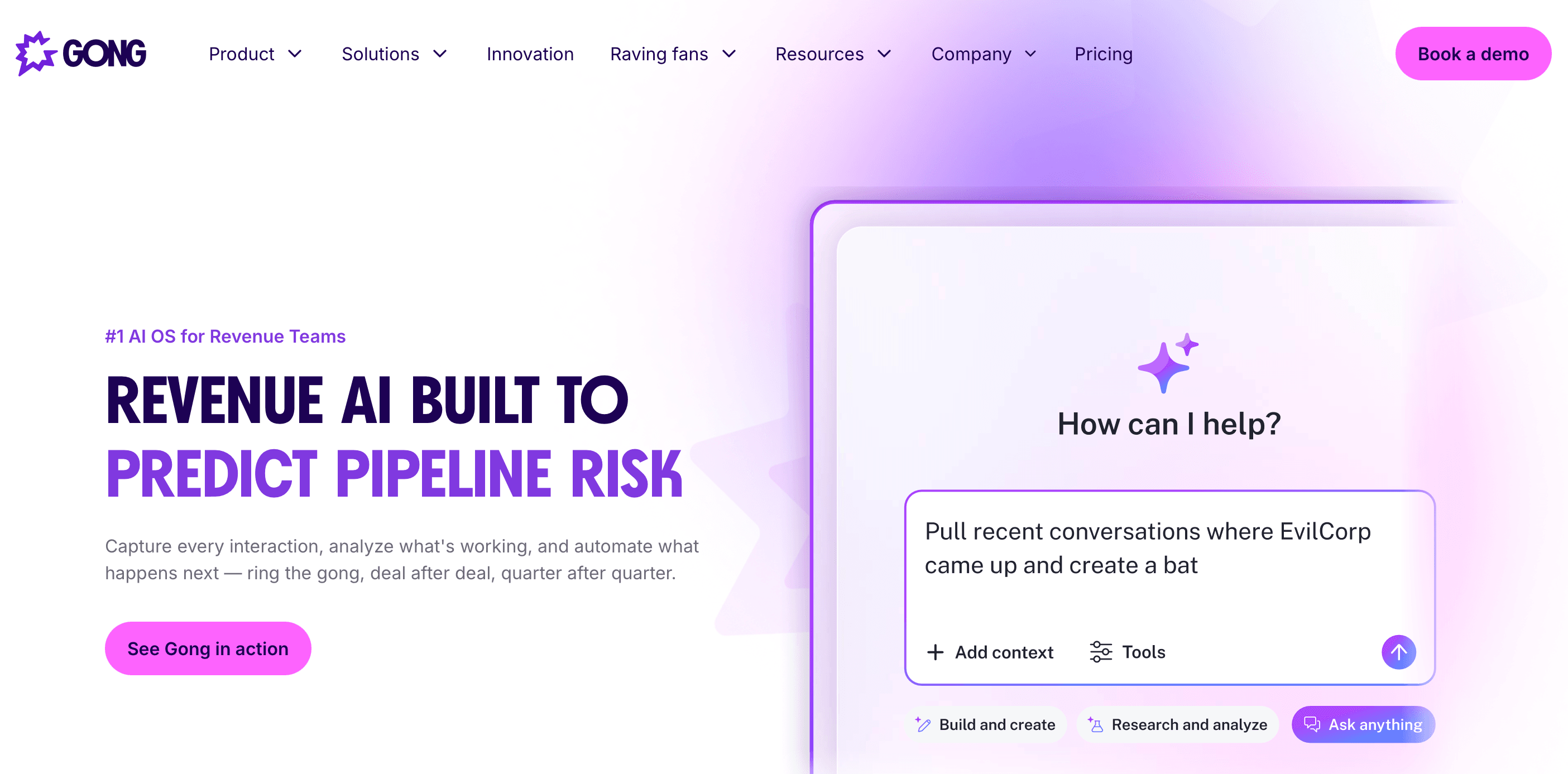
Before evaluating Gong as a Seismic alternative, it helps to understand what it is and what it is not. Gong was built as a conversation intelligence and revenue intelligence platform, and not a sales content management or rep readiness tool. It records, transcribes, and analyzes customer interactions across calls, emails, and meetings, turning that data into pipeline visibility, deal intelligence, and coaching signals.
✅ Quick tip: If Seismic's gap for your team is primarily content management, Gong does not fill it. If the gap is visibility into what is happening in live deals and whether your reps are executing effectively, Gong is a more relevant conversation.
Standout features
- Powerful conversation capabilities, which leverage calls, emails, and meetings to deliver insights to improve sales conversations.
- Conversational AI that allows revenue teams to ask questions about customer calls and deals and receive answers grounded in actual conversation data rather than manual inputs.
- Revenue intelligence tools provide insight into deal progression and pipeline health, which helps sales teams more accurately predict outcomes.
Pros
Gong offers some advantages over Seismic, including:
- Ease of setup
- Ease of use
- More robust conversation intelligence tools
- More robust revenue intelligence tools
Cons
Per user feedback, there are certain areas where Gong may fall short – especially when compared to Seismic. Some of those areas include:
- Integration set-up can be complex
- No dedicated tools for building and managing sales playbooks
- Limited content management capabilities
- Overall, a less comprehensive sales enablement solution than Seismic
7. Paperflite
G2 rating: 4.7 out of 5
Price: Starts at $50 per user per month. Enterprise pricing is available on request. One of the few platforms on this list with published, transparent pricing tiers.
Founded in 2017, Paperflite has grown from a content distribution tool into a platform that now includes AI-powered search, personalized microsites, digital sales rooms, deal intelligence, and an AI coaching module called Heysales. That expansion reflects an attempt to move up the enablement stack, though buyers evaluating the coaching and readiness capabilities specifically should ask how mature those features are relative to the platform's core content strengths.
Standout features
- Centralizes sales and marketing content with an AI search layer that surfaces relevant assets based on deal context.
- Notifies reps when a prospect opens shared content, tracks time spent on individual assets, and shows the path a buyer took through a microsite.
- Shows which assets influence deal progression and which do not, giving marketing teams evidence-based input on what to build, update, or retire.
Pros
Paperflite offers several advantages over Seismic, including:
- Ease of setup and use
- Quality of ongoing support
- A more simple, user-friendly interface
- Robust content sharing and collaboration tools
- A more cost effective option for those working with smaller budgets
Cons
Paperflite also has some significant downsides, especially when compared to Seismic. Some of those downsides include:
- Less extensive sales enablement capabilities than Seismic
- Less refined user interface
- Layout issues
- Fewer integrations, which can be especially problematic for businesses with larger tech stacks
8. Salesloft
G2 rating: 4.5 out of 5
Price: Custom pricing. No public rates.
Salesloft was not built to do what Seismic does. Its core identity is sales engagement, helping reps execute outreach at scale through structured cadences across email, phone, and LinkedIn, and tracking buyer interactions through the sales cycle. If the gap you are trying to close is content management, rep readiness, or structured onboarding, Salesloft addresses a different problem.
💡 Do you know
Clari and Salesloft announced a definitive merger agreement in August 2025 and the combined company now positions itself as a Predictive Revenue System. Forrester specifically flagged the merger as raising "more questions than answers" from a product standpoint, noting substantial technology overlap and a lengthy integration timeline. The combined company's own customer FAQ acknowledged that full platform unification would happen "over the coming years" — which is useful context for any buyer considering a multi-year contract today.
Standout features
- Multi-step outreach sequences combining email, calls, LinkedIn touches, and manual tasks with branching logic based on prospect behavior.
- Records and transcribes sales calls, identifies key moments including pricing discussions, competitor mentions, and next steps, and surfaces coaching signals for managers.
- Assigns deal health scores based on buyer engagement signals across email, calls, and meetings, helping reps prioritize follow-up on opportunities with genuine momentum.
Pros
According to feedback from users, Salesloft outperforms Seismic in a number of different areas, including:
- Sales engagement features
- Revenue intelligence tools
- Outbound call tracking
- Email tracking
- Personalized outreach
- Workflow integrations
Cons
The biggest downside of Salesloft is that it isn't a traditional sales enablement platform. That means organizations would still need to invest in a separate, dedicated sales enablement platform.
9. Saleshood
G2 rating: 4.6 out of 5
Price: Published and tiered. Essential plan starts at $40 per user per month
SalesHood covers training and onboarding, content management, sales playbooks, AI coaching, and digital sales rooms in a single system. It is a meaningful option for high-growth teams that need enablement up and running quickly without the implementation overhead and timeline that enterprise platforms typically require.
Standout features
- Peer-to-peer learning tools allow sellers to easily share best practices and learn from others within the organization.
- Just-in-time guidance on what to say, what to do, and what to share at each deal stage.
- Branded buyer environments with shared next steps and timelines that keep both sides accountable through the sales cycle.
Pros
Per user feedback, SalesHood often outranks Seismic on factors including:
- Ease of setup
- Sales training and onboarding features
- Digital sales rooms
- Sales coaching features
Cons
Users cite downsides of the SalesHood platform related to factors including:
- Limited customization options
- A steep learning curve, which can hinder adoption
- Challenges with initially setting up integrations
- High cost compared to other options for small to medium sized businesses
- Inefficient search functionality
- Navigation difficulty
What's next?
Eight platforms. Three ongoing mergers. One market in the middle of redefining itself.
If this list has done its job, you now have a clearer picture of what each alternative actually does (and more importantly, what it does not do).
The question worth sitting with before you shortlist is this: are you replacing Seismic with something that does what Seismic does better, or are you replacing it with something that solves a problem Seismic was never really built to address?
For most teams re-evaluating Seismic in 2026, the honest answer is the second one. Seismic's strength has always been content management at scale. What it has never prioritized is the rep — how ready they are, how consistently they execute, how quickly they ramp, and whether the enablement investment is actually moving the needle on revenue. Those are the gaps that keep showing up in the friction points documented across this guide.
Mindtickle was designed specifically to address these shortcomings.
A focused 30-minute discussion is the most efficient way to experience Mindtickle's capabilities firsthand and determine its fit for your organization's priorities.
FAQs

Subscribe to the blog
Get the latest sales enablement tips, guides, and industry best practices delivered to your inbox. Unsubscribe anytime.