







By now, most B2B organizations understand the importance of sales enablement. In fact, recent research found that sales enablement has become the most popular strategy for driving revenue growth.
But simply equipping your teams with training, tools, and content isn’t enough. You must also consistently measure the impact of your efforts. Otherwise, there’s a good chance you’re wasting time and resources on programs that aren’t delivering results.
Tracking the right sales enablement KPIs gives you clear insight into what’s working, what’s not, and where there are opportunities to optimize programs and increase impact.
But which sales enablement KPIs do you need to be tracking?
In this guide, we’ll explore everything you need to know about sales enablement KPIs, including:
- What they are
- Why they matter
- The key metrics you should start tracking today to improve sales performance and prove ROI
What are sales enablement KPIs?
Key performance indicators—or KPIs for short—are metrics used to measure performance. Tracking KPIs helps businesses understand whether they’re on track to meet their goals.
Sales enablement KPIs are key performance indicators that gauge sales productivity and help revenue teams understand how (and whether) sales enablement programs and initiatives are helping them meet their sales enablement goals.
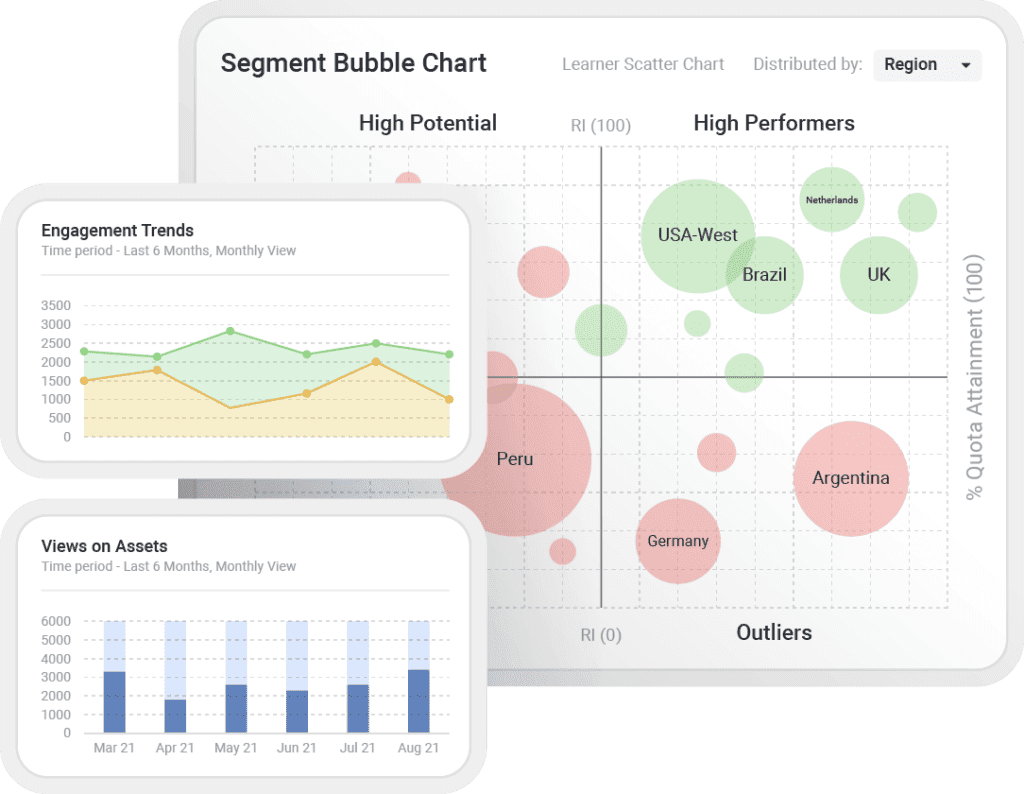
By leveraging sales enablement analytics software, revenue teams can determine how well their enablement programs empower sales reps to effectively and efficiently engage with buyers and close more deals.
Why are sales enablement KPIs important?
Tracking KPIs is a crucial component of any business strategy. Sales enablement is no exception.
If you don’t track sales enablement metrics, it’s impossible to determine how (or whether) your sales enablement efforts are improving business outcomes and delivering ROI for your organization.
In the best of times, businesses aim to invest in programs and initiatives with the biggest impact. This is especially true in today’s uncertain economy when many organizations face flat (or even reduced) budgets.
Tracking sales enablement KPIs is key to demonstrating the value sales enablement delivers to the business. When you can prove impact, it’s much easier to maintain the budget and resources you have and potentially secure additional budget and resources.
Monitoring KPIs also helps you understand where there are opportunities for improvement. Then, you can make data-driven optimizations to improve your sales enablement programs’ effectiveness and sales rep performance.
Why you need to track sales enablement KPIs
Tracking sales enablement KPIs is a critical step in any sales enablement program, and it’s well worth the effort. Organizations that regularly track KPIs experience some significant benefits. Let’s look at what regular tracking can do for your business.
Improve cross-functional alignment
Modern B2B customers expect excellent, seamless experiences across the purchase journey. Multiple teams, including sales, marketing, and customer success, play a role in delivering these experiences.
Often, these teams work in silos. This results in disjointed buying and selling journeys.
For example, a marketing team may build new campaigns that increase leads. While their campaigns generate a high volume of leads, the leads aren’t high quality. Therefore, sales reps waste their time on leads that’ll never convert.
Establishing sales enablement KPIs is key to ensuring all teams understand sales enablement goals and their role in achieving those goals. When teams are aligned, outcomes improve.
Properly allocate enablement resources
If you’re not tracking sales enablement KPIs, it’s impossible to know what kinds of sales enablement programs and initiatives you need to build. As such, you may scramble to build many different programs and initiatives and hope that something works.
You can identify the most effective ways to support your revenue teams when tracking the right metrics. Then, you can allocate your enablement resources appropriately.
Optimize your sales enablement strategy
Regularly tracking sales enablement KPIs helps you understand if you’re on track to meet your sales enablement objectives. It can also help you identify where there are areas for improvement. Then, you can make data-based optimizations to your sales enablement strategy and programs to improve ROI.
Deliver data-driven training and coaching
Each sales rep has unique strengths and weaknesses. Delivering generic sales enablement to every member of the team isn’t an effective approach.
But this one-size-fits-all approach is more common than we’d like to think. Research found that only 40% of C-level executives can identify sales rep strengths and weaknesses for customized training.
Monitoring sales enablement KPIs provides insight on overall sales performance as well as the performance of specific teams. You can also drill down further to understand the strengths and weaknesses of each sales rep. Armed with these insights, sales enablement teams can deliver targeted training and coaching that address the needs of each seller. That way, every sales team member will have what they need to be effective and efficient in their roles, and they won’t waste their time on irrelevant training and coaching.
Increase the effectiveness of sales content
The right sales content is key to closing deals, but certain types of content are more effective than others.
When you regularly track sales enablement KPIs, you can understand how sales reps and prospects use sales content and how it’s influencing sales outcomes. You can use those insights to optimize your content strategy properly. For example, you can invest more in the types of content tied to closed won deals, and you can eliminate unused assets on the shelf.
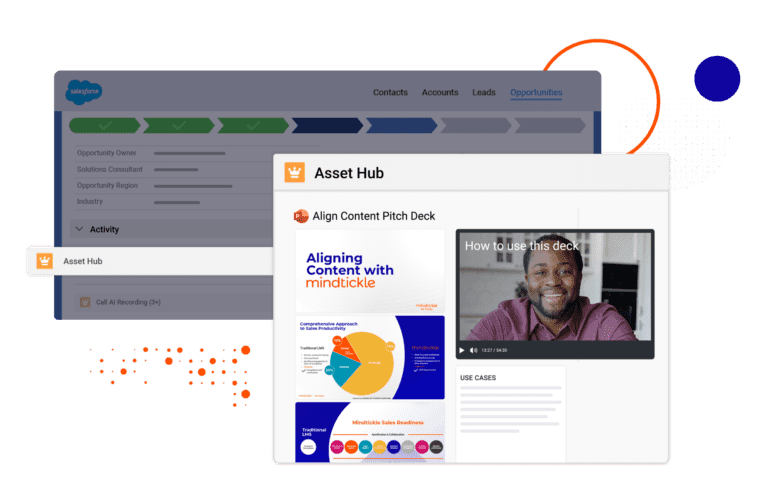
Then, you can use a sales content management solution to help sales reps find the right content for any sales scenario.
Optimize the sales cycle
The shorter the sales cycle, the faster your business can make money. Monitoring sales enablement metrics provides insight into where sellers are having problems. Revenue teams can then work to provide the tools, training, and resources to help sales reps overcome their challenges.
What sales enablement KPIs do you need to measure?
Now that we’ve explained sales enablement KPIs and why it’s important to monitor them, you may be wondering which specific metrics you need to track.
There is no one-size-fits-all answer. Instead, it’s important to determine which sales enablement KPIs are appropriate for your organization.
However, some common examples of sales enablement KPIs include:
Qualitative vs quantitative sales enablement KPIs?
So far, most of the sales enablement KPIs we’ve discussed have been quantitative. In other words, they’re data-driven, measurable metrics that help you understand the effectiveness and efficiency of your sales enablement programs.
Quantitative sales enablement KPIs tell you what’s happening. But they don’t always reveal why it’s happening. That’s where qualitative sales enablement KPIs come in.
Qualitative sales enablement KPIs capture insights that numbers alone can’t provide. Some examples include:
- Sales rep feedback
- Manager observations
- Sentiment around training and content
These insights help you understand how your sales enablement efforts are being received, whether reps feel prepared, and where there may be friction or gaps.
Relying on numbers alone can lead to blind spots. For example, data may show you that training completion rates are low. But without qualitative input, you won’t know why it’s so low, and you won’t know how to improve.
Be sure to track both qualitative and quantitative sales enablement KPIs. By pairing hard data with human insight, you’ll get a more complete view of sales enablement performance and you can make smarter decisions that’ll actually move the needle.
Get a full picture of sales enablement impact with Mindtickle
Sales enablement – when it’s done well – can have a significant impact on sales performance and revenue growth. But developing and delivering training, content, and resources and hoping for the best isn’t effective.
Instead, it’s imperative to measure sales enablement impact.
There’s no single metric that’ll tell you whether or not your sales enablement programs are making a difference. Instead, you must track a variety of qualitative and quantitative sales enablement KPIs, including the metrics we covered in this post.
Tracking and analyzing so many sales enablement KPIs can seem overwhelming. This is especially true if you’re using multiple, disparate tools to power your sales enablement programs.
Instead, consider trading point solutions for an integrated revenue enablement platform like Mindtickle.
Sales Enablement with Mindtickle
Ready to see why winning revenue teams depend on Mindtickle to build, deliver, and measure winning sales enablement programs that boost sales productivity and performance?
This post was originally published in June 2024 and was updated in April 2025.