






In the past, many B2B deals were struck face-to-face. Today, virtual selling has become the norm.
But the shift to virtual selling didn’t happen overnight. Over time, many consumers started embracing the convenience of browsing and buying online. Inevitably, the preference for digital interactions started to carry over to the business world.
Of course, the pandemic quickly accelerated the shift to virtual selling. And though the pandemic lockdowns are behind us, virtual selling is here to stay. In fact, Gartner predicts that by 2025, 80% of interactions between B2B buyers and sellers will occur via digital channels.
By 2025, Gartner predicts that
What is virtual selling?
Virtual selling, as you’ve probably guessed, is a sale completely orchestrated by technology. However, it’s not the same as simply making a sale online — so what is virtual sales and what does the term really mean?
The difference is that the former uses technology to complete a process designed for in-person interactions. The latter is built from the ground up to be an entirely virtual experience — one that reimagines sales rather than just repackaging it.
Part of this difference is due to evolution driven by B2C buying experiences and expectations. Virtual selling is a response to changing customer demands; for example, 56% of surveyed shoppers said they like the flexibility of shopping on their own schedule, while 50% noted they like the convenience of avoiding shopping trips.
These preferences carry over into the business world. That means B2B buyers prefer (and expect) virtual sales experiences to cater to their needs.
10 challenges of virtual selling
Although the right virtual selling software and skills can make digital interactions feel as real as face-to-face experiences, this method has certain drawbacks. Here are a few key examples:
Research shows challenges with virtual selling
[Source: The RAIN Group Virtual Selling Skills and Challenges Report]
Gaining a buyer's attention and keeping buyer engaged
91%
Changing buyer's point of view on what's possible or how to solve a problem
89%
Developing relationships with buyers virtually
88%
Connecting with buyers and building rapport
87%
Overcoming objections and dealing with resistence
87%
Collaborating and interacting with buyers virtually
82%
Prospecting and filling the pipeline virtually
81%
Making the transition to virtual selling
80%
Leading virtual needs discovery
80%
Educating buyers with new ideas and perspectives
79%
Best practices for virtual selling
While there are certainly challenges in virtual sales, there are also plenty of remote-selling best practices to set your reps up for success. And virtual selling does work. According to McKinsey research, 75% of decision-makers think virtual engagement serves buyers equally well or even better than the shift to remote work.
According to McKinsey
Here are some tips for making sure your virtual meetings are successful:
- Have a professional setup: Good lighting and technology can make a huge difference, especially when it comes to eliminating distractions. Blur your surroundings or use branded background images to keep the focus on you — and don’t forget to dress to impress.
- Take every virtual selling training opportunity: Virtual selling skills aren’t the same as in-person selling skills. Use training and coaching as a chance to learn more about the environment, customer expectations, best practices, and more.
- Share data-driven sales materials: Different kinds of media can help grab and keep a prospect’s attention. Use videos, infographics, product images, and any data-driven sales collateral you can offer virtually.
- Create follow-up and nurture strategies: Losing contact in the virtual world is easy. Make sure you follow up with prospects to stay top-of-mind — and always leverage nurture strategies to gradually reel them in over time.
4 best virtual selling tools
To capture all the benefits of virtual selling, you need a fully digitized environment, including sales rooms, enablement materials and more. Remember, you can’t just adapt existing sales techniques to the digital world; you have to completely reimagine them and build every step with technology in mind.
Here are some of the best virtual selling software options:
-

B2B database: Zoominfo
One of the biggest challenges of B2B sales is connecting with prospects. This can be even more difficult in the world of virtual selling. ZoomInfo is a business-to-business (B2B) tool that connects revenue teams to customers. With ZoomInfo, remote sellers can access the right data to identify which prospects are a good fit for their products and services.. In addition, ZoomInfo provides insights on the best way to connect with each prospect. This platform also unites sales, marketing, and sales operations so these teams can build and deliver seamless, engaging experiences, whether the prospect is interacting with a sales rep or navigating the purchase journey independently.
-

Video conferencing: Zoom
At the end of 2019, Zoom had 10 million daily meeting participants. By April 2020, that number exploded to 300 million. By now, the video conference platform is familiar to just about everyone. Zoom is flexible, easy to use and full of additional features such as email and calendar integration. With Zoom, sellers have the opportunity to engage with buyers face-to-face – regardless of geographic location. These face-to-face interactions help sellers build trust.
-

Document sharing: Google Drive
Virtual selling involves the exchange of different types of documents and information. It’s important to house these documents in a single repository so revenue teams can always find what they need, when they need it. If you’re looking for cloud storage and document sharing, Google Drive is one option.. Docs, Sheets, Slides, Forms — Google Drive enables you to share documents of all kinds and even integrates with the company’s email and conferencing offerings.
-

Virtual selling platform: Mindtickle
The above examples are great virtual selling tools, but you’d need to juggle more than one to succeed. This can lead to tool overload. Consider that 66% of sales reps are overwhelmed by the number of tools they’re expected to use.
Mindtickle is an integrated platform that eliminates jumping back and forth between different tools.
With Mindtickle, all your sales and revenue activities are together in one place. From sales onboarding and virtual selling training to forecasting and analytics, you’ll have access to a full lineup of solutions. This enables all your teams to communicate and collaborate in a shared digital environment, allowing you to build digitally native processes tailored to your virtual selling best practices.
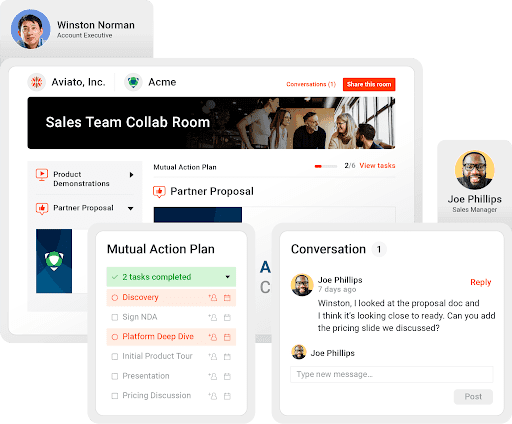
In addition, Mindtickle incorporates digital sales rooms, which are online portals where buyers and sellers can communicate, share content, and collaborate on deals – virtually. Sellers can also see how buyers engage in the digital sales room, which can help them adapt their strategy and improve deal outcomes.
Future trends in virtual selling
As more companies discover the benefits of virtual selling, the platforms necessary to enable it, and the skills that make it more profitable, the environment will continue to shift. Trends will likely include:
- Personalization and customization: To overcome the inherent limitations of virtual selling, reps will find new ways to personalize interactions and build sales around customized digital experiences. Marketing and sales teams will likely need to keep conversations going across multiple platforms. For example, a prospect who reaches out on social media will want continuity when switching to email or video chat.
- AI and automation: From workflow automation to AI sales assistants, new tools will make it even easier to build digital-first processes and eliminate manual tasks that slow down your reps’ days.
- Self-service: Self-service solutions enable prospects to do their research, essentially letting them be their own sales reps until they need more in-depth support. This saves time and money while boosting customer satisfaction.
How Mindtickle supports virtual selling
If you’re looking for a way to integrate virtual selling tools, skills, best practices, and whole teams, this is it.
Mindtickle doesn’t just put your processes in one place. It enables reps to do more and sell more by better utilizing digital tools, data, sales enablement materials, and even coaching opportunities. Top solutions include:
- Sales training: Individualized goals, AI-supported lessons, practice opportunities, and consistent reinforcement — that’s all part of Mindtickle sales training.
- Analytics: Role-based dashboards and customized insights help you track your teams’ progress and identify skills or knowledge gaps in real time.
- Conversation intelligence: Help your reps sharpen their virtual selling skills by tapping into sales conversations, identifying best practices, and supporting growth across your team.
See Mindtickle in Action
Enable your reps to do more and sell more by better utilizing digital tools, data, sales enablement materials, and coaching opportunities.
This post was originally published in June 2023, updated in December 2023, and again in September 2024.