



4 Common AI Sales Coaching Mistakes to Avoid in 2026



AI was supposed to make sales coaching easier. For many teams it added noise instead. By 2026, most sales organizations have stopped debating whether to use AI in their coaching, because they already do. The harder question is why some teams turn it into real behavior change while others generate a lot of activity that never reaches a live deal.
The gap usually comes down to how the program is built, not which tool sits inside it. The AI sales coaching mistakes below are the ones that quietly stall progress, and each has a clear correction that any enablement leader or frontline manager can apply this quarter.
Key takeaways
- Coach with AI, don't hand coaching to it. Use AI for scale and consistency; keep managers for the judgment and motivation only a person brings.
- Tie practice to real deals. Use call analysis to find the exact skill gap, then assign targeted practice to fix it.
- Measure readiness, not activity. Completed role plays show engagement; readiness tied to ramp, win rate, and deal velocity shows impact.
The most common AI sales coaching mistakes at a glance
The four AI sales coaching mistakes covered here are using AI to replace the manager rather than support them, coaching reps on random scenarios instead of the gaps showing up in real deals, pointing generic AI at coaching without the context to make it useful, and measuring activity instead of readiness. None of them are caused by the technology itself. Each comes from how the sales coaching program is designed around it, which is also why each one is fixable without buying anything new.
Mistake #1: Using AI to replace the manager instead of supporting them
The first mistake is standing up AI scoring and treating the score as the coaching, rather than as the input a manager coaches from. It is an easy trap to fall into, because AI finally makes it possible to review every call instead of a handful, and that jump in coverage looks like progress all by itself. Coverage is not the same as development, and this is where a lot of well-funded programs quietly stall.
What this looks like in practice
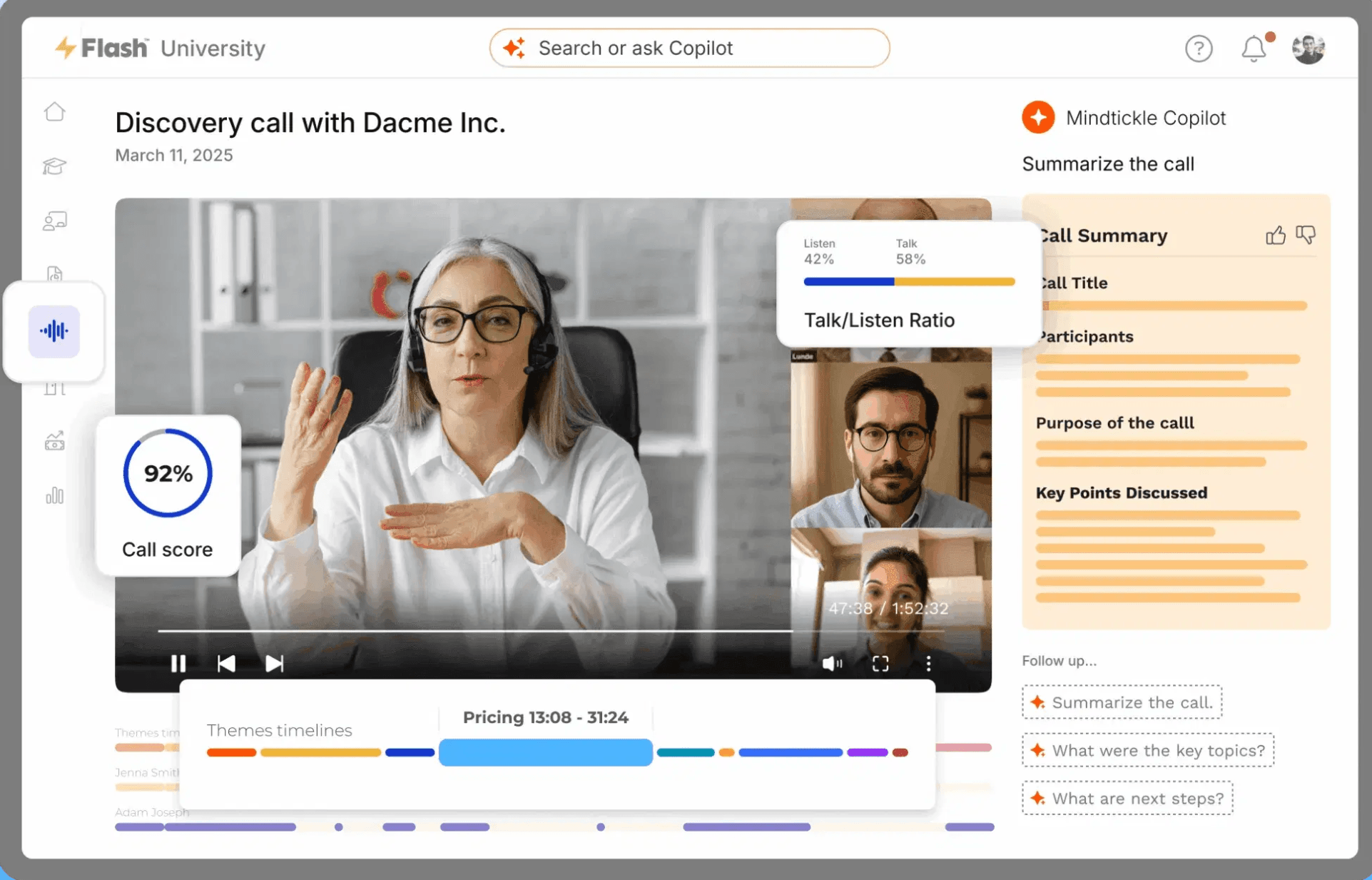
Conversation intelligence captures and scores every call automatically, so a rep finishes a discovery call and within minutes has an AI score against the rubric, a talk-to-listen ratio, a note that discovery ran thin, and a flag that they never confirmed a next step. All of it lands in the rep's dashboard, and that is where the workflow ends.
The frontline manager, who is already carrying multiple reps along with their own forecast and deal reviews, sees that scoring is now automatic and assumes coaching is handled. Leadership reads it the same way from the top, because the coverage number tells a flattering story. A team that used to review two or three calls per rep a quarter is now scoring every call a rep makes, and on a quarterly slide that looks like coaching coverage jumping from a sliver of calls to all of them.
The rep is left to self-correct from a number. They are told discovery was weak without being told which of their five open deals it puts at risk, what strong discovery actually sounds like on this product, or which single habit to fix first. So they either ignore the feedback, because no manager is expecting them to act on it, or they over-index on the wrong thing.
Also, the one-to-one that used to be where a manager watched a rep's calls across a month and said "you concede on price the moment procurement pushes back, so that is what we are drilling this week" has shrunk into a deal-status check-in. The same objections keep losing the same deals, ramp-up time does not shorten, and every activity metric on the dashboard still reads green.
What to do instead
Keep the AI doing what it is genuinely good at, which is scoring every call against a consistent rubric, tracking talk-to-listen and discovery quality across the whole team, and flagging the specific reps and calls that need a human to look closer. Then build the manager back in as the person who acts on that signal. In practice that means the manager reviews the AI's read before each one-to-one, picks the one or two patterns worth addressing for that rep, and turns them into a specific instruction and a round of deliberate practice.
The AI does the surfacing and saves the manager the hours they used to lose scrubbing through recordings, which is exactly what makes it realistic for one manager to coach multiple reps with the depth they could once give two or three. A manager still needs to read the pulse inside a stalled deal, catch a strong rep who is quietly disengaging, and decide which of ten things a rep could work on is the one that will actually move their number this quarter. Those are judgment calls, and no score makes them for you.
Cisco's Sales Superstar pitch contest
Cisco ran the largest pitch contest in its history, asking roughly 7,200 sellers to deliver a ten-minute pitch on its security portfolio. Scoring that volume by hand was the exact bottleneck described above, since managers faced an enormous number of pitches to review and the feedback came back slowly and unevenly. Cisco used Mindtickle Copilot to handle the first pass, giving every seller consistent, immediate feedback on tone, pacing, and content relevance.
What makes this relevant to the mistake is how Cisco used the time it freed up. Instead of letting the AI stand as the final verdict, the team paired its consistent scoring with the judgment of human leaders, a blend that Chris Jackson, a Distinguished Solutions Engineer at Cisco, describes as combining AI precision with human expertise.
Automating the first pass saved managers roughly 38 weeks of review time, more than 6,000 hours, and that time went back into higher-value coaching rather than being cut out of the process.
Cisco reported a 31% rise in average deal size from the program, and the sellers who scored highest on the pitch carried an average of $110,000 more in security bookings, a direct line from pitch quality to revenue.
Mistake #2: Coaching reps on random scenarios instead of real deal gaps
The second mistake is running AI sales role plays and practice drills that have no connection to what is actually going wrong in live conversations. The practice happens on schedule, and it rehearses the wrong things.
What this looks like in practice
A team rolls out a library of role play scenarios and asks every rep to work through the same set, regardless of where each seller is struggling. A rep who consistently loses deals at the pricing conversation spends time rehearsing a discovery script they already handle well. The practice volume looks healthy in the dashboard, and win rates stay flat, because reps never drilled the specific moment where their deals fall apart.
What to do instead
Start from evidence rather than assumption. Conversation intelligence lets you review what is really happening on calls and see the patterns that separate reps who advance deals from reps who stall. Once you can see the recurring gap, whether it is sales objection handling, multithreading, or the depth of discovery, you assign practice that targets that exact skill.
This connects two things most programs keep apart, the analysis of real calls and the practice meant to improve them. When that loop is closed, every role play a rep completes traces back to a weakness that showed up in an actual deal, and the practice finally starts to move the numbers leaders care about. Remember that practice without diagnosis is just activity. Practice aimed at a proven gap is coaching.
Mistake #3: Pointing generic AI at coaching without the context to make it useful
The third mistake became common in 2026 as teams began routing coaching through general purpose AI tools. These models produce fluent, confident advice, and a general model has no knowledge of your team, so that advice stays generic no matter how polished it sounds.
What this looks like in practice
A manager pastes a call transcript into a general AI assistant and asks it to critique the rep. The response reads well and carries an authoritative tone. It also has no idea what your product does, how your buyers actually object, what a strong discovery call looks like on your team, or how this particular rep performed last month.
The feedback comes back generic, sometimes wrong about your sales motion, and hard to trust at scale, because the model is reasoning from the public internet rather than from your reps and your deals.
What to do instead
Sales coaching is only as good as the context it draws on. AI that coaches well has to be grounded in your own behavioral data, meaning the record of how your reps actually sell, which calls convert, and which behaviors separate won deals from lost ones. That grounding is what turns a generic critique into feedback a rep can act on the same afternoon. Read: What is Behavior Intelligence — and Why is it the Future of Sales Coaching
When you evaluate AI for sales coaching, look past how articulate the output sounds and ask what it is reasoning from. Feedback built on a history of your team's real interactions will consistently beat feedback improvised from patterns scraped off the open web, and reps can feel that difference the first time they read it.
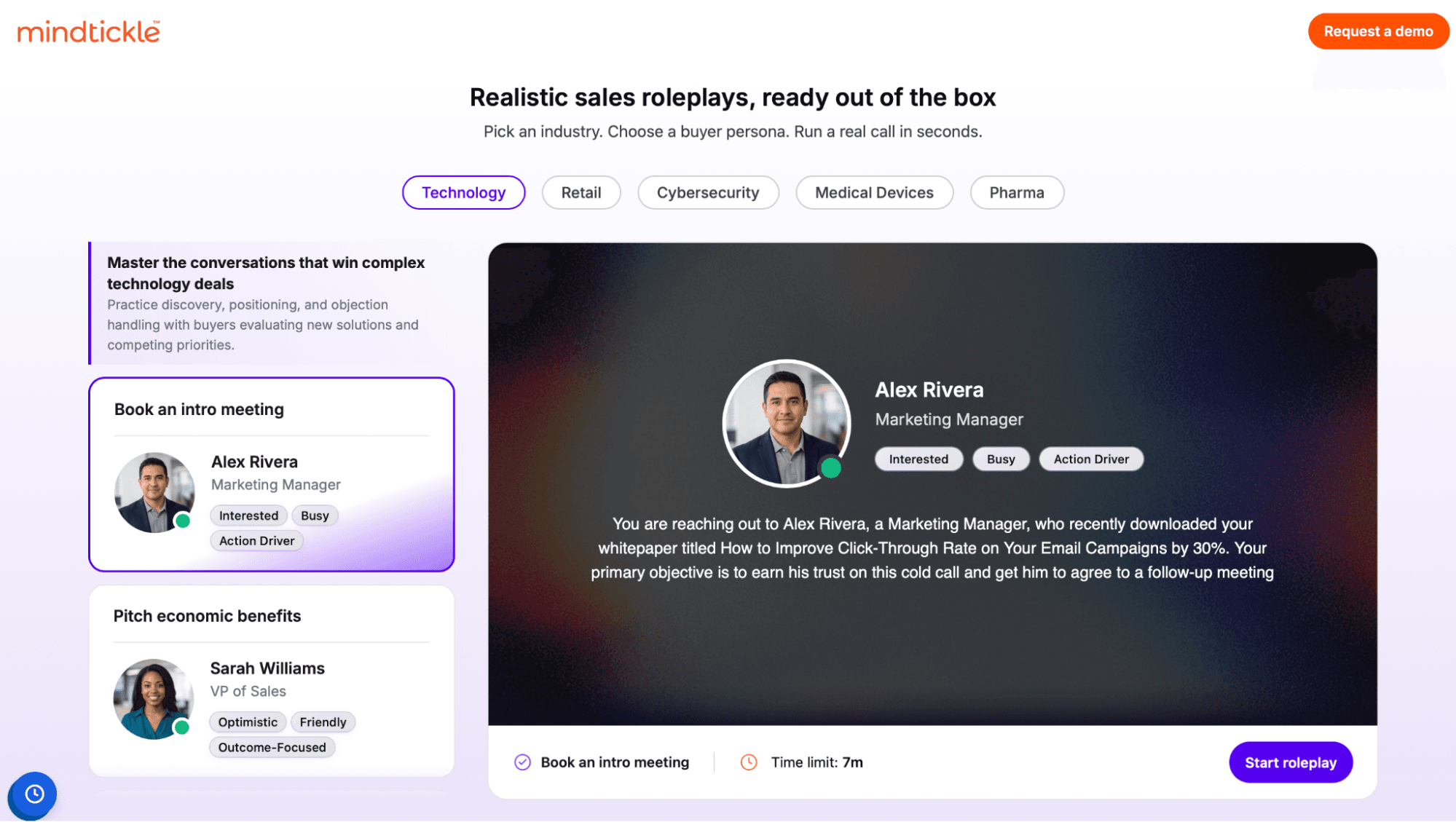
If you want a sense of what grounded, context-aware feedback looks like in a practice setting, you can see how an AI sales role play scores a live pitch and compare it against the generic critique a general model would return.
Mistake #4: Measuring activity instead of readiness
The fourth mistake is judging the coaching program by how much of it happened rather than by whether reps are actually prepared to sell. Activity is easy to count, which is exactly why it tends to become the default metric.
What this looks like in practice
The reporting centers on role plays completed, modules finished, and hours logged. Leadership sees high numbers and assumes the program is doing its job. None of those figures answer the question a revenue leader actually needs answered, which is whether a given rep is ready to handle the next deal in their sales pipeline. A team can look fully engaged on every activity metric and still walk into forecast calls underprepared for the conversations that decide the quarter.
What to do instead
Shift the measure from participation to sales readiness. Readiness ties coaching to whether a rep can demonstrate the specific skills a deal requires, and it connects those skills back to outcomes like ramp time, win rate, and deal velocity.
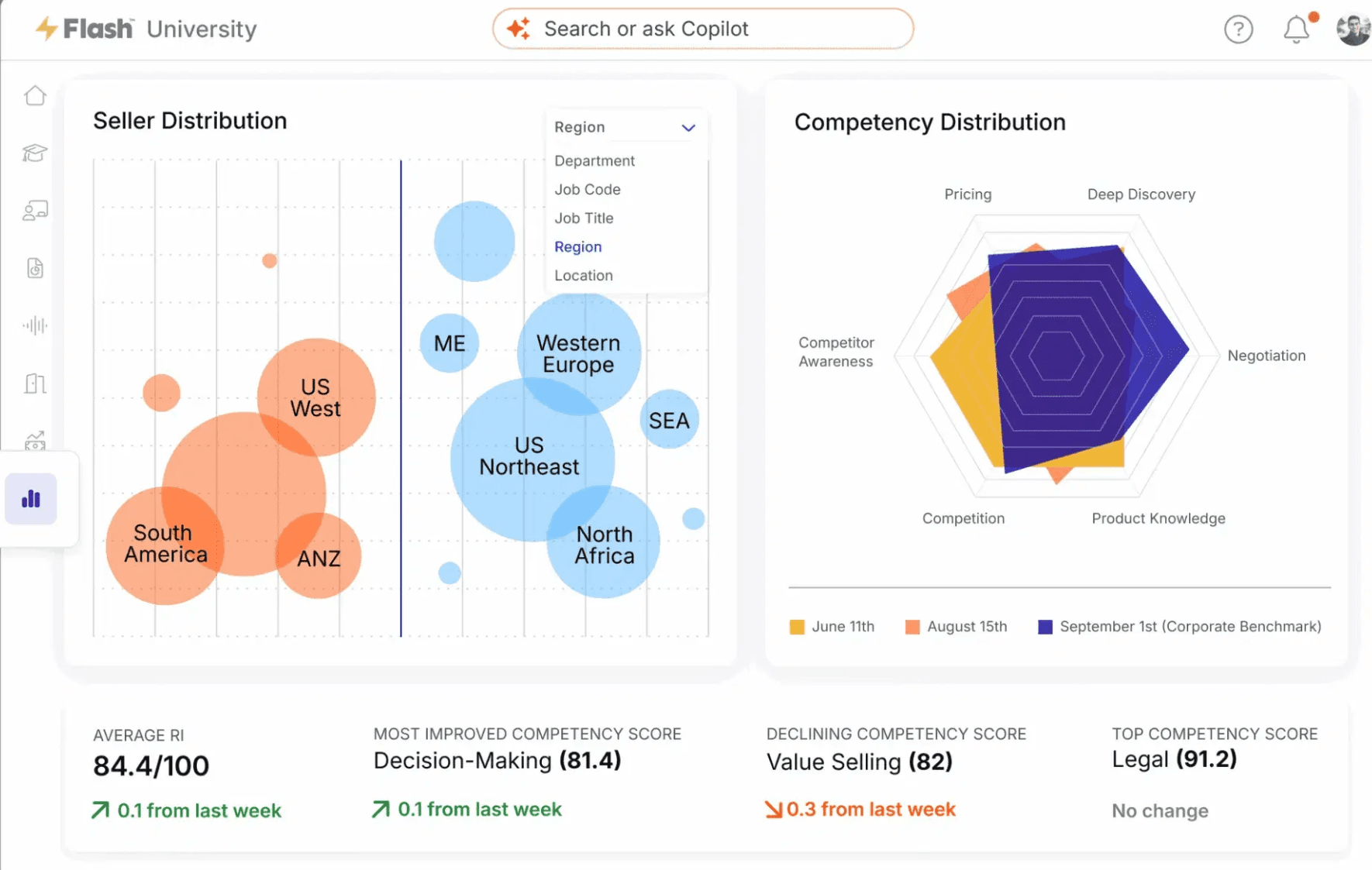
The practical test is simple to state. You should be able to answer whether your team is ready, show the evidence behind that answer, and prove the line between coaching and revenue. Operationally, this is the job a readiness index is built to do. It benchmarks each rep against a profile of the behaviors your top performers share, correlates those skills with CRM outcomes like quota attainment and win rate, and lets you track readiness by rep, team, or region instead of relying on a gut feel.
Mindtickle's Readiness Index is one example of this approach put into practice. When your metrics can do that, coaching stops being a program that reports completion and becomes a system you can point to when the number lands. That is the difference between knowing your reps were busy and knowing they were prepared.
Must Read: The 20+ Sales Coaching Metrics You Should Measure for Effective Skill Coaching
How to avoid these AI sales coaching mistakes
The through line across all four AI sales coaching mistakes is the same. The tool matters far less than the program built around it. AI that is grounded in real behavioral data, aimed at the gaps that show up in actual deals, paired with a manager rather than substituted for one, and measured against readiness instead of activity will outperform any standalone feature bolted onto a coaching process that was already loose.
For sales coaches, enablement leaders, and frontline managers, that is genuinely good news. Avoiding these mistakes is less about buying something new and more about tightening how your coaching connects analysis, practice, and results into a single loop you can see and improve over time. Start with the mistake that sounds most like your own team, correct that one first, and let the next one surface from there.
Frequently asked questions
About the Author
Lead Content Marketer
Jayadeep brings over a decade of experience in B2B content and product marketing, with expertise in editorial leadership, messaging strategy, and agency management.
He has built and scaled content operations, led agency partnerships, and collaborated across marketing, product, and demand generation teams to deliver integrated campaigns. His "process-first, execution-next" philosophy has made him a trusted resource at Mindtickle, where he helps shape content strategy, thought leadership programs, and flagship marketing initiatives.
Subscribe to the blog
Get the latest sales enablement tips, guides, and industry best practices delivered to your inbox. Unsubscribe anytime.