




The Complete Guide to Outbound Sales Strategy with AI


An outbound sales strategy with AI uses buyer signals and automation to decide who a rep should call, what to say, and when to follow up. It makes outreach relevant instead of just high in volume.
That precision matters because outbound has a trust problem. Buyers have sat through enough scripted cold calls to recognize a generic pitch before the rep finishes the first line. The moment they do, they stop listening. For years, teams tried to outrun that problem by adding more sequences and more dials. Adding volume to irrelevant outreach only scales the irrelevance.
AI is where that changes, but only when it targets the real issue. Most teams still use it to send the same pitch faster. Used well, it does the harder work. It sharpens targeting, personalizes at scale, and gives reps back the hours they lose to manual research. Those are the hours meant for selling.
Key Takeaways
- Relevance beats volume. An outbound sales strategy with AI works only when it's aimed at reaching the right accounts with the right message at the right moment, not at sending more.
- AI handles the load, reps keep the judgment. AI takes on the research, targeting, timing, and follow-up that used to eat a rep's day, while the rep owns the conversation and the relationship.
- The value runs across the whole cycle. AI earns its place at every stage, from prepping reps before a call to keeping them present in deals that increasingly happen without them.
- Measure outcomes, not activity. The teams that win judge AI by win rate and cycle time, not by how many calls or emails it generates.
What modern outbound strategy looks like
Modern outbound trades volume for relevance. Rather than measuring effort by calls dialed or emails sent, it targets the right accounts using buyer signals, tailors the message to each stakeholder, and reaches them inside an actual buying window.
That shift happened because the old model stopped producing. Calling more numbers from a script worked when replies were easy to earn and attention was cheaper to hold. Tracking activity was a fair proxy for results back then. Today a rep can dial 100 prospects and generate zero real interest, because buyers arrive better informed and one script can't speak to all of them.
💡 Do you know?
88% of buyers enter a sales conversation already understanding the solution they need, per Mindtickle's 2026 State of Agentic Revenue Enablement Report.
Buyer groups changed too. According to Forrester's The State of Business Buying, 2026, the average purchase decision now involves 13 internal stakeholders and nine external participants. A rep is usually in contact with only a few of them, often just the champion, so one strong call can't move the entire group.
Competition changed the math as well. Reaching a prospect went from a handful of channels to dozens, and every channel is crowded. A rep now competes with every other seller running the same play against the same list. That pressure pushed teams away from dialing through lists and toward tracking intent.
CRM systems now flag where a prospect sits in the pipeline, so a website visit can move someone onto a call list. Signal tracking surfaces the buyers most likely to be interested instead of treating the whole list as equal. The gap shows up on the call itself. A signal gets a rep in the door, and plenty of reps still arrive underprepared for the conversation that signal earned them, with outreach too generic to hold a buyer who already did their homework.
Read more: 8 Cold Calling Tips for Sellers and Sales Leaders
How AI changes each stage of the outbound sales process
Most AI in sales tools today is assistive. A rep asks for something, AI executes that one thing, and stops. Agentic AI for sales execution works differently. It notices changes worth acting on, decides to act, and carries out several steps toward a goal.
Here's how AI fits at each stage.
Stage 1: Rep readiness
Most sales coaching happens after a call has already gone wrong, once a manager finds time to review it. By then, the rep has had a few more live calls with no feedback, and the same gap shows up again. Closing that earlier means letting reps practice the specific conversation ahead of them, not a generic script, before they pick up the phone.
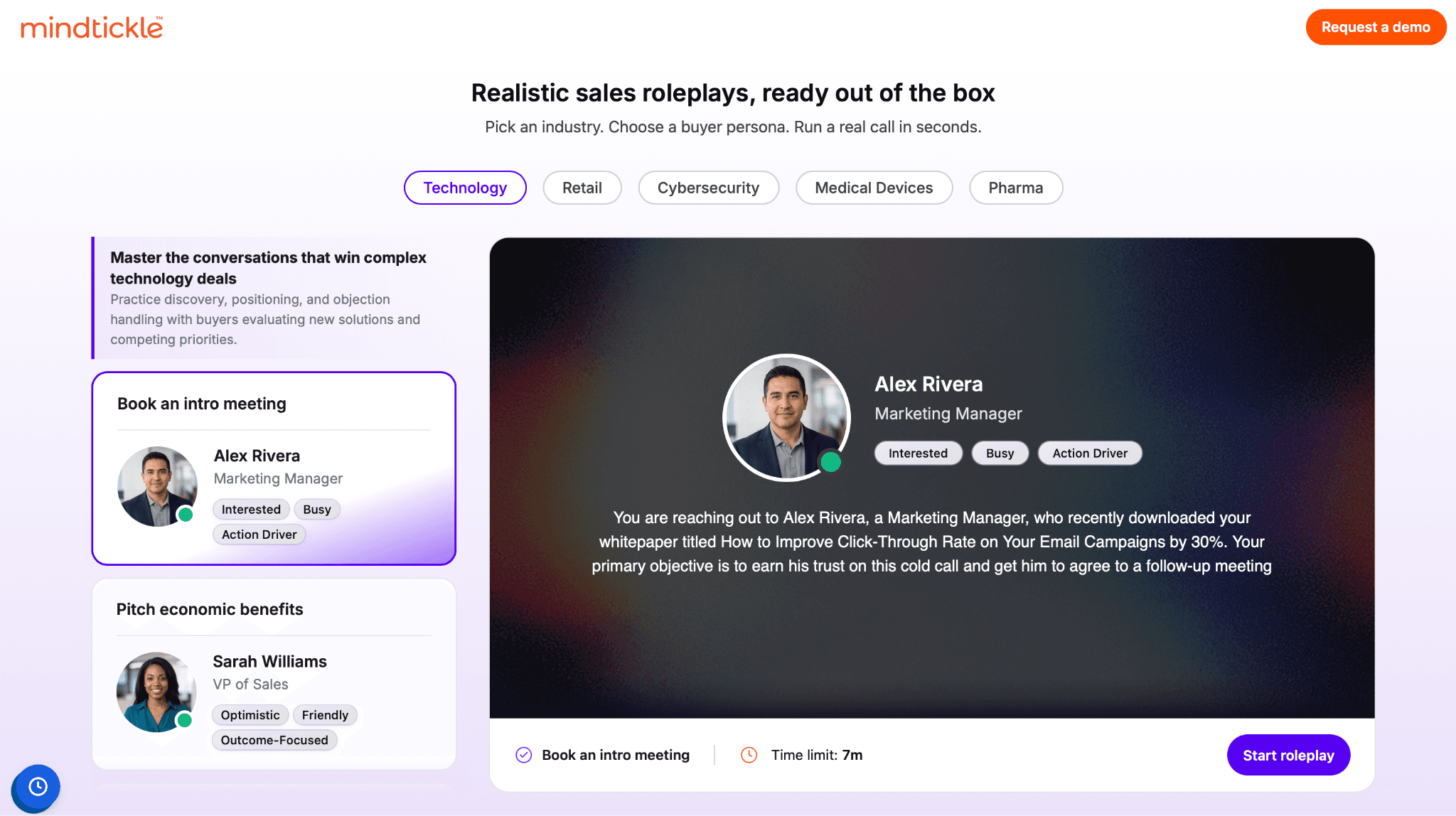
AI role play builds practice around the actual deal. A rep prepping for a renewal practices renewal objections, while a rep calling into a new industry practices those specific objections. Scoring comes back immediately, so a rep learns what to fix before the next call instead of weeks later in a one-on-one. Read: How to Master Objection Handling With AI Sales Role Play
🎯 Practice before the pressure
Knowing the pitch and delivering it under pressure are different skills, and most reps only practice the second one on live deals, where mistakes cost pipeline.
Mindtickle's AI Sales Role Play lets your reps rehearse the exact conversation ahead against an AI buyer that pushes back and scores them instantly, as many times as they need, before it ever counts. Because it's tied to coaching and readiness data, you can see whether practice actually changed live-call performance.
Stage 2: AI for outbound sales prospecting
AI scores accounts on behavior. It reads intent signals across web visits, content downloads, product research, and hiring activity, then ranks who is showing buying behavior right now. A rep opens the day with a prioritized list, and the accounts at the top earned their place through something they actually did.
This stage is where AI begins to act on its own. It watches for a signal, moves the account onto a call list, and re-ranks priority as fresh behavior comes in, all before a rep asks. The final cut still needs a human read, since a signal shows interest and interest is not the same as fit. The surfacing and ranking run continuously in the background.
Stage 3: Research and personalization
Once a rep knows who to call, the next job is knowing what to say. Manual research is where reps lose their mornings, digging through LinkedIn, earnings notes, news mentions, and old call records to find a reason the conversation matters to this particular buyer. Most reps do a version of it, few do it well, and almost none do it at scale.
AI compresses that research into seconds. It pulls the account's recent moves, the stakeholder's role and priorities, and the relationship history, then drafts a point of view the rep can build on. A message tied to a real trigger, a funding round, a leadership change, a new compliance requirement, reads as relevant because it is.
Personalization at scale stops being a tradeoff here. A rep can open dozens of conversations that each sound one-to-one, and the same intelligence keeps the follow-up as specific as the first touch.
📁 Where the content fits
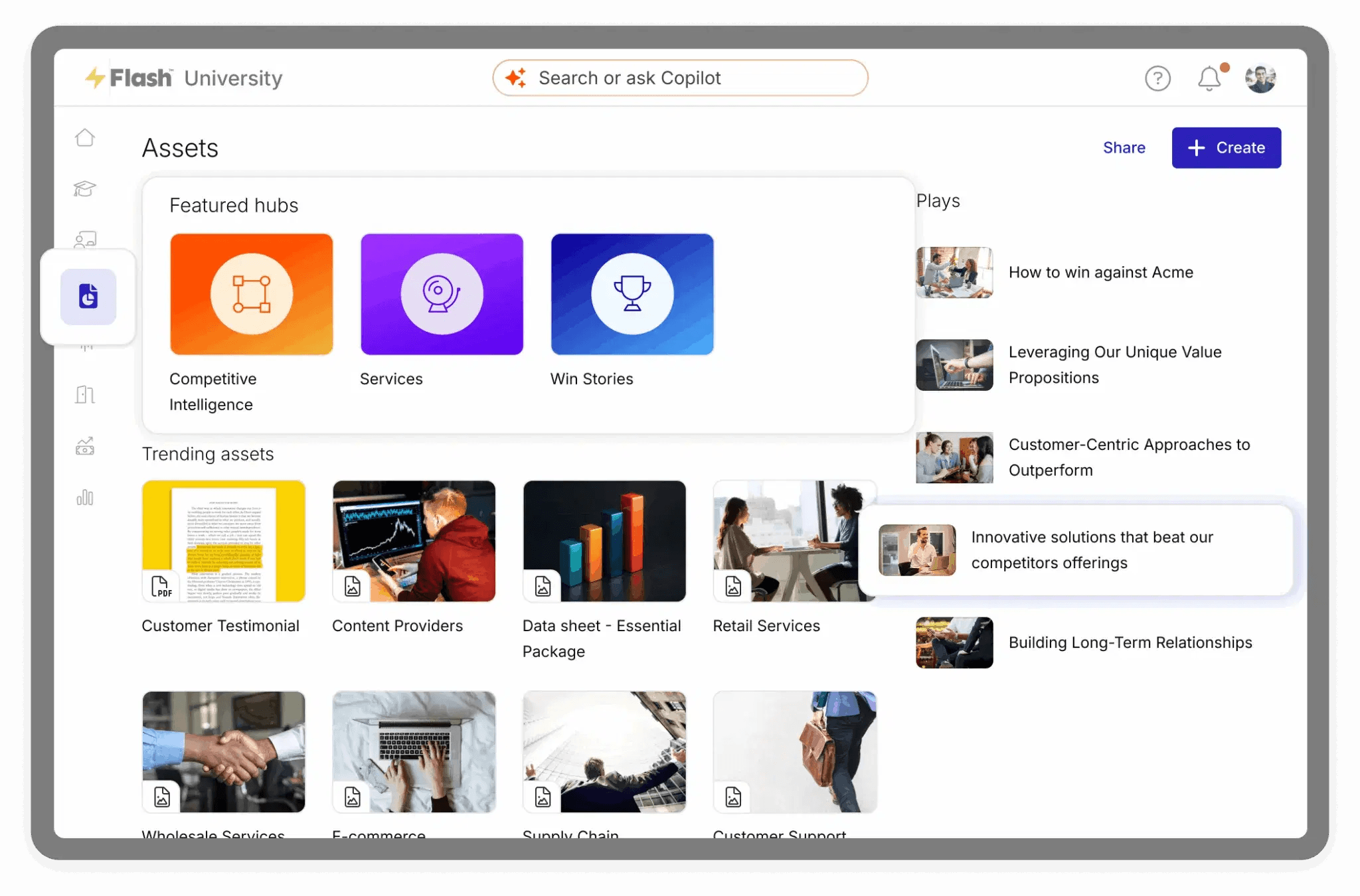
Personalized outreach only works if the rep can actually find the right asset for the moment, and most can't. A sales content management system closes that gap by surfacing content contextually, matched to the industry, persona, and deal stage in front of the rep, and then showing which assets actually influenced deals so the library keeps improving.
This is the layer Mindtickle's Sales Content Management handles inside the same platform where reps train and sell, serving the right content in the flow of work and tying engagement back to outcomes. On average, teams using it see content utilization rise 250%.
Stage 4: Outreach and sequencing
With a message ready, the question becomes how and when to reach each buyer. AI runs the sequencing a rep can't track by hand. It varies channel and cadence by how each contact responds, holds off when a buyer goes quiet, and moves faster when engagement picks up. Send times shift to when a given person actually opens things. The rep sets the strategy and the intent, and the system handles the mechanical timing across a full book of accounts.
This is another place where AI carries steps on its own. It registers an open, a reply, a click, or silence, and adjusts the next move without waiting for the rep to log in and decide. Reps stay on the conversations that are heating up while the routine follow-through runs itself. Read: How Agentic AI Is Changing Sales Enablement
Stage 5: Live conversation support
Everything upstream exists to earn the live conversation, and the live conversation is where most of it is won or lost. A rep juggling discovery, objections, competitive positioning, and next steps in real time can only hold so much in their head at once.
AI sits in the call as support the rep can lean on. It surfaces the relevant answer, the competitive counter, or the proof point the moment a topic comes up, so the rep isn't stalling to remember or promising to circle back on something they should have had ready. After the call, conversation intelligence captures what was said, flags the moments that mattered, and turns them into coaching signal and next steps.
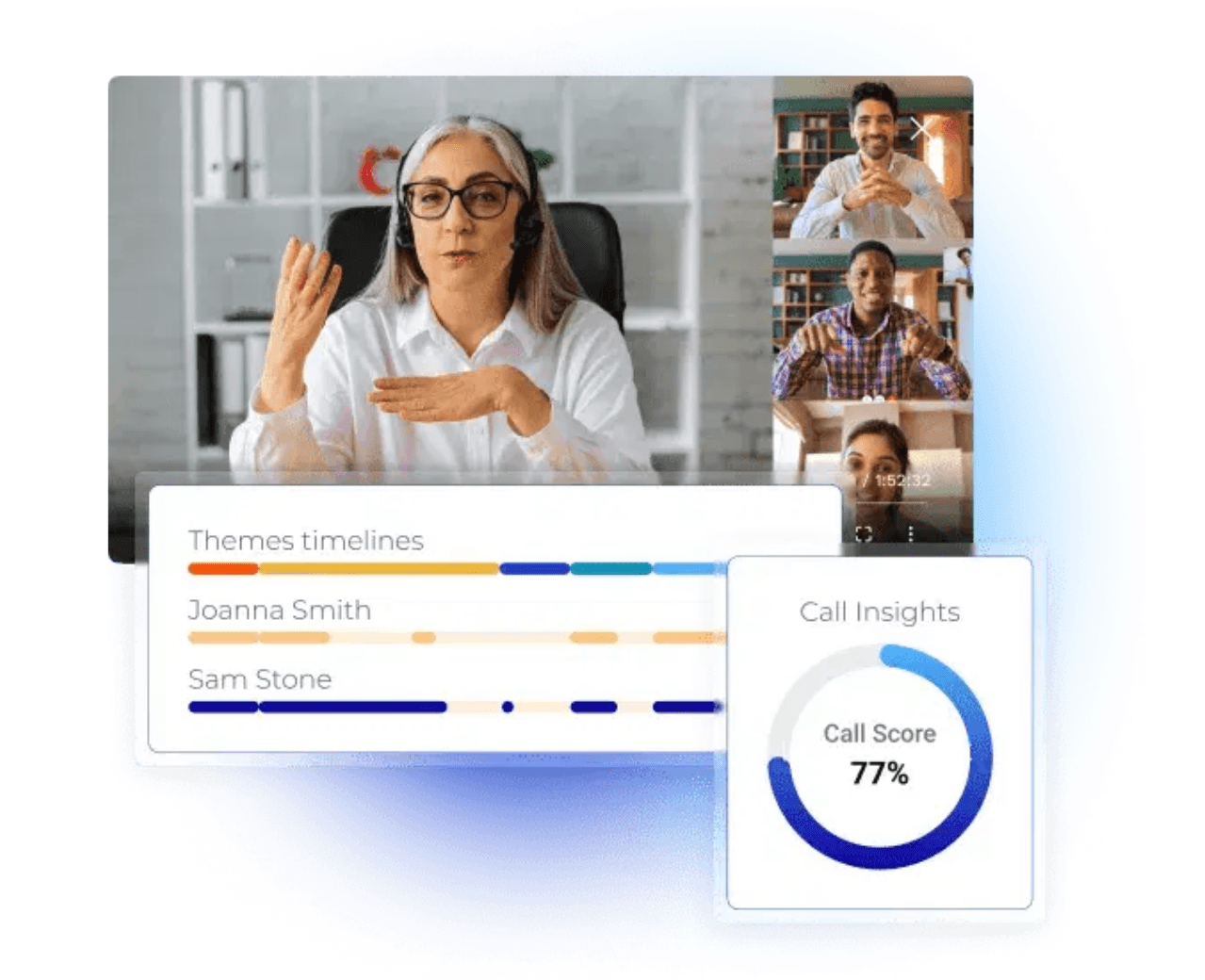
The value compounds across the team. Every recorded call becomes data on what actually works in live selling, which sharpens coaching, updates the scenarios reps rehearse, and feeds into how the next rep prepares. The loop that started at sales readiness closes here.
Read more: How to Choose a Conversation Intelligence Platform
Stage 6: Follow-up and deal progression
The stretch after the first meeting is where deals quietly die. A rep runs dozens of active opportunities at once, each with its own stakeholders, open questions, and next steps, and the admin of keeping all of it current is exactly the work that slips when the calendar fills up.
This is where AI assists the most. It helps with drafting CRM updates, building out the mutual action plan, and staging follow-up materials for the rep to approve before anything goes out. The routine keeps moving while the rep stays in control of what the buyer actually sees. That matters more as the buying group grows, because the deal is no longer one conversation with a champion. It's a dozen-plus stakeholders comparing notes in rooms the rep was never in, forwarding materials, and forming opinions between calls.
🏛️ Closing the gap between calls
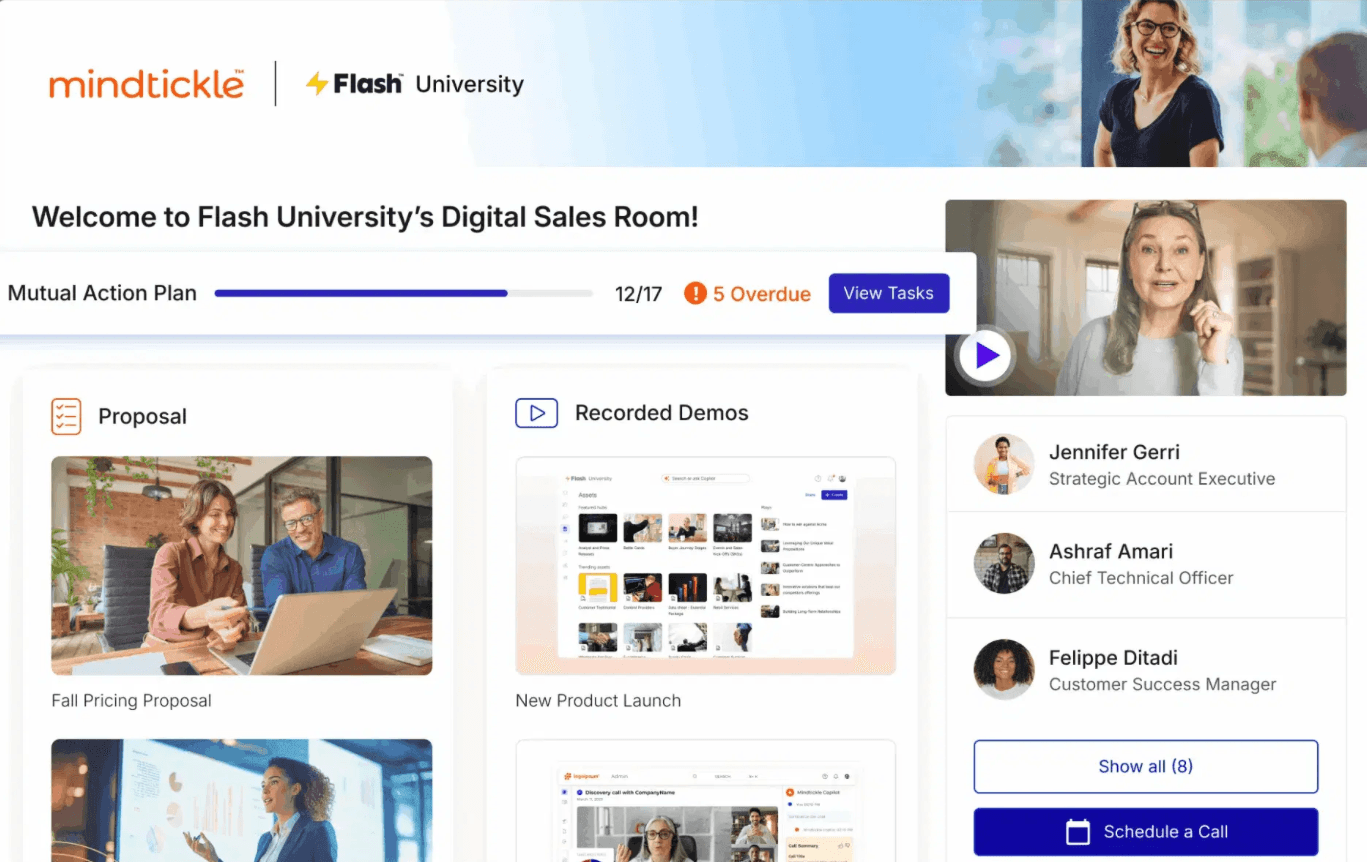
Most of a modern deal happens when the rep isn't there. A Digital Sales Room narrows that blind spot. It gives buyers and sellers one persistent, shared space where deal content, a mutual action plan, and every stakeholder live together through a single link, so the champion can pull in new decision-makers without the thread scattering. For the rep, the value is visibility: the room tracks who viewed what and where a deal is stalling, and surfaces it in time to act.
Mindtickle's Digital Sales Rooms run inside the same platform as a team's readiness, coaching, and conversation intelligence, so a buyer going quiet at the pricing stage can become a coaching trigger for the rep or a signal to build better pricing content, rather than a dead end in a dashboard.
💡 Do you know: Rooms tied to a mutual action plan draw about twice as many buyer visits as those without, per Mindtickle's 2026 State of Agentic Revenue Enablement Report.
B2B outbound sales best practices with AI
A few practices consistently separate teams getting measurable results from AI. Most are less about the technology than about how you deploy it.
- Augment the rep, don't replace them. Point AI at prep, research, and personalization, the work that eats a rep's morning, and keep a human on the judgment calls: reading a room, handling a stalled negotiation, deciding when to push. This isn't only about output quality. Reps disengage from tools that act without them, and adoption stalls the moment the floor senses AI is there to replace them rather than free them up. The teams that win treat AI as leverage for the rep, not a substitute for one. Read: The Future of Sales: AI Guided Selling Explained
- Trigger outreach on signals, not schedules. Base timing on what a buyer actually does, a pricing-page visit, a return to a piece of content, activity inside a deal room, instead of an arbitrary day-three, day-five cadence. Signal-based outreach reaches people while intent is live, which is the difference between a message that lands and one that gets archived. It also spares the rep from chasing accounts that have gone cold.
- Align the teams before you scale the tech. Outbound AI cuts across sales, RevOps, marketing, and enablement, and it breaks at the seams between them. Ops owns the data and CRM hygiene the system learns from. Marketing owns much of the content it personalizes. Enablement owns whether reps actually adopt it. Get those functions agreeing on goals, definitions, and ownership before rollout, because a tool bolted onto teams that aren't aligned amplifies the misalignment instead of fixing it.
- Govern your training data before you scale. AI learns from your CRM and past outreach, so audit what that history is actually teaching it first. Biased history in, biased outreach out. Check whose deals the data over-represents, which segments it ignores, and whether "what worked before" reflects a market that still exists. Clean the inputs on a small group, confirm the outputs hold up, then widen the rollout. Scaling first and auditing later just distributes the errors faster.
- Measure behavior change, not activity. The point of AI in outbound isn't more calls or more emails, the old volume trap in a new form. Tie it to leading indicators a frontline manager can act on, reply quality, meetings booked from targeted accounts, stage progression, and to the outcomes a revenue leader cares about, win rate and cycle time. If the only thing that moved is activity volume, the rollout hasn't earned its place yet.
Building an outbound sales strategy with AI that works
The core problem in outbound was always relevance. Buyers stopped responding because the outreach stopped being about them, and extra dialing never fixed a message that didn't fit. That's the lens for judging AI in outbound. It earns its place where it makes outreach more relevant: targeting the right accounts, preparing reps for the specific conversation ahead, timing the message to real intent, and keeping a rep present in deals that increasingly happen without them in the room. It's a poor investment where it only helps you send the same generic pitch faster.
The teams pulling ahead treat AI as leverage for the rep across the whole cycle, from readiness through follow-up, and hold it to one standard: whether behavior changed and outcomes improved, rather than whether activity simply went up. If you're getting started, pick the stage where your gap is widest, prove the impact on a small group, then expand. That approach outperforms a floor-wide rollout you can't measure.
One thing to weigh as you evaluate tools. Most of the value in this guide compounds when the pieces connect: readiness that learns from real calls, content that responds to buyer engagement, follow-up that reflects what was actually said in the conversation. Stitched together from separate point solutions, those handoffs are where signal quietly gets lost. That's the practical case for a connected revenue enablement platform over a stack of disconnected ones, and it's worth testing against your own tech stack before you commit.
FAQs
About the Author
Senior Product Marketing Manager
Poornima Mohandas is a business journalist turned product marketer with over two decades of professional experience. At Mindtickle, she handles go-to-market for the market leading, Training, Coaching, AI Role Play products, and runs the company’s competitive intel program. Her writings have been published in reputed trade publications like Mind the Product and the Product Marketing Alliance.

Subscribe to the blog
Get the latest sales enablement tips, guides, and industry best practices delivered to your inbox. Unsubscribe anytime.