







Sales content is an essential component of any sales enablement strategy. With the right sales content, sellers are better equipped to master key skills and engage buyers throughout the sales cycle.
Clearly, revenue leaders understand the importance of developing sales content. A recent analysis found that the average organization using Mindtickle published an average of 642 new assets each year.
The average organization publishes an average of
But creating sales content is only the first step. You must also ensure your sellers can easily find the right content at the right time. And you must have the data and analytics to understand how each piece of sales content is used and whether it’s impacting sales outcomes.
In other words, you need to embrace sales content management.
In this post, we’ll discuss what sales content management is and why it’s beneficial. We’ll also explore how the right tools and technology can help you build an effective sales content management strategy that empowers sellers to engage buyers throughout the sales cycle.
- What is sales content management?
- The importance of sales content management
- What are the benefits of sales content management?
- Improves sales and revenue productivity
- Reducing sales’ search time for content and collateral
- Increasing win rates
- Improving sales and marketing alignment
- Improving the ability to track content usage
- Reducing new sales team members’ ramp times
- Reducing competitive losses
- How to improve sales content management with technology solutions
What is sales content management?
Sales content management refers to the process of creating, organizing, distributing, and analyzing sales-related content, such as product information, case studies, and customer testimonials, with the goal of supporting the sales team and improving their performance.
Effective sales content management involves developing a content strategy that aligns with the organization’s overall sales goals and targets specific stages of the sales cycle. It also involves selecting the right tools and technologies to manage the content, such as a content management system (CMS) or a customer relationship management (CRM) system.
Sales content management can help sales teams to:
Access the right content
Customize content
Track performance
- Access the right content at the right time: By organizing and centralizing sales content, sales reps can easily find the information they need to educate prospects and move them through the sales funnel.
- Customize content for different audiences: Sales teams can tailor content to meet the specific needs of their target audiences and increase their chances of closing a deal.
- Track content performance: By analyzing sales content performance, sales managers can identify what’s working and what’s not and adjust their strategies accordingly.
Overall, sales content management is a critical part of any sales strategy, helping organizations improve their sales performance and grow their business.
The importance of sales content management
Sales content management is essential for organizations that want to improve their sales performance and drive revenue growth. Here are some key reasons why sales content management is important:
Sales content management is critical for organizations that want to improve their sales performance, build stronger customer relationships, and drive revenue growth. By using the right tools and strategies, organizations can streamline content management and make their sales teams more effective and efficient.
What are the benefits of sales content management?
Today, the most successful revenue organizations invest in sales content management strategies and tools. It’s easy to see why, as sales content management delivers significant benefits. Let’s take a look at a few that top the list.
Improves sales and revenue productivity
Sales content can be crucial in improving sales and revenue productivity in several ways. Here are some examples:
Sales content improves sales and revenue productivity by educating prospects, personalizing content, providing consistent messaging, streamlining the sales process, and using data to optimize content and identify areas for improvement. By investing in sales content management and creating high-quality sales content, organizations can increase their sales effectiveness and achieve their revenue goals.
Reducing sales’ search time for content and collateral
These two improvements are closely related. When your salesforce has easy access to sales content and tools, their search time is reduced. These two outcomes alone increase the amount of selling time that your reps have and increase their overall productivity. Here’s how.
Increasing win rates
Good sales content can help you close more deals in several ways:
By investing in sales content management and creating high-quality sales content, organizations can increase their sales effectiveness and achieve their revenue goals.
Improving sales and marketing alignment
Sales and marketing departments worked separately for many years. More recently, they’ve made more efforts to communicate more consistently. Doing so allows Marketing to continually deepen their understanding of your prospects. This makes it easier for them to create content that encourages prospects to move through their buying cycle. In fact, according to a DemandGen study, over half of the participants estimated a revenue increase of 20% if they had the right content available at the right time in the sales cycle.
Reducing new sales team members’ ramp times
New rep ramp time varies from company to company. Average sales cycle length and training effectiveness influence the amount of time it takes for a new salesperson to become fully productive. Reducing this time increases your bottom line more quickly as well. Having content more easily distributed and accessible means that new reps are able to learn more in a shorter period of time. Having content at their fingertips helps reps sell more effectively without needing to memorize every proof point. All they have to do is find it, consume it, and/or share it with their prospect. Their questions are answered without slowing down in the learning and sales processes.
Improving the ability to track content usage
Tracking content usage provides valuable insights into marketing’s effectiveness. It enables them to know which content is being used more frequently and which content isn’t being used at all. This information allows them to quickly and easily identify content gaps so they’re able to stay current with new content requirements. This results in sales always having the content they need throughout the sales cycle for the exact persona in the specific industry.
Reducing competitive losses
Good sales content can be a powerful tool in winning over your competition. Here are some ways it can help:
- Differentiation: Good sales content can help you differentiate your product or service from your competitors. By highlighting your unique value proposition and explaining why your offering is better than your competitors, you can give potential customers a reason to choose you over your competition.
- Education: By providing informative and educational content, you can position yourself as an expert in your field. This can help build trust with potential customers and give them confidence that you have the knowledge and expertise to meet their needs.
- Persuasion: Effective sales content can persuade potential customers to take action. By addressing their pain points and showing them how your product or service can solve their problems, you can motivate them to choose your offering over your competitors.
- Credibility: Good sales content can also help establish your credibility and reputation in the marketplace. By providing case studies, testimonials, and other social proof, you can show potential customers that you have a track record of delivering results and providing value.
Overall, good sales content can help you stand out from your competition, educate and persuade potential customers, and build your credibility and reputation in the marketplace.
How to improve sales content management with technology
There’s no shortage of ways to organize, distribute, and measure sales content. Scaling and simplifying sales content efforts gets its power when it’s embedded into other enablement efforts.
At Mindtickle, we know that content needs to be aligned with skills, processes, and customer needs.
Here’s how we’re doing it.
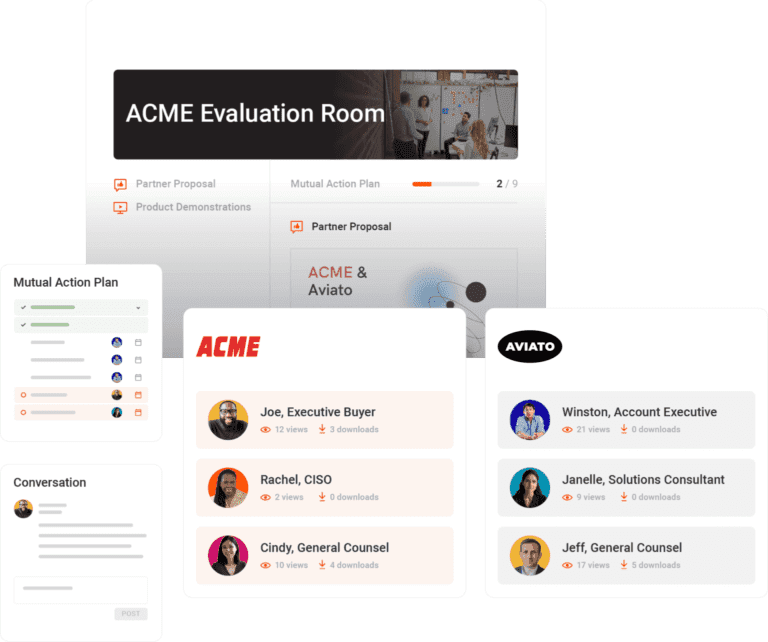
Mindtickle’s Digital Sales Rooms are much more than simple content microsites and elevate the digital sales experience. They are collaborative portals where the entire selling team and all buyer stakeholders can align, communicate, share content, and drive the deal to its optimal resolution.
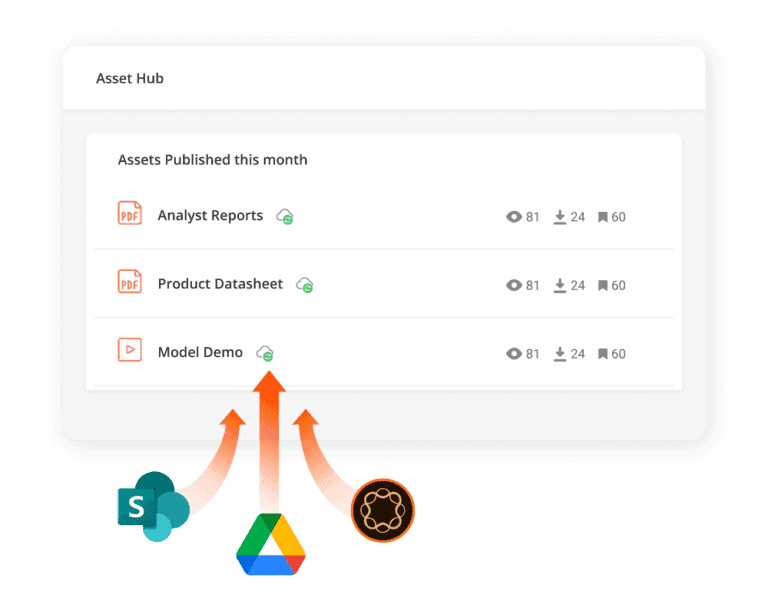
Automatic content sync allows you to use more content more easily, by automatically syncing content and metadata from your cloud-based content storage directly into Mindtickle.
Enablement engagement metrics provide granular engagement analytics that expose how learners engage with content. Dashboards and reports give visibility into the impact of your efforts and inform your strategy with smarter data.
Customized, quick content sharing protects your brand and ensures the right messaging reaches the market. At the same time, sellers have the agility and flexibility they need to build smart, custom presentations. Sellers can tailor the buying experience to each buyer’s needs.
Smart content attribution & revenue impact data help you identify the content that actually wins deals. In Mindtickle you can see which content drives revenue impact, and leverage those insights to create better content in the future.
Features to look for in a sales content management tool
Today, several sales content management tools promise to improve your content management. But not all sales content management tools are created equal.
When exploring different sales content management tools, look for these must-have features.
Version control
It’s important to refresh your sales content regularly to maintain relevance and effectiveness. In fact, the top 10% of orgs update their content at least once every 3.25 months.
Be sure your sales content management platform has version control features that allow you to publish sales content updates in real time. That way, you can always be sure your sellers only use approved, up-to-date assets.
Support for different content formats
Sales content can take various formats, from presentations to PDFs to videos to conversation snippets. Be sure your chosen sales content management tool can support a wide range of formats.
Robust search capabilities
Often, sellers waste time searching for the right sales content. A sales content management tool should feature robust search and filter capabilities so reps can quickly and easily surface the best content for every situation.
Proven sales content recommendations powered by AI
Choosing the right sales content can feel like picking a needle out of a haystack. Look for a sales content management platform that leverages artificial intelligence (AI) to suggest content based on factors like buyer signals, sales cycle stage, and past performance.
Anytime, anywhere access
Modern sales reps aren’t tied to their desks. Instead, they may be out in the field, at a tradeshow, or traveling to a customer. It’s important to ensure your sales content management system can be accessed anytime, from anywhere.
Data and analytics
The best sales content management platforms provide data and analytics that can inform decision-making and improve sales outcomes.
For example, your sales content management tool should provide insight into how buyers and sellers engage with sales content and whether or not that engagement improves outcomes. You can use these insights to optimize your sales content strategy and invest more in sales content that works.
A sales content management platform should also provide buyers with insight into how their buyers are (or aren’t) engaging with sales content. That way, the seller can adjust their approach as needed.
Integrations with other technology
Chances are, your sellers use a variety of tools and technology every day. Be sure your sales content management system integrates with these tools.
Conquer sales content management with Mindtickle
Sellers rely on sales content to engage with buyers throughout the sales cycle. And B2B buyers depend on this content to make informed, confident purchase decisions.
But creating sales content is only the first step. You must also develop a sales content management strategy and invest in the right sales content management tools.
Mindtickle is an integrated revenue enablement platform with robust sales content management tools. With Mindtickle, your sellers can always find relevant, approved, and proven sales content to engage any seller – wherever they are on the purchase journey.
Sales Content Management in Mindtickle
Ready to see why winning go-to-market organizations depend on Mindtickle to equip sellers with the training, tools, and content they need to deliver outstanding buying experiences?
This post was originally published in May 2018, was updated in April 2023, March 2024, and again in February 2025.