




8 AI Role Play Scenarios for Technology Sales Reps (With Buyer Personas + Objections)



AI role play scenarios for technology sales reps are simulated sales conversations where reps practice against AI buyer personas. The buyer might be a skeptical IT director, a security reviewer evaluating your compliance documentation, or a CFO asking for a clear business case. The AI responds dynamically, allowing reps to rehearse discovery, technical objections, and procurement conversations before they face the real thing.
Key takeaways
- Technology sales role play needs to mirror the complexity of real buying conversations. Reps need practice with technical evaluations, security reviews, competitive comparisons, business cases, and changing stakeholder dynamics.
- Strong role play develops judgment, not just objection-handling scripts. Reps need to know when to ask a follow-up question, when to challenge an assumption, when to acknowledge a knowledge gap, and when to bring in a specialist.
- The best AI role play scenarios recreate realistic moments that are difficult to rehearse consistently. Dynamic buyer responses force reps to think on their feet and practice the behaviors they need in live deals.
Why technology sales needs its own role play scenarios
Generic sales role play teaches a rep how to run a conversation. It doesn't teach them how to survive the specific scenarios that technology deals put reps through. Three pressures make tech selling a different ball game.
The buyer already did the homework
6sense's 2025 B2B Buyer Experience Report found that buyers evaluate about five vendors and place about four of them on their shortlist on Day One of the buying journey. They ultimately purchase from one of those Day One vendors 95% of the time.
That means reps often enter conversations with buyers who already have a shortlist, established preferences, and a set of questions they want answered. A generic pitch deck isn't enough. Reps need to understand what the buyer already knows, uncover what still needs to be validated, and adapt the conversation accordingly.
One deal has several people to win over separately
A technology deal rarely depends on a single relationship. The champion may care about solving a business problem. A technical evaluator may want to understand architecture, integrations, and implementation requirements. Security may focus on data handling, access controls, and compliance documentation. Finance may scrutinize the business case and commercial terms.
Reps need to adapt their conversations to each stakeholder's priorities without losing sight of the broader buying process. That requires persona-specific objection handling rather than a one-size-fits-all approach.
The evaluation window is longer, but a rep’s moment inside it is shorter
Technology deals can involve multiple conversations over an extended sales cycle. Each interaction may serve a different purpose such as validating technical fit, addressing security requirements, clarifying implementation, building the business case, or negotiating commercial terms.
That makes situational readiness important. A rep who defaults to a broad product pitch when a technical evaluator needs a specific answer can miss the purpose of the conversation. Role play gives reps a way to practice these moments before they happen in a live deal.
8 high-stakes AI role play scenarios for technology sales reps
Scenario 1: Displacing an in-house solution
How this plays out: A rep is selling a technology solution to a company that has already built an internal alternative. The buyer may be comfortable with what they have today and see little reason to introduce the cost, effort, and risk of evaluating another solution. The rep needs to understand why the company built the solution, how it is being maintained, and where it may no longer meet the team's needs.
Where reps can struggle: Reps may jump straight into a feature comparison or try to prove that their product is technically superior. That can turn the conversation into a product debate before the rep understands what the buyer actually values about the existing solution.
What the rep should practice: Explore the customer's current approach, why it was built, what is working well, and where the team encounters limitations. The rep should identify whether there is a meaningful problem worth solving and build a case for change around that problem. If maintenance effort, scalability, engineering capacity, or other costs matter to the buyer, the rep should quantify them rather than assume they are the reason to switch.
🎬 AI role play scenario for displacing an in-house solution
Buyer: VP of Engineering or Head of Platform whose team uses an internally built solution
AI role: Act as a technically knowledgeable buyer who is satisfied with the existing solution and sees little reason to change. Defend the current approach when the rep makes generic claims about product capabilities. Reveal limitations or business pressures as the rep asks relevant questions. Push back when the rep tries to create urgency without establishing a genuine problem.
Rep objective: Understand the customer's existing solution, uncover meaningful limitations or unmet needs, and determine whether there is a credible case for evaluating an alternative.
📋 What to assess: Quality of discovery (Read Discovery Call Playbook), ability to understand the status quo, relevance of follow-up questions, ability to quantify a meaningful business problem, and discipline in avoiding unsupported technical or financial claims.
Scenario 2: Technical discovery with an IT or security buyer
How this plays out: An IT or security stakeholder joins an early conversation with questions about architecture, data handling, integrations, uptime, or other technical requirements. The buyer wants to understand whether the solution can fit their environment before investing more time in the evaluation.
Where reps can struggle: A rep may try to steer the conversation back to the prepared pitch instead of addressing what the buyer needs to validate. They may also answer too quickly without understanding why a particular technical question matters or what requirement sits behind it.
What the rep should practice: Address the buyer's question accurately while continuing to uncover the underlying requirement. The rep should ask clarifying questions when needed, explain what they can verify without overclaiming, and recognize when a solutions engineer, architect, security specialist, or another technical resource needs to be involved.
🎬 AI role play scenario for technical discovery with an IT or security buyer
Buyer: IT director, security stakeholder, or technical evaluator assessing the solution
AI role: Act as a technically knowledgeable buyer who leads with specific questions about the solution and its fit with the customer's environment. Ask follow-up questions when the rep gives a generic answer. Challenge assumptions and introduce additional requirements when the rep fails to establish the underlying need.
Rep objective: Understand what the buyer needs to validate, answer technical questions accurately, and maintain a useful discovery conversation without forcing the buyer back into a standard pitch.
📋 What to assess: Quality of technical discovery, clarity of explanations, active listening, accuracy, use of clarifying questions, and judgment about when to involve a technical resource.
Scenario 3: Handling an unexpected technical question during a product demo
How this plays out: During a product demo, a stakeholder asks whether the solution supports a specific integration, workflow, configuration, or edge case that falls outside the standard walkthrough. The question shifts the conversation from the prepared demonstration to a capability the rep may not have anticipated.
Where reps can struggle: A rep may guess at an answer to avoid appearing uncertain or give a vague response that leaves the buyer unsure whether the capability exists. They may also dismiss the question and move on, leaving an important concern unresolved.
What the rep should practice: Handle questions they cannot answer with accuracy and composure. The rep should clarify the requirement, state what they can confirm, avoid speculating, and identify the right resource or follow-up needed to provide a definitive answer. They should also know how to return to the purpose of the demo without brushing aside the buyer's concern.
🎬 AI role play scenario for handling an unexpected technical question
Buyer: Technical evaluator attending a product demonstration
AI role: Act as a technically informed buyer who interrupts the demo with unexpected questions about integrations, configurations, or edge cases. Follow up when the rep gives an incomplete answer. Test whether the rep distinguishes between what they know, what they need to verify, and what requires input from a technical specialist.
Rep objective: Maintain credibility when faced with an unexpected technical question, determine what needs to be verified, and keep the evaluation moving without making unsupported claims.
📋 What to assess: Accuracy, composure, ability to clarify the question, transparency about knowledge gaps, appropriate use of technical resources, and ability to maintain demo momentum.
Scenario 4: Competitive evaluation against a named alternative
How this plays out: A buyer is actively evaluating the rep's solution alongside a named competitor and asks how the products differ. The buyer may arrive with a feature comparison, existing preferences, or information gathered from independent research.
Where reps can struggle: Reps may become defensive, make unsupported claims about the competitor, or launch into a feature-by-feature comparison without understanding what matters most to the buyer.
What the rep should practice: Understand the criteria driving the evaluation before positioning the product. The rep should address relevant differences accurately, connect capabilities to the buyer's requirements, and explain meaningful differentiation without disparaging the alternative. Must Read: How to Train Sales Reps Against Competitors: A Playbook for When a New Rival Enters Your Market
🎬 AI role play scenario for competitive evaluation against a named rival
Buyer: Technology buyer actively evaluating the rep's solution against a named competitor
AI role: Act as a buyer who has researched both vendors and raises specific comparison points. Challenge generic claims about differentiation and ask why a particular capability should matter to the organization. Push back when the rep makes unsupported claims about the competitor.
Rep objective: Understand the buyer's evaluation criteria, address competitive concerns with accurate information, and establish relevant differentiation based on the buyer's requirements.
📋 What to assess: Quality of discovery, accuracy of competitive claims, relevance of differentiation, ability to handle direct comparisons, and avoidance of unsupported claims about the competitor.
Scenario 5: Security review with an IT or security stakeholder
How this plays out: A security or IT stakeholder joins the evaluation to assess requirements that may affect whether the solution can move forward. The discussion may cover data handling, access controls, compliance documentation, data residency, security practices, or customer-specific requirements.
Where reps can struggle: A rep may not know the answer to a specific security question and feel pressure to provide one anyway. They may also rely on broad statements about security or compliance when the buyer needs specific documentation or evidence.
What the rep should practice: Answer what they can verify, use the appropriate documentation, and recognize when a security or technical specialist needs to join the conversation. The goal is to maintain credibility without improvising answers to requirements the rep is not qualified to address.
🎬 AI role play scenario for security review with an IT stakeholder
Buyer: Security reviewer, IT security leader, or technical stakeholder responsible for evaluating the solution
AI role: Act as a security reviewer with requirements related to the customer's environment. Ask detailed questions about data handling, access, compliance, documentation, or other security requirements. Challenge vague responses and ask the rep to provide evidence or involve the appropriate resource.
Rep objective: Understand the buyer's security requirements, answer accurately within the limits of their knowledge, provide the right documentation, and involve the appropriate specialist when necessary.
📋 What to assess: Accuracy, clarity, understanding of security requirements, ability to use supporting documentation, transparency about knowledge gaps, and judgment about when to escalate.
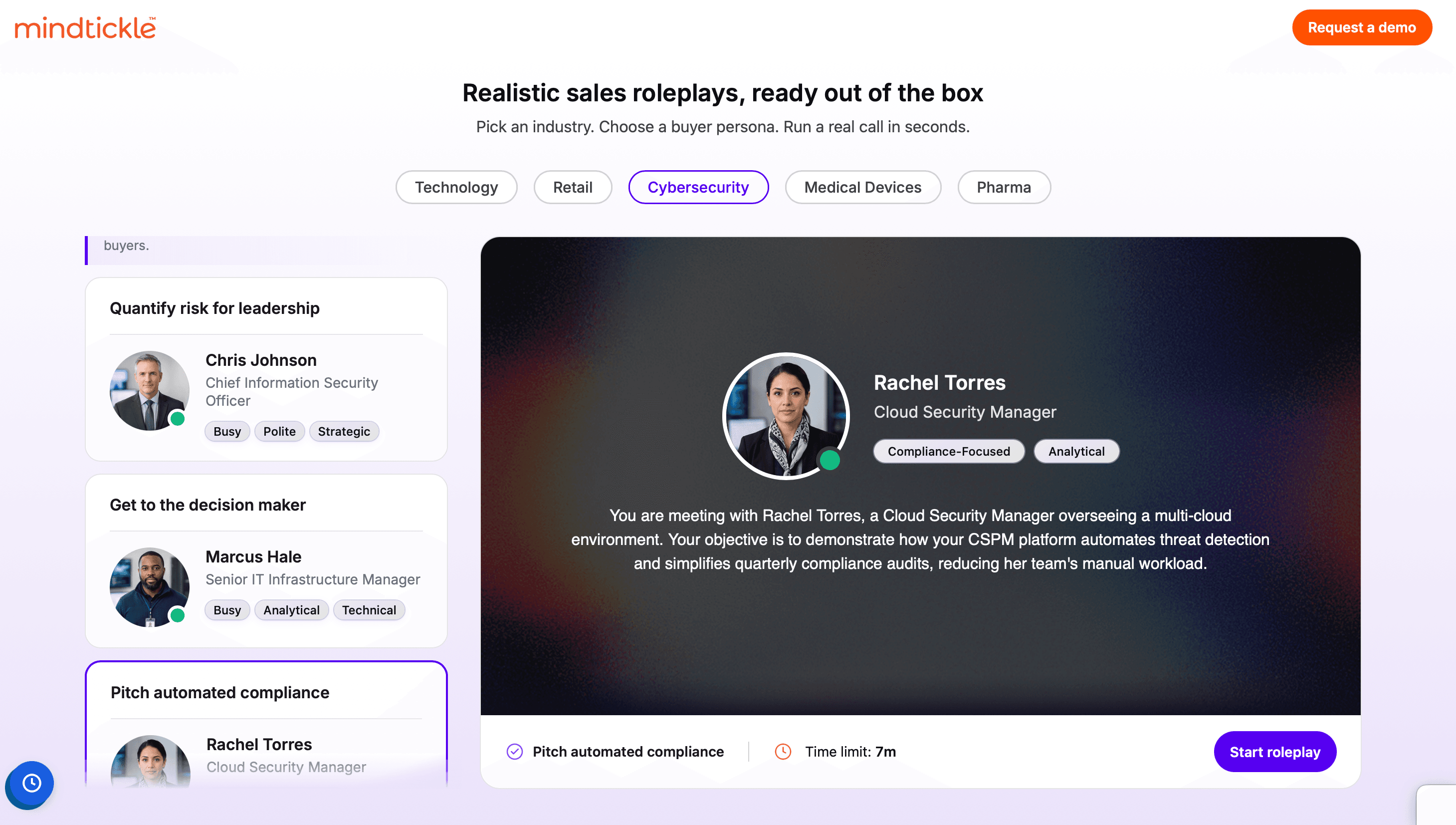
Scenario 6: Technical POC or evaluation stall
How this plays out: A proof of concept or technical evaluation is progressing, but the deal stops moving. The solution may be working as expected, yet the buyer has not committed to a next step. The reason may have little to do with the technology itself.
Where reps can struggle: Reps may assume that a successful POC should naturally lead to a purchase and resort to generic follow-ups when the deal stalls. They may also focus on the technical result without understanding what remains unresolved in the broader buying process.
What the rep should practice: Diagnose what is preventing the evaluation from progressing. The rep should revisit the original success criteria, understand whether they have been met, identify who still needs to be involved, and establish what the buyer needs to do next.
🎬 AI role play scenario for stalled evaluation
Buyer: Champion or technical stakeholder involved in a stalled POC
AI role: Act as a buyer who says the POC is going well but remains noncommittal about next steps. Provide different reasons for the delay depending on the rep's questions. Reveal unresolved stakeholder concerns, business requirements, implementation questions, or internal approval issues when the rep explores them appropriately.
Rep objective: Determine what is preventing the evaluation from moving forward, confirm whether the original success criteria have been met, and establish a credible path to the next stage.
📋 What to assess: Quality of diagnosis, ability to revisit success criteria, stakeholder awareness, follow-up questions, ability to uncover hidden blockers, and ability to establish a specific next step.
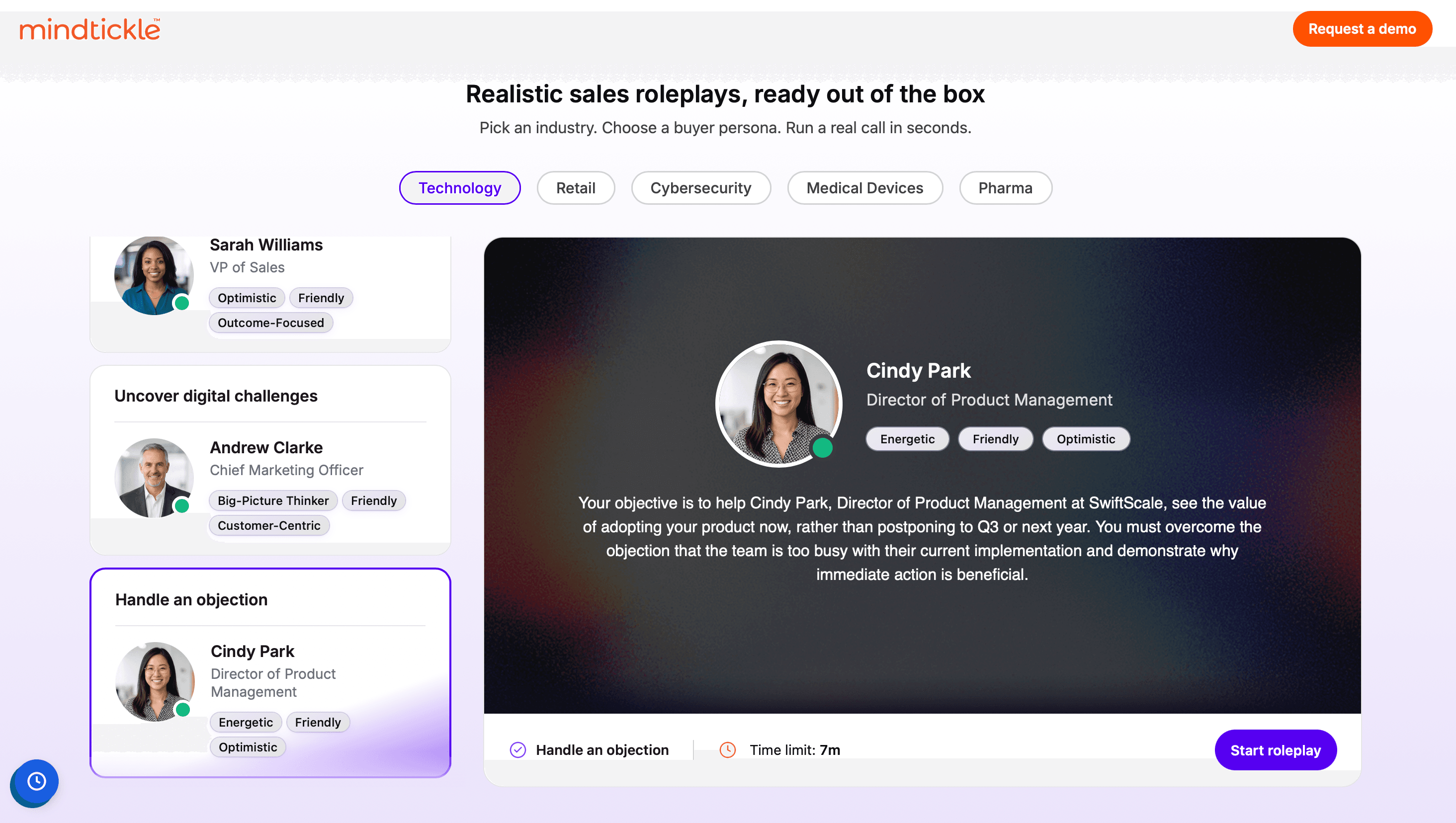
Scenario 7: Defending the business case with a finance stakeholder
How this plays out: A finance stakeholder joins the evaluation after technical and business discussions have already taken place. They need to understand the financial case for the investment and may challenge assumptions behind the expected value, cost, or time to impact.
Where reps can struggle: Reps may repeat the same product narrative they used with technical stakeholders or present an ROI figure without being able to explain how it was calculated. A finance stakeholder may challenge the assumptions behind the business case rather than the product itself.
What the rep should practice: Translate the business case into financial terms and explain the assumptions behind the model. The rep should be prepared to discuss expected value, costs, implementation considerations, and the evidence supporting the business case without overstating certainty.
🎬 AI role play scenario defending the business case with CFO
Buyer: CFO, finance leader, or other stakeholder responsible for evaluating the financial case
AI role: Act as a finance stakeholder who has reviewed the proposed investment and questions the assumptions behind the business case. Challenge expected savings, revenue impact, adoption assumptions, implementation costs, or time to value. Push the rep to distinguish between evidence and estimates.
Rep objective: Explain the financial rationale for the investment, defend the assumptions behind the business case, and respond credibly when finance challenges the expected value or cost.
📋 What to assess: Financial fluency, clarity of assumptions, ability to distinguish evidence from estimates, responsiveness to financial objections, and discipline in avoiding unsupported ROI claims.
Scenario 8: Handling AI governance and adoption objections
How this plays out: A buyer is evaluating an AI-enabled technology solution but has concerns about how the organization will govern and adopt it. Questions may extend beyond the product's capabilities to data use, access controls, human oversight, output quality, employee adoption, or internal policies.
Where reps can struggle: Reps may respond to every concern with another product capability or make broad claims about how safely or easily the organization can deploy AI. They may also overlook the fact that different stakeholders can have different concerns about introducing AI into existing workflows.
What the rep should practice: Understand the specific concern behind the objection before responding. The rep should explain what the product can substantiate, distinguish product capabilities from organizational decisions, and involve the right technical, security, legal, or implementation resource when the question falls outside their expertise.
🎬 AI role play scenario for AI governance and adoption objection
Buyer: Technology leader evaluating an AI-enabled solution alongside stakeholders responsible for security, compliance, or adoption
AI role: Act as a buyer who is interested in the solution but raises concerns about responsible deployment and organizational adoption. Ask follow-up questions about data use, access, human oversight, implementation, or how employees will use the technology. Challenge vague assurances and ask for specifics.
Rep objective: Identify the buyer's underlying concern, respond with accurate and relevant information, and determine when another stakeholder or specialist needs to be involved.
📋 What to assess: Quality of discovery, accuracy of AI-related claims, ability to distinguish product capabilities from customer responsibilities, handling of governance and adoption concerns, and judgment about when to involve specialists.
How AI coaching scores and improves each scenario
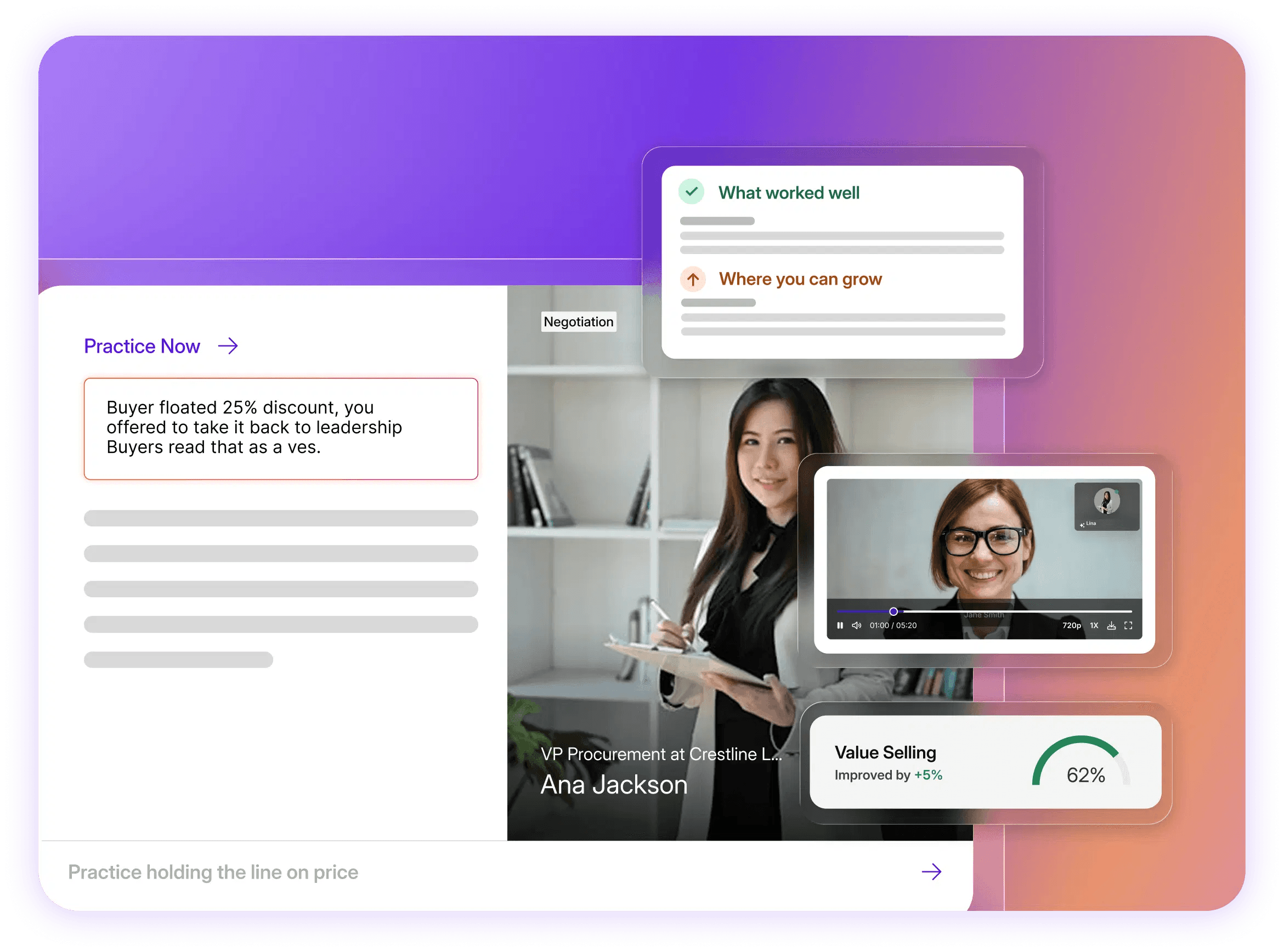
Feedback arrives before the next call
Mindtickle’s 2026 State of Agentic Revenue Enablement Report found that manager scoring role plays averages 17 minutes per review. With a queue to work through, feedback usually reaches a rep 7 to 8 days after they submitted. AI review cuts that to 1 to 2 minutes. That's the difference between feedback a rep can still use and feedback that shows up after three more calls have already gone the same way.
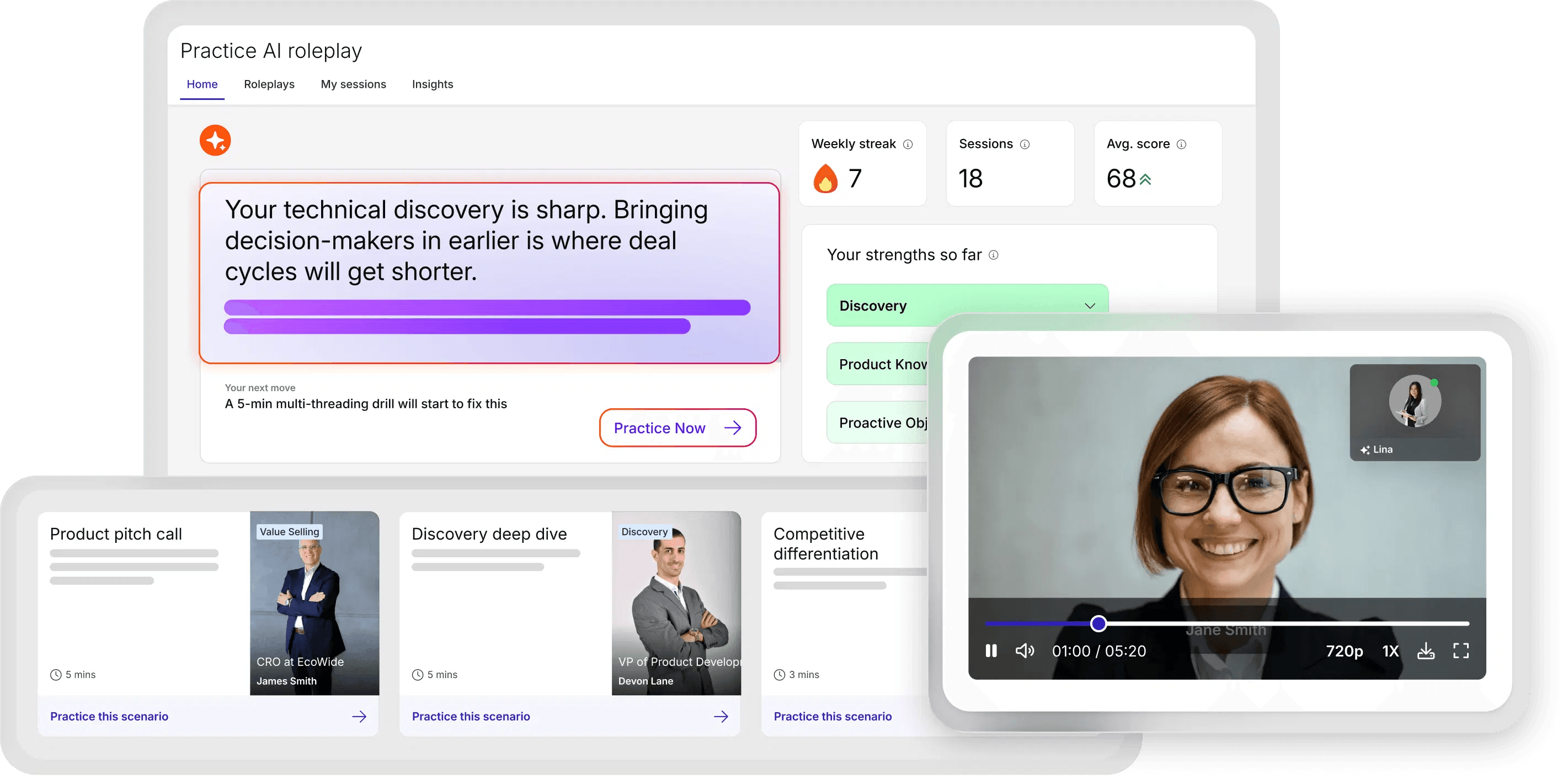
Scores are specific with a clear roadmap ahead
A role play score names the exact moment things went wrong, like the sentence that turned a discovery question into a pitch, or the point a competitive comparison went defensive instead of confident. A rubric tied to a specific skill also tells them what to fix next. This specificity helps reps retry the scenario immediately without spending too much time on figuring out what they could do better.
📖 Also read: Metrics to Measure your AI Sales Role Plays
Proves the practice is actually changing what happens on real calls
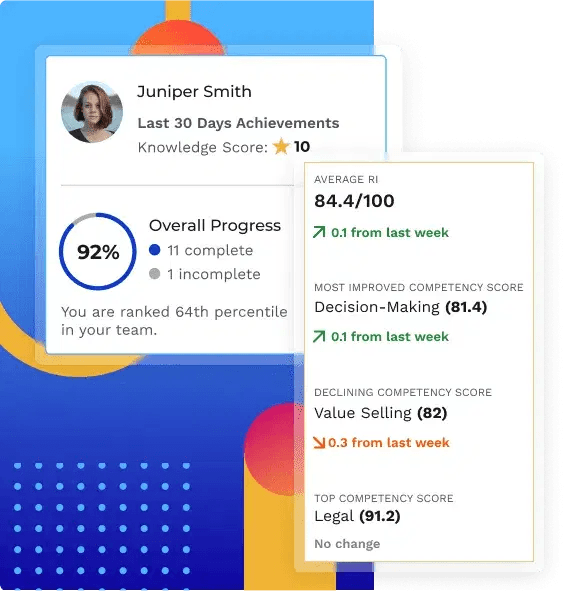
A score by itself doesn't tell you whether that practice moved the needle on an actual deal. That’s where connected enablement software closes the loop by tying practice to the outcome. Managers get a clear view of what the rep practices, how many deals they close, and why. Comparing this to your pre-role play training helps you understand whether it made a difference at all.
Are your reps really ready for selling?
Time to build and train
These eight scenarios are the moments that actually decide whether a technology deal closes. Building them by hand, one persona at a time, works fine if you're testing this with a small team.
Scoring every submission consistently, keeping scenarios tied to your methodology, and updating them the moment your product or competitive landscape shifts is harder to sustain by hand. That's where Mindtickle earns its place. Get in touch with our experts today for an organization-wide roll out.
Frequently Asked Questions
About the Author
Lead Content Marketer
Jayadeep brings over a decade of experience in B2B content and product marketing, with expertise in editorial leadership, messaging strategy, and agency management.
He has built and scaled content operations, led agency partnerships, and collaborated across marketing, product, and demand generation teams to deliver integrated campaigns. His "process-first, execution-next" philosophy has made him a trusted resource at Mindtickle, where he helps shape content strategy, thought leadership programs, and flagship marketing initiatives.
Subscribe to the blog
Get the latest sales enablement tips, guides, and industry best practices delivered to your inbox. Unsubscribe anytime.