




How to Build and Measure the Impact of Persona-specific AI Sales Role Play for Objection Handling



Enterprise sales reps aren't selling to one person anymore. A single deal can involve a buying group of five to ten people (Gartner), each bringing different priorities, concerns, and criteria to the decision. The CFO is thinking about the numbers. The champion is thinking about whether the solution will solve the problem they brought to the table. The end user is thinking about what it will actually mean for their day-to-day work.
With that many stakeholders involved, objections are inevitable, and they aren't all the same. “It's too expensive” from a CFO is likely a conversation about budget, business impact, or ROI. From an end user, the same words might signal that the value doesn't justify changing how they work. Same objection. Different concern underneath.
That's why effective objection handling isn't about memorizing the perfect rebuttal. It's about understanding who's raising the objection, what's driving it, and how to address the concern in a way that matters to that buyer.
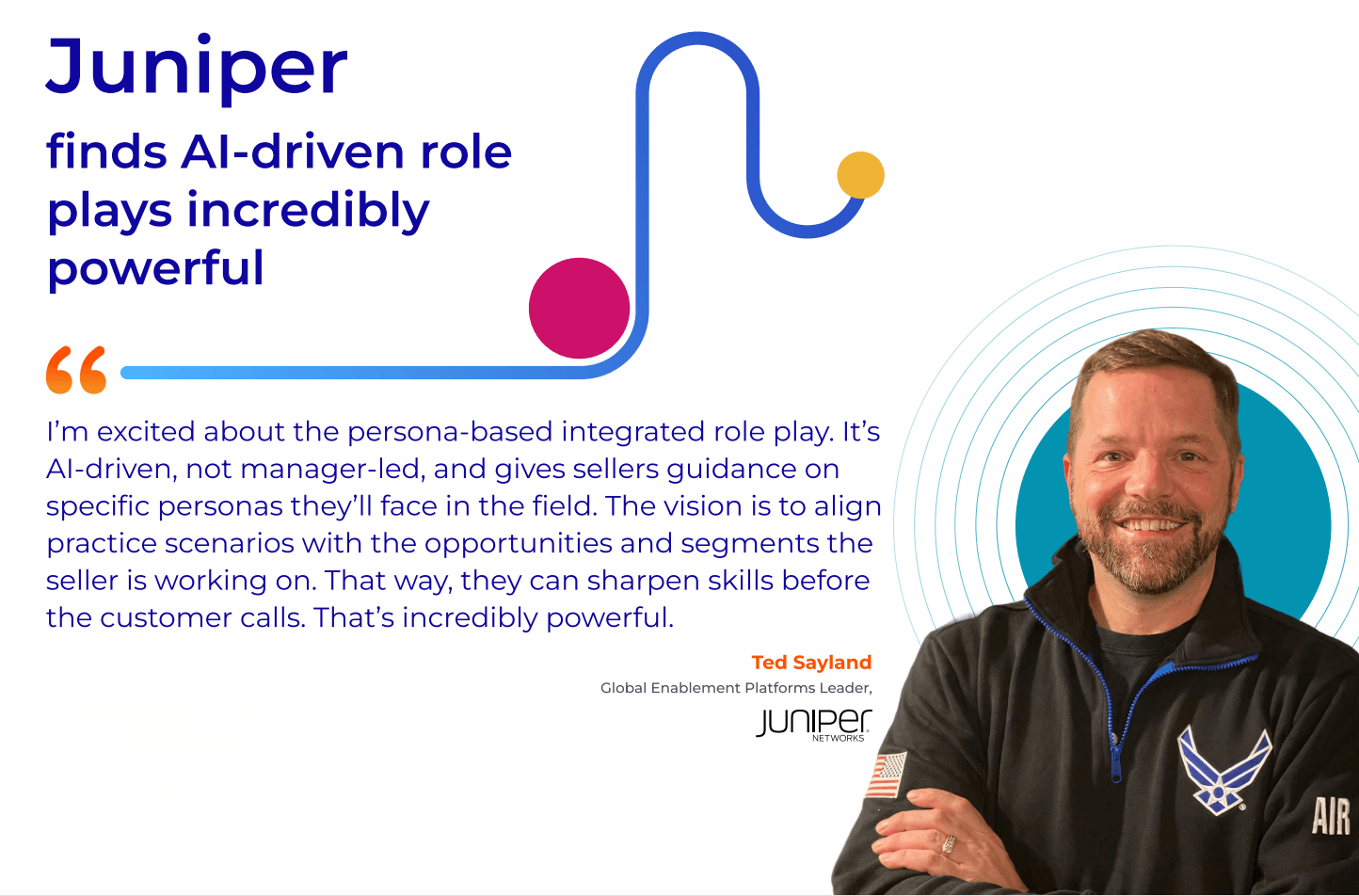
AI sales role play gives reps a way to practice that distinction. Instead of rehearsing generic objections, they can practice the same sales conversation with different buyer personas, each with their own priorities, concerns, and responses, before they have to navigate those conversations in a real deal.
Key takeaways
- The same objection can mean different things to different buyers, so reps need to diagnose the concern before responding.
- Generic objection training falls short because it rarely provides enough persona-specific, repeatable practice.
- AI sales role play enables contextual practice across buyer personas, objections, and real-world selling situations.
- The goal isn't to memorize better rebuttals but to help reps listen, adapt, and handle buyer conversations with greater confidence.
Why generic sales objection handling training fails in 2026
Most objection training is built around a set of common sales objections, a recommended response for each, and reps who practice or memorize the pairing. It's easy to roll into sales onboarding, which is part of why the approach has stuck around. The problem is that it doesn't prepare reps for the context surrounding an objection, especially when multiple stakeholders are involved in a deal.
Three failure points show up again and again.
- It's persona-blind. Generic sales training teaches reps how to respond to common objections, but often without enough context about who's raising them. It doesn't give reps enough practice adapting their response to a CFO's concerns about financial impact versus an end user's concerns about how a solution will affect their day-to-day work.
- It doesn't create enough repetition. Objection handling is a skill, and skills get stronger with practice. A rep may understand the framework during onboarding, but that knowledge doesn't automatically translate into a confident response months later when a difficult objection surfaces in a live deal. Without regular opportunities to practice, reps are left to learn under pressure, with a real prospect on the other side of the conversation.
- It doesn't scale. The traditional answer has been live practice, usually through role play with a manager. But managers have limited time, and running realistic practice sessions for every rep, persona, objection, and selling situation quickly becomes difficult. The result is that reps may get occasional practice, but not necessarily the targeted, repeatable practice they need for the conversations most likely to stall their deals.
How to build a persona-specific AI sales role play scenario
Any AI sales role play tool can put a rep in front of a simulated buyer. Whether the rep actually gets better comes down to the quality of the practice itself.
For persona-specific role play to mirror real sales conversations, the AI sales role play scenario needs more than a buyer persona and an objection. It needs to capture the context around both.
| Role play scenario elements | What to define | Why it matters |
|---|---|---|
| Buyer persona | Role, priorities, goals, KPIs, and business pressures | Gives the objection context and helps reps understand what matters to that particular buyer. |
| Deal context | Where the buyer is in the buying process, what's driving the evaluation, and what they're using today | Makes the conversation more realistic. The same buyer may raise different concerns depending on the situation. |
| Objection | The specific objection the buyer is likely to raise | Gives the rep a clear situation to practice without turning the exercise into a scripted conversation. |
| Underlying concern | What might be driving the objection beneath the surface | Encourages reps to diagnose the concern instead of immediately reaching for a memorized response. |
| Buyer response | How the buyer might react to different approaches from the rep | Makes the exercise dynamic and tests whether the rep can adapt as the conversation develops. |
| Difficulty | Level of resistance, follow-up questions, competing priorities, or additional stakeholders | Allows reps to progress from straightforward practice to more challenging conversations. |
| Feedback | How well the rep identified the concern, adapted to the persona, and moved the conversation forward | Turns each practice session into an opportunity to improve rather than simply complete an exercise. |
💡Did you know
According to the 2026 State of Agentic Revenue Enablement Report, role plays now account for 70% of all revenue enablement programs, up from 45% three years ago.
But volume alone isn't the story. The teams pulling ahead aren't simply doing more role plays. They're making them more relevant by building scenarios around the deals their sellers are working on and the specific skill gaps they need to address.
How to use persona-specific AI role play in sales training
Once the scenarios are grounded in real buyer situations, the next challenge is making persona-specific role play a consistent part of how reps prepare and improve. That starts with a few practical changes to the way sales enablement teams approach role play.
- Start with the objections that matter most. Don't build dozens of scenarios simply because the technology allows it. Look at the objections that repeatedly surface in important opportunities, deals that stall, or areas where reps need more coaching.
- Build scenarios around real sales situations. Use actual buyer personas, deal stages, competitive situations, and common objections. The closer the practice is to the conversations reps are having in the field, the more useful it becomes.
- Give reps repeated practice before important moments. Role play shouldn't be limited to onboarding. Reps can practice before launching into a new segment, selling a new product, entering an important account, or preparing for a high-stakes customer conversation.
- Use performance data to guide coaching. The value isn't just in completing role plays. Enablement teams should look for recurring patterns in how reps handle objections and use those patterns to identify where additional sales training or coaching is needed.
- Keep managers in the loop. AI can make practice more accessible, but managers still play an important role. They can use what emerges from practice to have more targeted coaching conversations with individual reps.
Also Read: How Managers Can Use AI Sales Role Play Tools to Coach Reps
How to measure the impact of persona-specific AI sales role play scenarios
More than completing role plays, the more useful question is whether practice is changing how they handle buyer conversations. A few indicators can help enablement teams assess that progress.
| What to measure | What to look for |
|---|---|
| Objection diagnosis | Are reps getting better at identifying the concern behind an objection instead of immediately jumping to a rebuttal? |
| Persona adaptation | Can reps adjust their approach when the same objection comes from different buyer roles? |
| Questioning and discovery | Are reps asking relevant follow-up questions before responding, rather than assuming they already know what's driving the objection? |
| Response quality | Does the response address the buyer's underlying concern and priorities rather than simply matching the objection to a memorized answer? |
| Improvement across attempts | Do reps demonstrate measurable improvement when they repeat a scenario after receiving feedback? |
| Application in the field | Are the behaviors practiced in role play showing up in real sales conversations, deal reviews, or coaching sessions? |
Build better objection-handling skills through practice
The goal of persona-specific objection handling is to help reps become better at understanding what a buyer is really asking, recognizing what's behind an objection, and adapting their response to the conversation.
AI sales role play makes that kind of practice easier to deliver consistently. Reps can work through realistic buyer scenarios, practice the same objection from different perspectives, receive feedback, and try again before they have to handle the conversation with a real prospect.
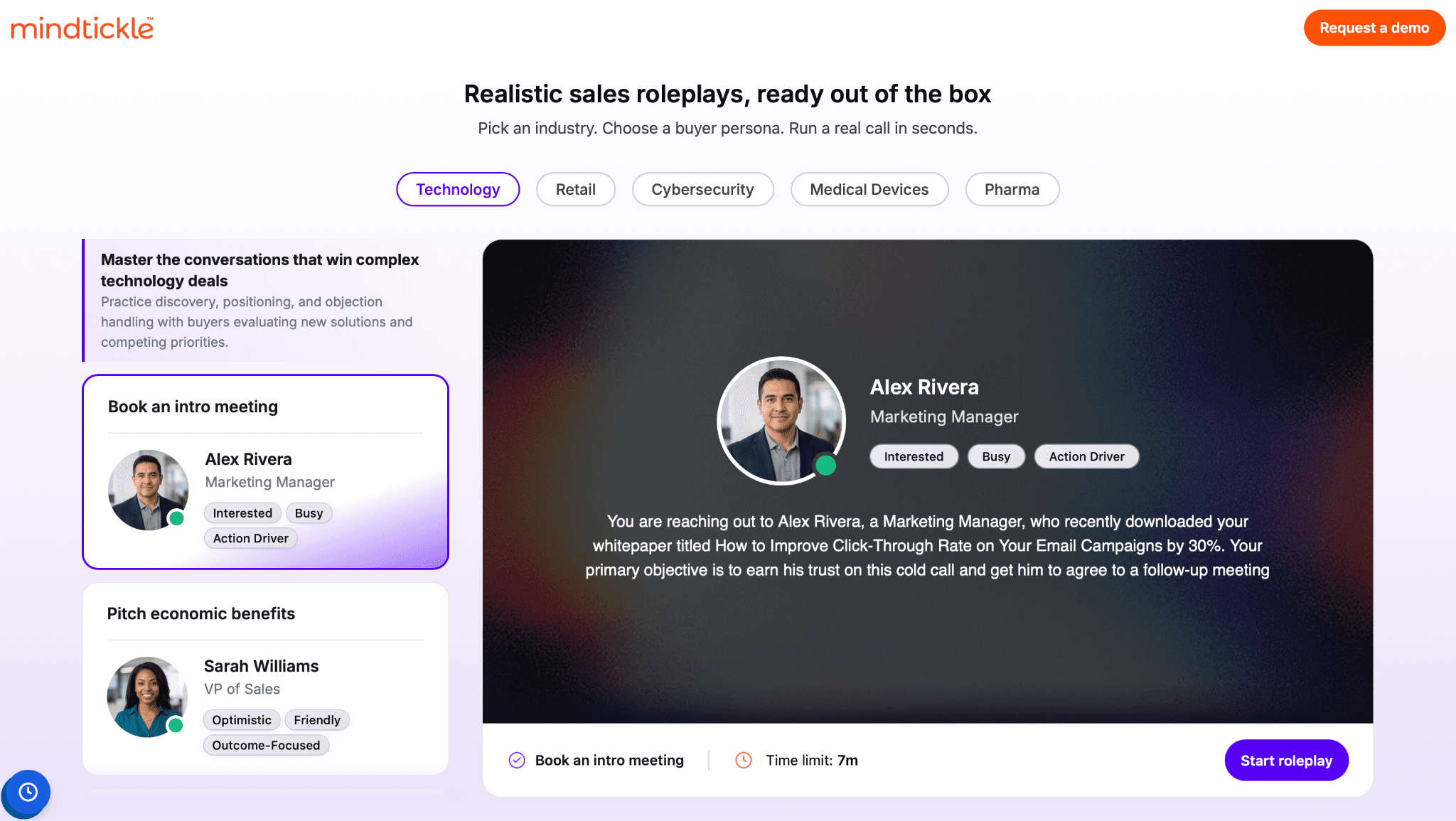
Mindtickle's AI Sales Role Play gives reps a way to put that practice into action. They can practice conversations with AI buyers, work through objections, and get immediate feedback on their responses. The experience also lets them choose different buyer personas and scenarios, making it possible to practice for the kinds of conversations they are likely to encounter in the field.
Curious how persona-specific AI role play works? Try Mindtickle's free AI Sales Role Play and experience handling a real objection firsthand.
Frequently Asked Questions
Subscribe to the blog
Get the latest sales enablement tips, guides, and industry best practices delivered to your inbox. Unsubscribe anytime.