




Enterprise Sales Training for Financial Advisors: Meeting SEC & FINRA Rules With AI



Financial services firms can use AI sales training to support SEC and FINRA compliance by giving reps realistic practice built on approved content, scoring every attempt against standards their compliance teams set, and keeping a clear record of who practiced what and when. The firm still owns compliance, but training becomes something it can show rather than something it only schedules.
You can prove that a rep finished the annual compliance course. It's harder to show how that same rep handles a nervous retiree asking whether to roll over a 401(k), or a client who wants a promise the rep isn't allowed to make. Those moments happen in live conversations, often long after the course ended.
That gap between finishing training and handling the conversation is where much of your risk sits, whether your team includes advisors, registered reps, wholesalers, or the people who supervise them.
Key takeaways
- Training is part of the rules, not separate from them. FINRA requires member firms to plan training every year and keep records of it, and Reg BI expects reps to understand the risks, rewards, and costs of what they recommend.
- Completion records only tell part of the story. A finished module shows a rep was trained, but it doesn't show how they'll handle a rollover or fee question in front of a client.
- AI role play moves the first attempt away from clients. Reps rehearse high-risk conversations with an AI client and get feedback against your own standards before a client is involved.
- The AI tool needs governance too. FINRA's rules apply to AI the same way they apply to any other technology, so you supervise the trainer as well as the people it trains.
- The judgment calls stay with the experts. Your compliance team sets the standards, decides the gray areas, and checks that AI scoring stays aligned with qualified reviewers.
Which SEC and FINRA rules apply to how firms train financial services reps?
Which rules apply depends on how a firm and its people are registered, though products and location can add a few more.
Reg BI expects reps to understand what they recommend
Reg BI's Care Obligation requires broker-dealers and their reps to take reasonable care to understand what they recommend to a retail customer, including its risks and costs, and the firm has to enforce written policies reasonably designed to achieve compliance. Meeting that standard depends on reps knowing the products and accounts they put in front of clients, which is where training comes in.
FINRA requires a written training plan every year
Broker-dealers can't treat this as something to fit in when there's time. The Firm Element of FINRA Rule 1240 has member firms evaluate their training needs at least once a year and develop a written plan. Firms also have to keep records of what each program covered and which registered persons completed it.
✅ Pro tip
Map each high-risk conversation your needs analysis identifies to a specific practice scenario. That way the plan and the records behind it point to the same priorities.
Supervision rules leave preparation largely to the firm
FINRA Rule 3110 requires every member firm to maintain a supervisory system reasonably designed to achieve compliance, including reasonable efforts to confirm that supervisors are qualified by experience or training. Beyond that, the rule doesn't spell out how reps should be prepared for client conversations, so each firm decides how training fits within that standard.
Investment adviser representatives follow a different framework
FINRA's training rules don't apply to investment adviser representatives unless they're also registered with a broker-dealer, and the SEC's Compliance Rule doesn't set a training requirement. Their continuing education comes from the states, and those that have adopted NASAA's model rule require 12 hours a year.
📖 Read more: Building Sales Capability in Financial Services: Key Takeaways from the Sales Operations Institute
Other rules shape training too
Depending on what a firm sells and where its reps work, a few other rules also shape training.
| Rule | Who it covers | Why it matters for training |
|---|---|---|
| NAIC annuity best-interest model | Insurance producers selling annuities in states that have adopted it | Producers complete a one-time annuity course and each insurer's product training before they sell |
| DOL fiduciary test | Advice on retirement accounts, including rollovers | The 2024 rule is gone, and the DOL's longstanding test applies again, while Reg BI covers rollover advice too |
| State rules | Varies by state | Some states impose continuing education and other requirements that firms need to account for in their training programs |
Where does traditional training leave financial services firms exposed?
Compliance training is probably already part of how your firm operates. The usual formats still leave a few blind spots, and in a regulated business, each one carries risk.
Completion records don't show what reps can do
A learning system can show that a rep passed the Reg BI module. It can't show whether they'll weigh reasonably available alternatives when a client asks about a rollover. And when completions, call reviews, and coaching notes are spread across a crowded sales tech stack, it's hard to see how ready any one rep really is.
Annual training falls behind product and rule changes
Products, rates, and guidance change all year, but many programs still run on an annual calendar. Mindtickle's 2026 State of Agentic Revenue Enablement Report found that sales priorities change quarterly while enablement programs change annually. In a regulated business, that lag can leave reps working from an outdated version of the story, which is why keeping them current on new products and regulatory requirements matters.
The first real practice often happens with a real client
A new rep can finish onboarding and then handle their first rollover discussion with an actual client, which is especially hard for newer financial advisors still building their book. Experienced reps face the same problem whenever a product launches or a rule changes.
Supervisors hear only a fraction of conversations
Supervisors can observe only a small share of client conversations, and feedback varies by manager and region, so two reps at the same firm can get very different coaching on the same mistake.
📌 Review time adds up
Managers spend 17 minutes reviewing a single role play submission, compared with 2 minutes for AI, according to Mindtickle's 2026 State of Agentic Revenue Enablement Report. At that pace, giving every rep regular, reviewed practice is hard to sustain with manager time alone.
How can financial services reps practice regulated client conversations without putting clients at risk?
Regulated conversations get easier with repetition, which is hard to come by when every practice session needs a manager or a peer. AI role play gives each rep an AI client to talk to, on demand and as often as they need.
Mistakes happen in rehearsal, not with clients
In role play practice, a fumbled answer costs nothing. Reps can stumble through a rollover discussion and try again until the explanation is clear. Realistic AI clients push back on vague answers and raise the objections real clients do, so the habit carries into the meeting. Read: How to Master Objection Handling With AI Sales Role Play
Reps rehearse the conversations that carry the most regulatory risk
Some client conversations deserve more attention in training, and the SEC's 2026 examination priorities highlight areas such as rollover recommendations and advice to older investors. With AI role play, you can turn these into contextual practice scenarios built around your own products and clients, so reps can rehearse conversations tied to areas of heightened regulatory focus.
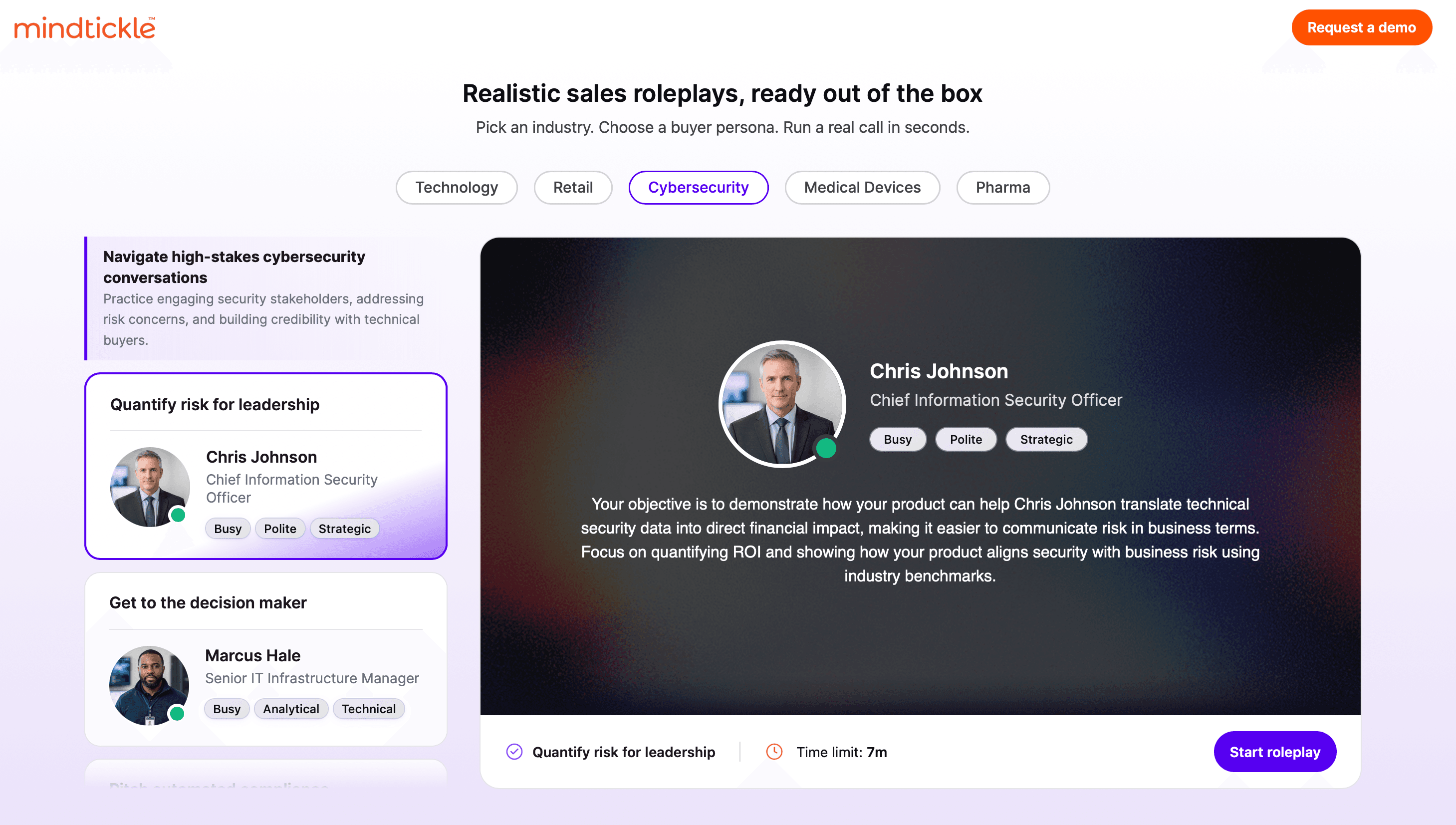
🎬 Practice scenario: a retiree weighing a 401(k) rollover
The situation. A 63-year-old client is retiring and wants to know whether to roll her 401(k) into an IRA with your firm. She's worried about fees and market swings, and halfway through the conversation she asks the rep to promise her balance won't drop.
What the rep needs to show. Before recommending anything, the rep asks about her goals and financial situation. They walk her through alternatives and their trade-offs, then decline to promise results without losing her trust.
What the AI scores against your rubric. Whether the rep considers relevant alternatives and explains costs clearly, and whether they avoid promising returns when she pushes for reassurance.
Feedback separates compliance errors from skill gaps
A rep can run a warm, well-paced conversation and still say something they shouldn't. You can account for that by building your rubrics in two layers: one scores skills like discovery and explaining costs, and the other flags critical items like guaranteeing results. A low skill score tells you a rep needs more practice, while a critical item tells you to take a closer look before they meet a client.
Supervisors coach the gaps that scores reveal
Your supervisors don't have to observe every rep. They can see who keeps missing the same point and start their coaching there, which makes manager coaching with role play more focused, since each one-on-one starts from what the scores show.
📖 Read more: AI Sales Role Play: 2026 Guide for Enablement Leaders
What makes an AI training program compliance-ready?
Once AI is part of your training, there's a second question to answer: whether your own use of AI meets the rules. A compliance-ready program covers both the people being trained and the tool doing the training.
AI training tools run under the same supervision as any other technology
FINRA describes its rules as technology neutral. Its 2026 Annual Regulatory Oversight Report makes clear that existing obligations still apply when firms use GenAI. For AI role play, that could mean reviewing and approving the use case, then monitoring how the tool performs over time.
Approved content helps keep practice and feedback accurate
Hallucinations are a key AI risk. In training, that could mean an AI persona or its feedback misstating a rule, which a rep might then repeat to a real client. Building scenarios and rubrics from content your team has already approved, and testing them before rollout, gives the AI a more reliable foundation for practice and feedback.
Data controls protect client information
One way to reduce unnecessary exposure is to keep real client information out of practice entirely, using synthetic personas built from realistic but invented situations. Beyond that, it's worth confirming where session data is stored and whether the vendor uses it to train outside models.
Training records show how readiness was assessed
Completion records tell you who finished training. AI role play adds another layer by recording how reps performed against the standards they practiced. Keeping scenarios, rubrics, scores, and certification results together gives you a clearer record of how readiness was assessed at the time.
➕ Bonus read: Best AI Sales Role Play Tools in 2026
Does AI replace a compliance officer's judgment?
No. AI can run thousands of practice conversations and score each one the same way, which frees up reviewer time. But accountability doesn't move, since FINRA Rule 3110 places final responsibility for supervision on your organization.
Your compliance team still decides which content is approved and which errors count as critical, and gray areas stay with people. They also keep the AI honest by having qualified reviewers score a sample of conversations regularly and compare the results, especially after a rubric changes.
📖 Also read: 4 Common AI Sales Coaching Mistakes to Avoid in 2026
How does Mindtickle help financial services reps prepare for regulated client conversations?
With Mindtickle, your enablement and compliance teams turn updated rollover guidance into a new scenario in the AI Sales Role Play platform, complete with a client persona and a rubric that flags anything you treat as critical. Reps in every region rehearse the conversation and get scored feedback within minutes of each attempt.
Since role play runs inside ElevateOS™, Mindtickle's agentic revenue enablement system, practice connects to the rest of your coaching workflow. Supervisors see where each rep struggles, like explaining fees, without sitting in on every session.
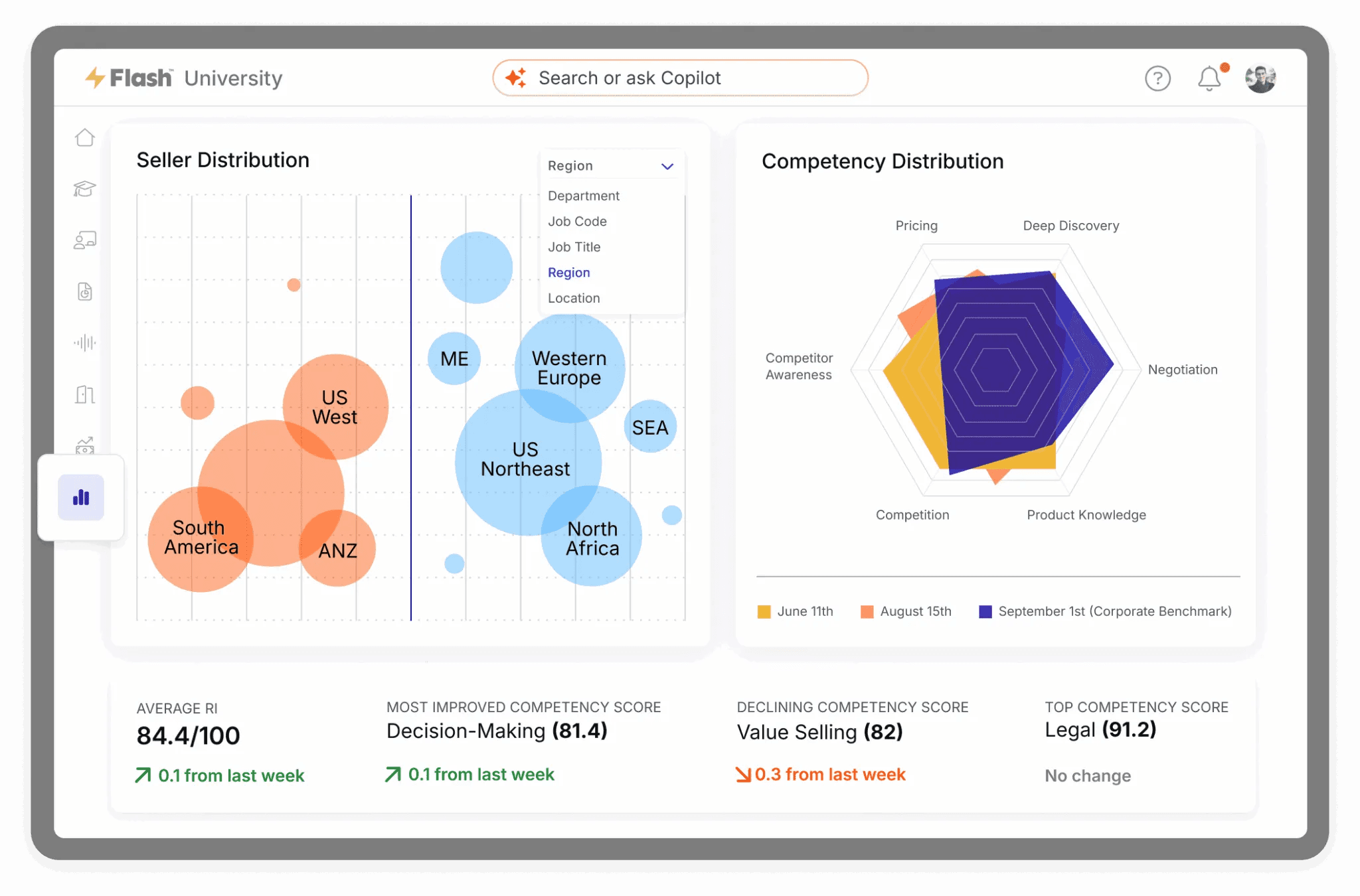
You can see it come together in the Readiness Index, which shows who is ready by team, role, and region. Every session stays on record, so when an examiner asks how reps were prepared for the change, the record is already there.
The platform is also built for the questions your compliance team will ask about the tool itself. Mindtickle has measures in place for SEC Rule 17a-4 recordkeeping, runs its AI on private infrastructure that keeps customer data away from public models, holds several ISO certifications, and has aligned its AI governance with ISO 42001 through an independent audit.
FAQs
Subscribe to the blog
Get the latest sales enablement tips, guides, and industry best practices delivered to your inbox. Unsubscribe anytime.