



Best Showpad Alternatives and Competitors for 2026: Ranked and Reviewed



The best Showpad alternatives and competitors in 2026 are Mindtickle, Seismic (now merged with Highspot), Allego, SalesHood, Mediafly, Dock, and Spekit. Each takes a different approach to the sales workflow, so the right pick depends on your team's biggest gap.
Showpad recently merged with Bigtincan under Vector Capital, and a change like that often brings roadmap and pricing uncertainty in the near term. If that has you looking around, this guide walks through all seven alternatives with helpful features, honest drawbacks, and pricing, so you can make the right call for your team.
Top Showpad alternatives: At a glance
| Platform | Core focus | Best for | G2 rating (As of Sep 2026) |
|---|---|---|---|
| Mindtickle | Training, coaching, content, and revenue intelligence in one system of record, with an AI layer to prove impact | Mid-market and enterprise teams that want rep readiness and buyer engagement on one AI-native platform | 4.7 |
| Seismic (merged with Highspot) | Content governance and automation, with AI to surface content and flag deal risk | Enterprises that need deep content governance | Seismic 4.6, Highspot 4.7 |
| Allego | Video communication, asynchronous learning, and content sharing for distributed teams | Regulated teams leaning on async video and peer-based learning | 4.6 |
| SalesHood | Template-driven setup with AI-powered practice and coaching | Growing teams that want a fast, template-driven setup with clear tiered plans | 4.6 |
| Mediafly | Value-selling tools, including interactive ROI calculators and dynamic presentations | Enterprise field teams that want ROI calculators built into the platform | 4.4 |
| Dock | Customized buyer-facing workspaces across the customer lifecycle | Sales and customer success teams that need a shared, trackable buyer space | 4.6 |
| Spekit | Knowledge surfaced inside everyday applications like Salesforce | Teams that want just-in-time, in-workflow enablement over a heavy LMS | 4.7 |
Why are teams considering Showpad alternatives?
A well-organized content library isn't the same as reps who know how to run a deal, and that gap is pushing some buyers to look beyond Showpad's core strengths.
Showpad holds a strong position with its mobile-first design, offline access, and presentation capabilities. It has also introduced features like PitchAI for automated pitch feedback, along with tools that surface content and meeting insights automatically. But connecting content activity to actual deal signals still takes work. Salesforce integrations can automate activity logging, though getting them fully set up usually takes real admin time. So even with AI in the mix, reps and managers are often left piecing deal health together themselves.
Showpad and Bigtincan also merged under the Showpad brand in October 2025. Roadmap and pricing changes are common in the months after a merger like this, which is another reason teams are evaluating alternatives.
7 best Showpad alternatives and competitors for 2026
1. Mindtickle
Price: Custom pricing, with a demo available on request.
Mindtickle is a unified revenue enablement platform that covers training, coaching, content, and buyer engagement in one place. It runs on ElevateOS, which ties every rep and buyer activity back to what's happening in the deal. That connection shows whether a proposal moved the deal forward and whether a rep is ready for a tough conversation. A content click alone tells you neither. Managers coach off real signals instead of guesswork, and reps get help in the moment they need it.
Top features:
- AI Sales Role Play lets reps rehearse real pitches and tough objections against a dynamic AI buyer before they face a real one. After each session, Copilot scores the rep and ElevateOS assigns a targeted practice based on where they struggled. You can try Mindtickle AI Sales Role Play for free.
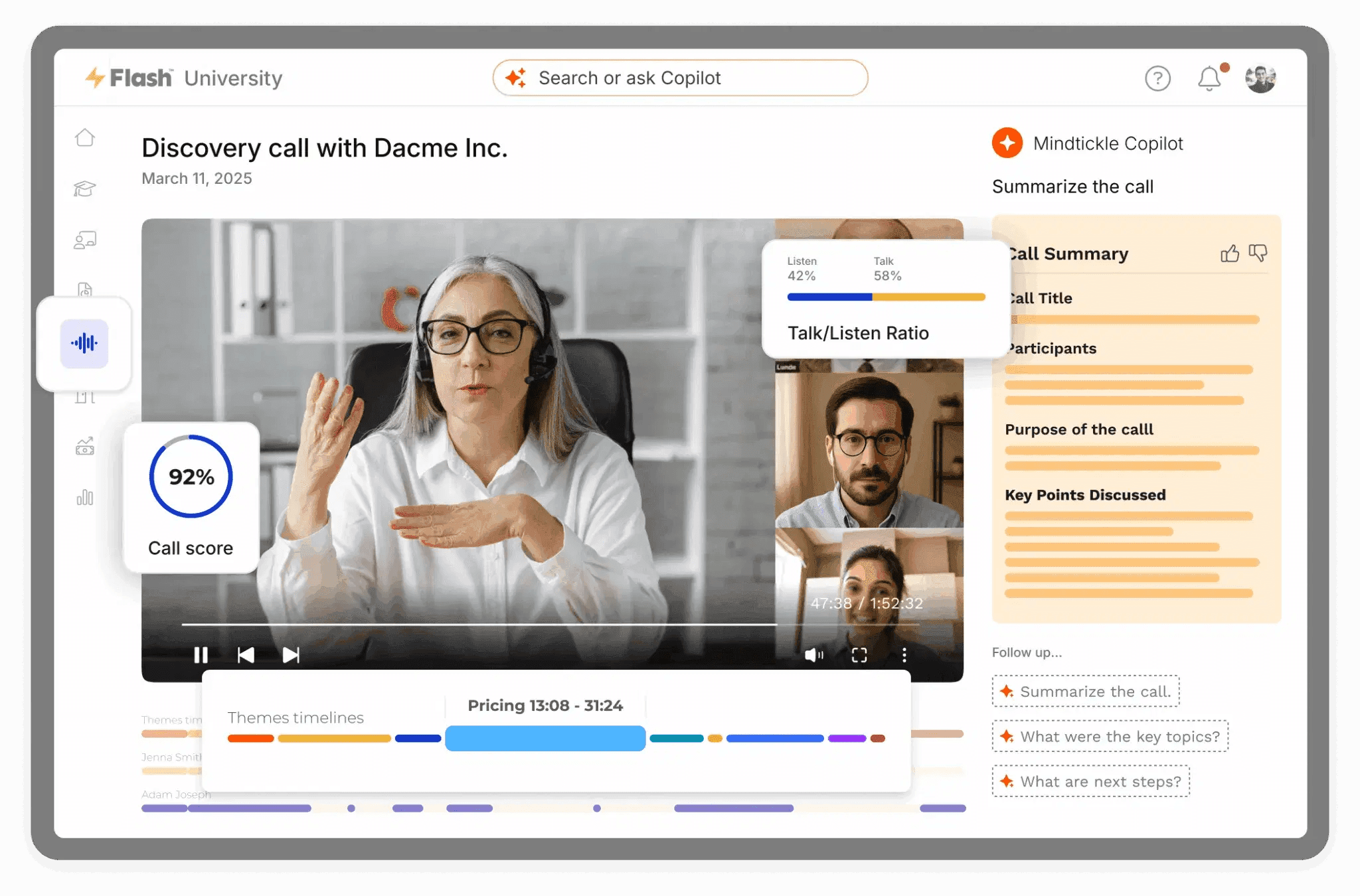
- Conversation intelligence analyzes live calls and feeds that data into structured coaching workflows, so leadership can see whether practice is showing up in real deals without listening to every call.
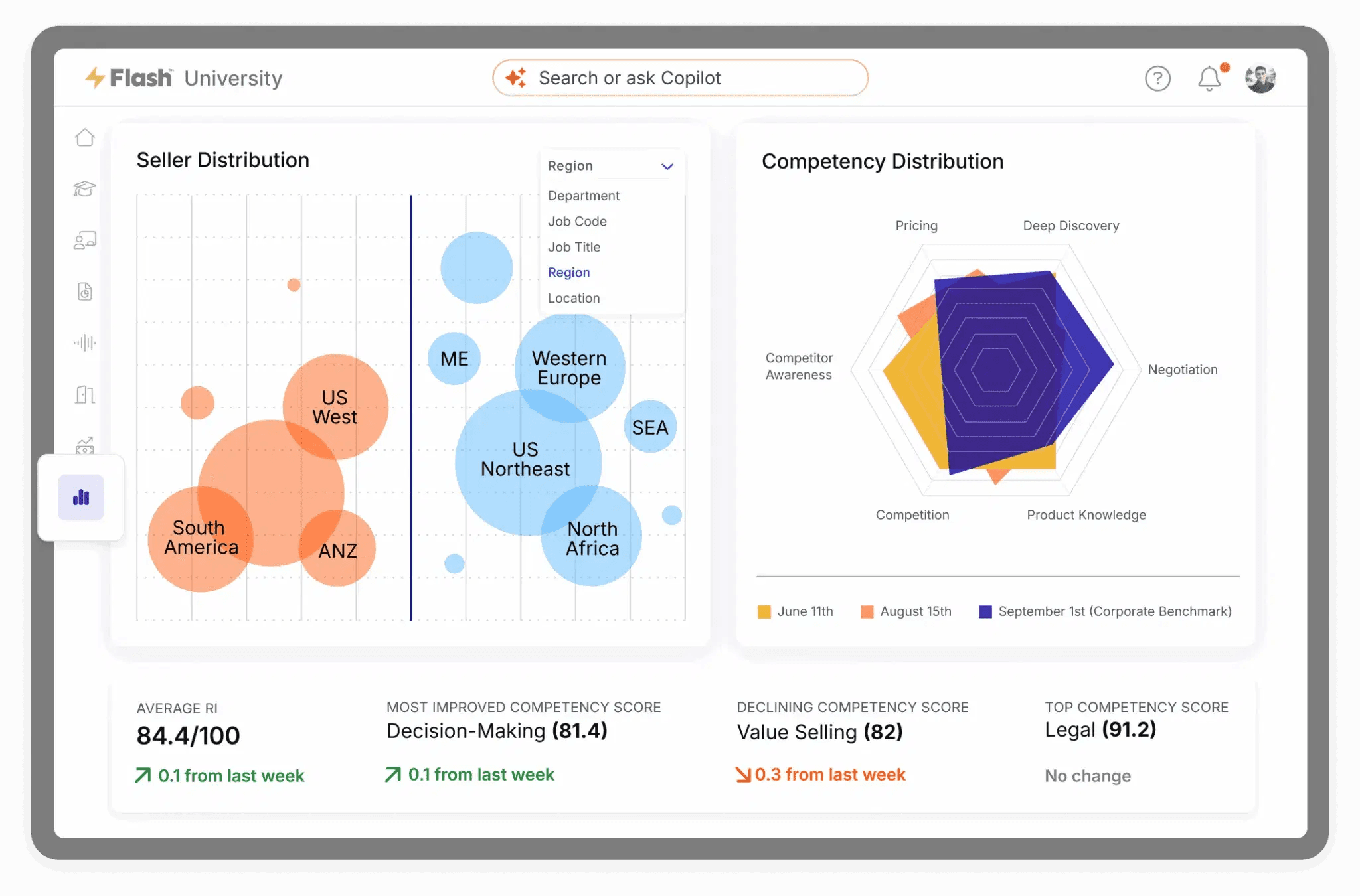
- Readiness Index gives managers a real read on who's ready to sell and where the gaps are, so coaching goes to the reps who need it.
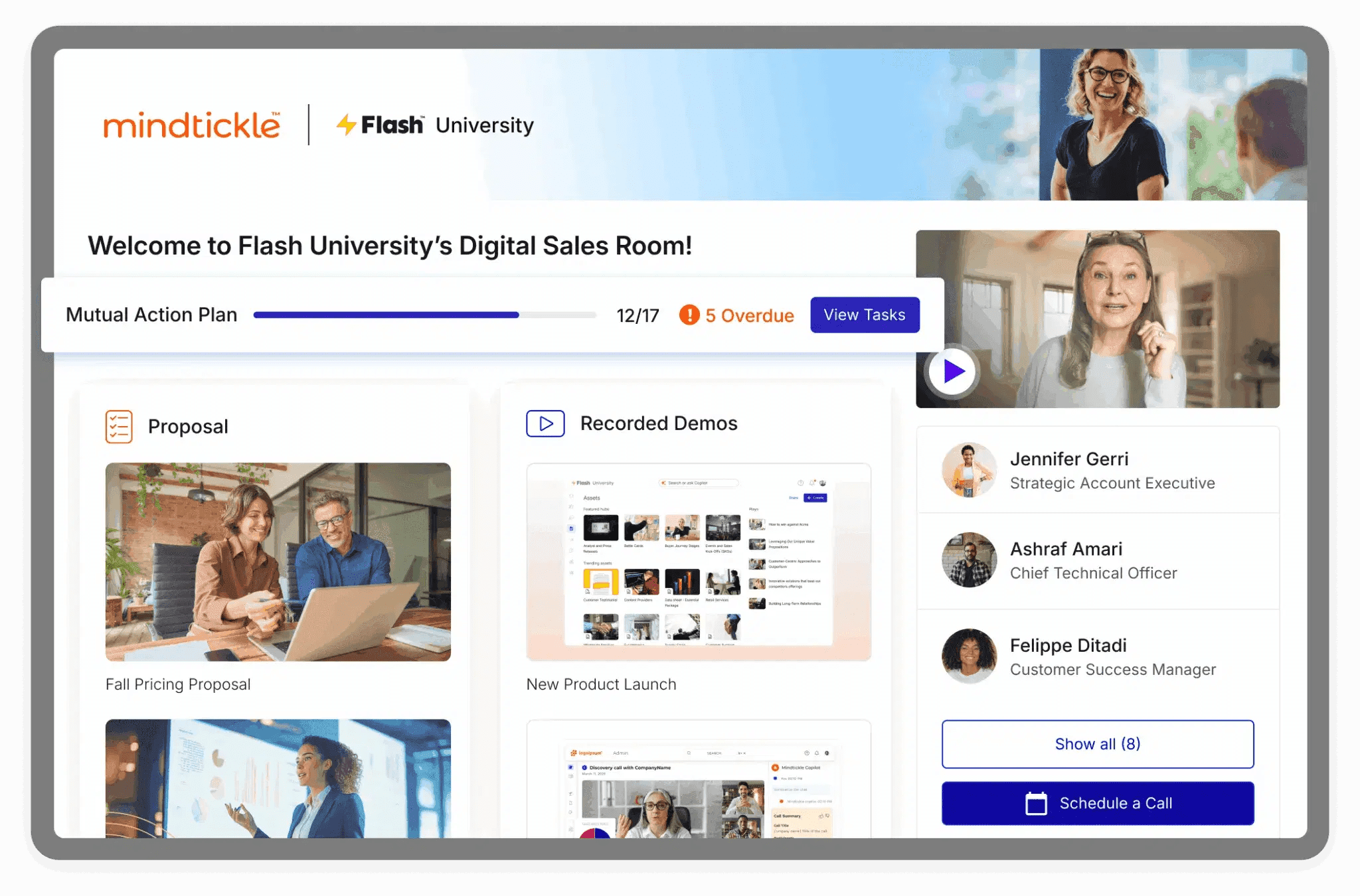
- Digital Sales Rooms give buyers one place to see everything tied to a deal, and give reps an organized space to manage content instead of digging through email threads. Everything a buyer views is tracked, so reps know what's landing.
- The platform is ISO 42001 and EU AI Act compliant, which matters when legal or security reviews a rollout across a large organization. (See Mindtickle Trust)
Notable drawbacks: Mindtickle's depth as a platform can come with a learning curve.
🏆 Best for: Mid-market and enterprise revenue teams that want rep readiness and buyer engagement on one connected, AI-native platform.
2. Seismic (merged with Highspot)
Price: Custom quote based on team size and modules.
Seismic and Highspot have completed their merger, combining under the Seismic name in 2026. Highspot centers on sales content management and AI agents that flag deal risk. Seismic covers a broader mix, including dynamic content automation through LiveDocs that updates and personalizes documents.
Top features:
- Highspot's Deal Agent recommends next actions based on content, sales training, and coaching data.
- Seismic's coaching tools include skill assessments and manager feedback workflows to track rep development over time.
- Seismic's learning module includes adaptive training paths, certifications, and AI sales role play.
Notable drawbacks: Seismic's admin side involves permissions and metadata tagging that need ongoing upkeep to keep search and content useful. With the merger still integrating, new contracts also carry some uncertainty about how the platforms will eventually combine.
🏆 Best for: Enterprises that need deep content governance and are comfortable with a platform still integrating post-merger.
➕ Read more: Mindtickle vs. Seismic-Highspot
3. Allego
Price: Custom quotes, per user per month, billed annually.
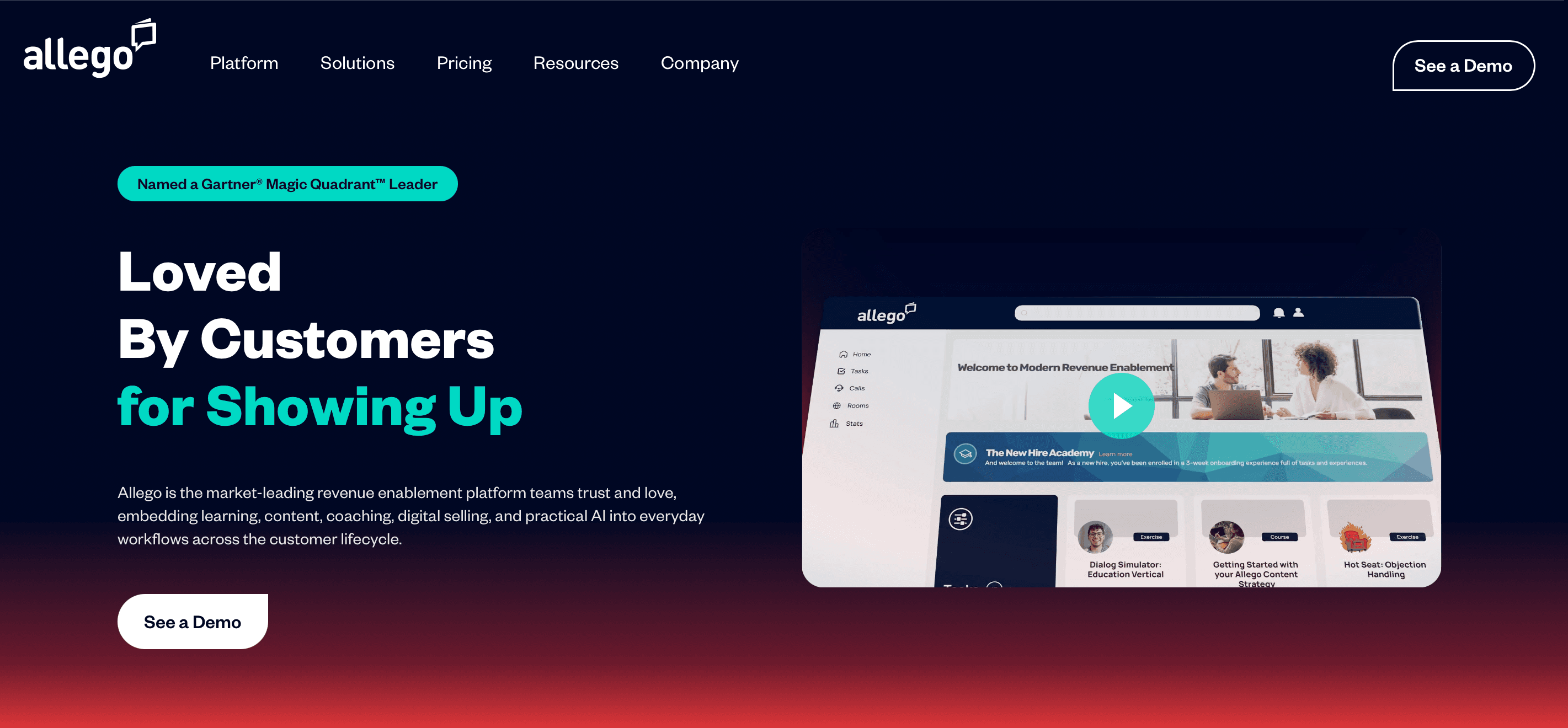
Allego started as a video-based learning tool and has grown into a broader platform covering content management, coaching, and buyer engagement. It runs on Practical AI, which surfaces next-best actions and flags deal risks across the platform.
Top features:
- Peer-based review lets reps get feedback from managers and colleagues on recorded practice.
- Micro-learning, flash drills, and certification modules sit inside reps' regular workflow.
- Call recording and analysis surface insights managers can use directly for sales coaching.
Notable drawbacks: Because Allego leans heavily on video, upload and processing times vary with file size and network conditions.
🏆 Best for: Teams in regulated industries that lean into asynchronous video sharing and peer-based learning.
📌 Also Read: Mindtickle vs. Allego: Which Is the Most Complete Revenue Enablement Platform?
4. SalesHood
Price: Three tiers (Essential, Pro, Unlimited), each with AI usage limits that expand at higher levels. Pricing is quote-based, not published.
SalesHood is built around getting teams live faster with pre-built templates and quick-start programs. It leans on structured, methodology-based training, with support for frameworks baked into the platform.
Top features:
- AI role play and AI Pitch Practice give reps a set number of scored, feedback-driven practice submissions per month.
- Reporting dashboards support custom reports to track content engagement and coaching activity.
- Sales content surfaces automatically inside the CRM based on deal context.
Notable drawbacks: Features like AI role play are capped by submission limits on lower tiers, so teams may need to move up a plan to get full use.
🏆 Best for: Growing teams that want a fast, template-driven setup with a clear, tiered plan structure.
5. Mediafly
Price: Modular pricing based on selected modules, user count, and integrations.
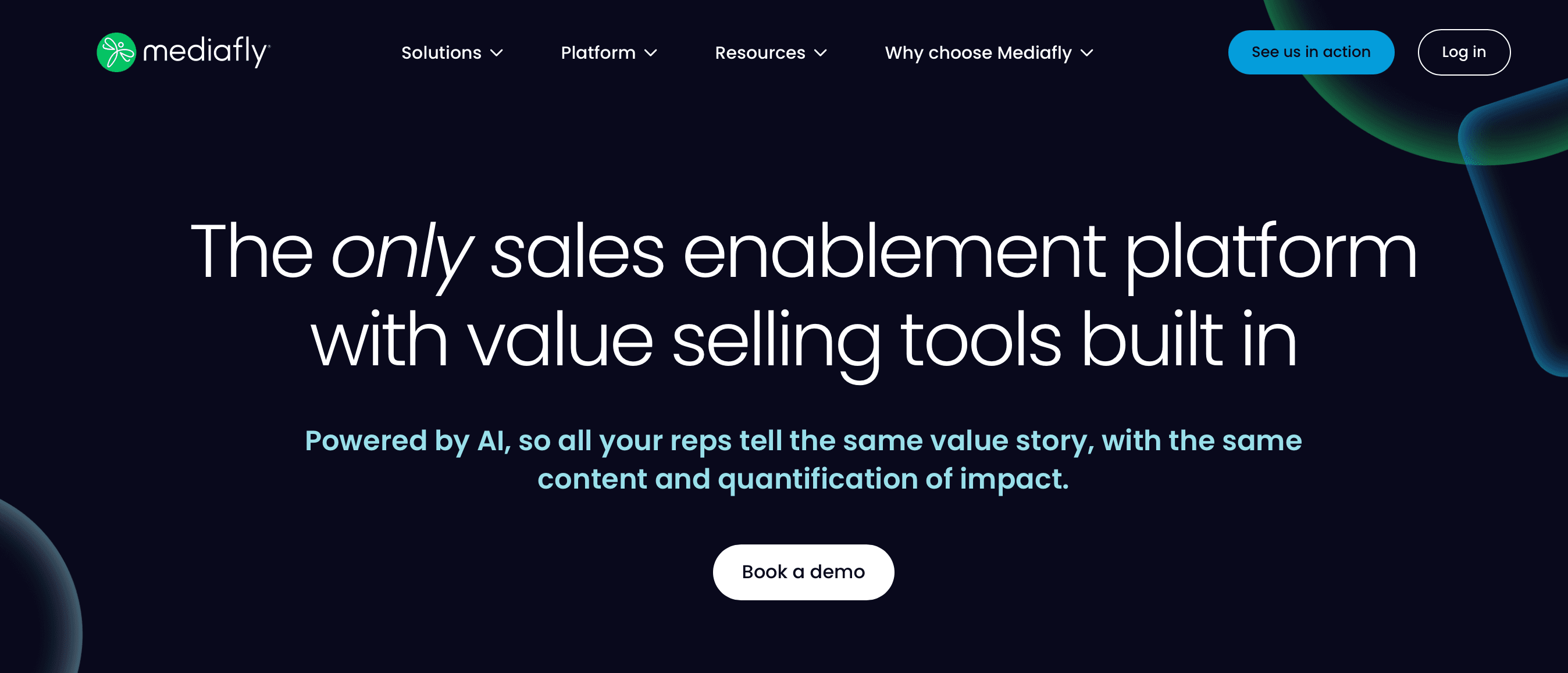
Mediafly focuses on value selling, with tools that help reps quantify and prove business impact to buyers. It runs on what it calls a Command Center, an AI layer that automates routine tasks and surfaces insights across the system.
Top features:
- Interactive ROI calculators, TCO estimators, and business-case builders let reps quantify value and generate personalized outputs during the sale.
- A built-in learning content management system delivers onboarding and coaching content inside reps' daily workflow.
- Digital sales rooms track when and how prospects interact with shared content.
Notable drawbacks: The interface has more depth to work through than a narrower point solution, which can mean a longer ramp for new admins.
🏆 Best for: Enterprise field teams that want value-selling tools like ROI calculators built into their platform.
Dive deeper: How to Measure the Impact of Your Sales Training Program
6. Dock
Price: Free plan available; the Standard plan starts at $350/month, with Premium ($1000/month) and Enterprise tiers (Custom price) above it.
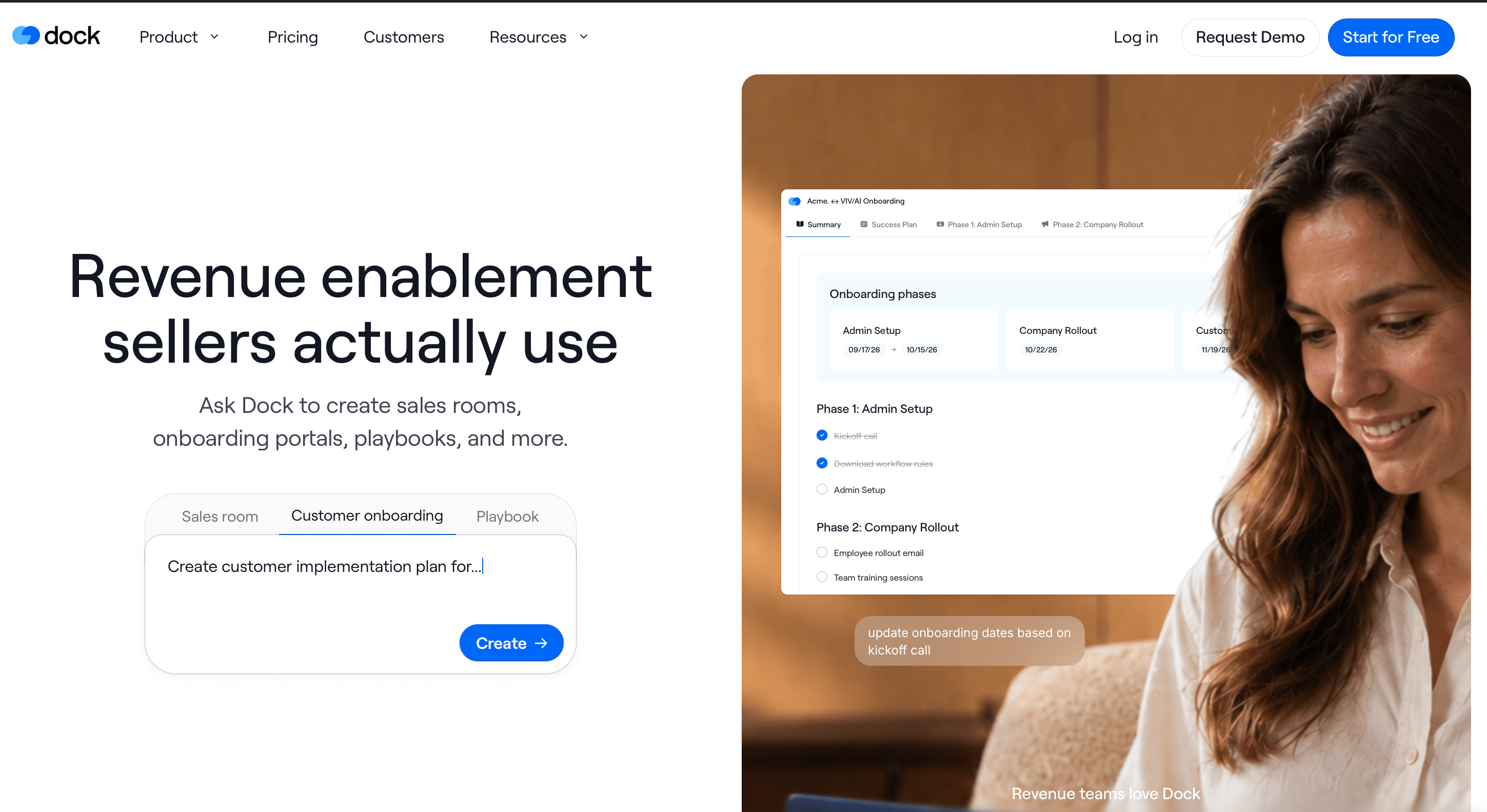
Dock focuses on collaboration across the customer lifecycle. It offers shared workspaces that reps and buyers both use, combined with content management, learning, and AI tools for document generation and insights.
Top features:
- Deal rooms give sellers and buyers a shared workspace for walking stakeholders through a deal.
- An AI agent generates documents like business cases or proposals from live CRM and deal data.
- Dynamic workspace templates auto-personalize based on CRM fields like deal stage and contact.
Notable drawbacks: Per-seat pricing means cost scales with team size regardless of how consistently each seat is used.
🏆 Best for: Sales and customer success teams that need a shared, trackable space for buyer collaboration.
7. Spekit
Price: Per-user monthly pricing based on user count, tier, and contract terms.
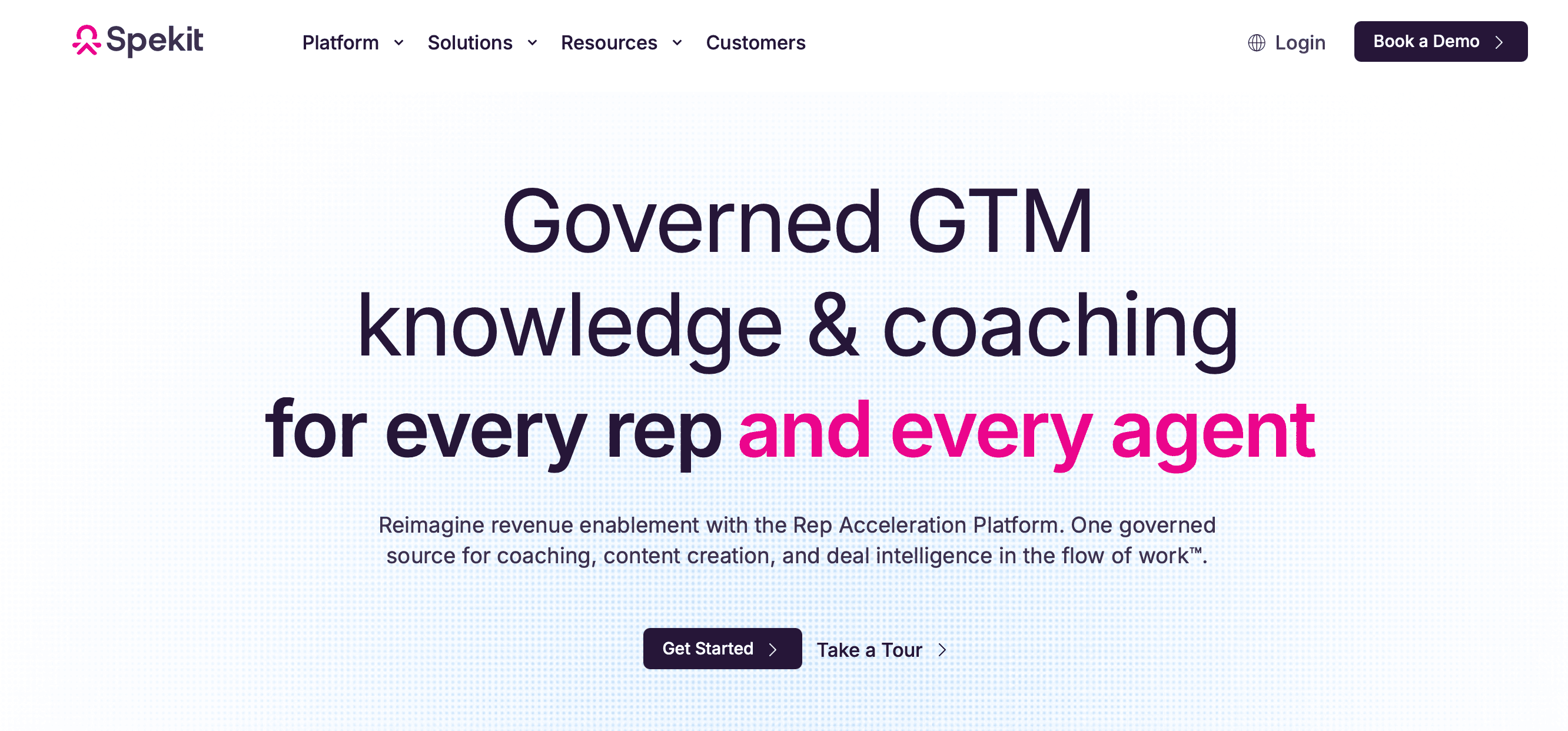
Spekit surfaces knowledge and training content directly inside the applications reps use every day, like Salesforce, through browser extensions and contextual pop-ups. It also includes structured learning paths and knowledge checks.
Top features:
- AI Sidekick surfaces answers, coaching, and next-best actions inside existing tools, pulling context from connected systems.
- The GTM Knowledge Engine keeps content tied to CRM data, updating related content automatically when a product or process changes.
- Deal rooms and buyer content generate from live deal and call data, personalizing what gets shared with each buyer.
Notable drawbacks: Search depth and interface density are worth testing directly, since surfacing knowledge inside another application involves more moving pieces than a standalone content library.
🏆 Best for: Teams that want just-in-time, in-workflow enablement rather than a traditional content portal or heavy LMS.
What's the next step for you?
Some of these platforms lean on a strong content management system. Others focus on video-based learning, fast setup, or meeting reps where they already work. The right call depends on what your team needs most.
If your goal is a platform that helps reps perform better in live deals, Mindtickle is built for that. It closes the practice-to-performance loop and brings reps and buyers onto one platform. Book a demo with our experts to see Mindtickle in action.
Frequently asked questions
About the Author
Lead Content Marketer
Jayadeep brings over a decade of experience in B2B content and product marketing, with expertise in editorial leadership, messaging strategy, and agency management.
He has built and scaled content operations, led agency partnerships, and collaborated across marketing, product, and demand generation teams to deliver integrated campaigns. His "process-first, execution-next" philosophy has made him a trusted resource at Mindtickle, where he helps shape content strategy, thought leadership programs, and flagship marketing initiatives.
Subscribe to the blog
Get the latest sales enablement tips, guides, and industry best practices delivered to your inbox. Unsubscribe anytime.