




How Can Lean Enablement Teams Set Up and Scale AI Sales Role Play?



Lean enablement teams scale AI sales role play by launching focused scenarios quickly, then keeping coaching consistent through relevant practice, a shared scoring rubric, automated feedback, and clear rules for when managers step in.
For a small team, getting the first role play live is usually the easy bit, since AI can turn a short buyer description into a practice scenario in minutes. What takes more thought is keeping reps practicing a few months in, and making sure managers know exactly when their time is needed.
When your enablement team is one or two people and every sales manager also carries a number, scaling looks a little different. The goal is to give every rep more practice and better feedback without adding hours to anyone's week.
Key takeaways
- Setup is fast once the decisions are made. Generating a scenario takes minutes, but choosing the conversation and defining a strong one takes more thought.
- A shared rubric keeps scoring consistent. When every manager scores against the same tested criteria, reps can trust what their results are telling them.
- Automated scoring gives managers their time back. Reps get feedback within minutes and retry on their own, which frees managers to focus on the reps who are stuck.
- A 30-day rollout builds a routine you can sustain. Build and test one scenario, open it to the team, and let the scores show what to coach and build next.
How quickly can a lean team launch AI role play?
A single AI role play can go live the same day. In an AI sales role play, a rep rehearses a conversation with an AI buyer and gets scored feedback as soon as they finish.
What you need before you start
Setup moves fastest when you already have four things in hand.
- A clear goal for the conversation
- Approved messaging or a talk track
- One buyer persona, described the way your reps would describe them
- A short rubric of three or four behaviors you want to hear
Discovery calls and everyday sales objections make good starting points, because most teams already have a talk track for them and know where reps tend to stumble.
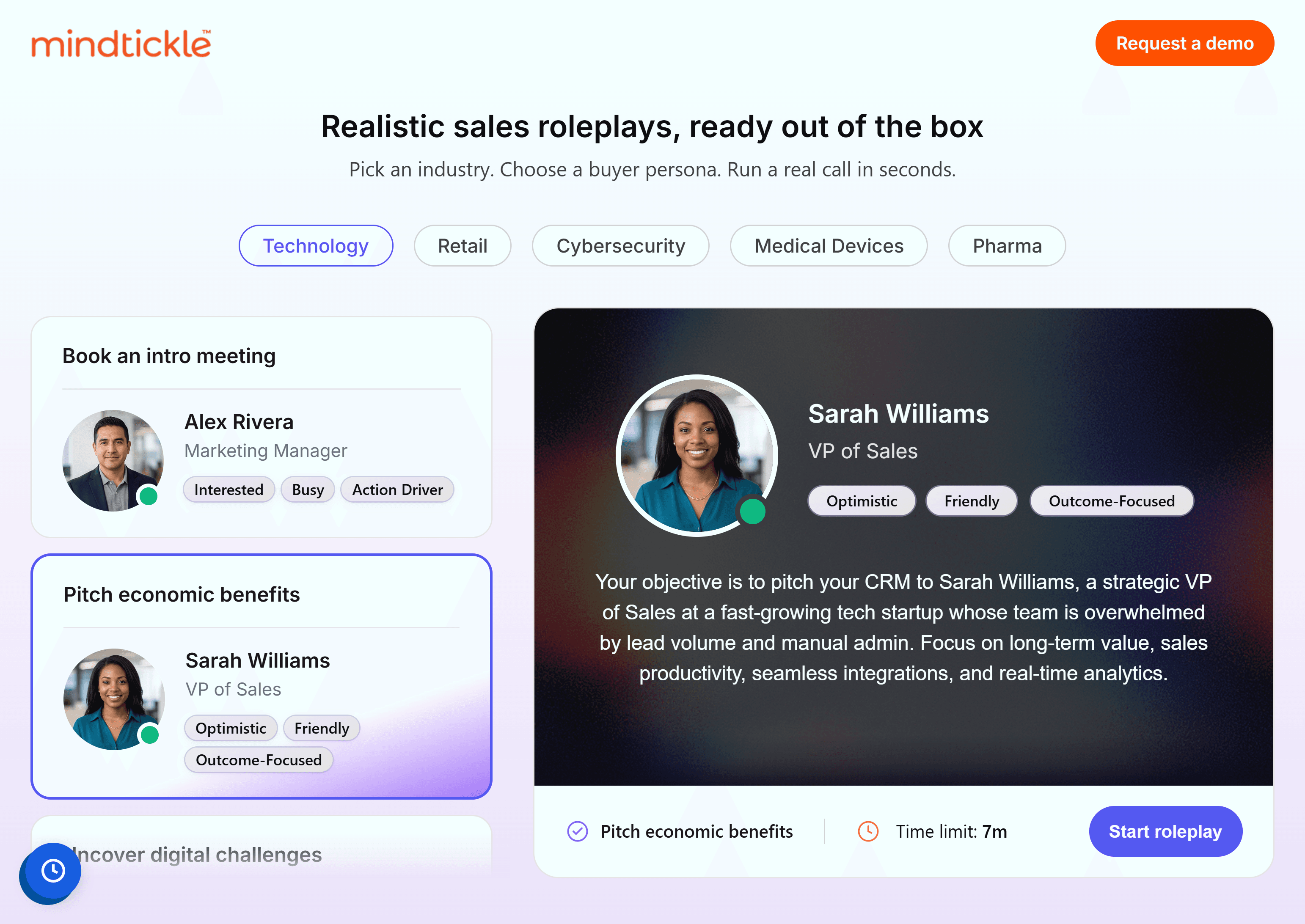
Say your reps keep losing ground when a busy operations manager pushes back on price. You describe that buyer and add the pricing objections your team actually hears, and during practice the AI buyer raises them the way a real one would. Building scenarios from your own deals is what turns a generic drill into contextual practice that reps can use on their very next call.
Where the time actually goes
Building the scenario is quick. The decisions behind it take longer, like choosing which conversation matters most and agreeing on what good sounds like, and those are calls only your team can make.
It also helps to think of one scenario as the starting point for a bigger program. A single role play can launch today, and as the program grows, connecting practice to the rest of your revenue enablement workflow turns those early scores into steady improvement across the team.
When does AI role play need more preparation?
Some conversations need more than a talk track and a persona. Technical or multi-product pitches and deals with several stakeholders usually take extra work, and so do scenarios tied to certification or conversations where the messaging is regulated.
It mostly comes down to accuracy. A subject matter expert needs to supply or approve the source material. Otherwise, the AI buyer may ask the wrong questions or the feedback may drift from what reps are allowed to say.
These scenarios also need more testing before their scores count toward anything formal. At that point, a role play is doing the job of sales training, so it deserves the same level of care.
📖 Read more: What Makes a Successful Sales Training Program?
How can a small team keep AI role play coaching consistent without more managers?
Sales managers have less coaching time than they used to. According to Mindtickle's 2026 State of Agentic Revenue Enablement Report, the most active managers ran 22 coaching sessions a month in 2025, down from 40 in 2022.
Hiring more managers usually isn't an option for a small team, so the answer is a system where AI carries the repetitions and people handle the judgment. Four pieces hold that system together.
Real sales conversations keep practice relevant
Practice only carries over to real calls when it sounds like them, so start with your current messaging and sales methodology, then add the objections that keep showing up in call recordings.
It's worth asking one or two top performers to try the scenario before anyone else does. They'll know right away whether the AI buyer pushes back like a real one, and that kind of hyper-realistic role play is what gets reps to take practice seriously.
A shared, tested rubric keeps scoring fair
A score only helps if it means the same thing for every rep. Write down the behaviors you want to hear, such as the discovery questions that matter and the next step a rep should secure, so every manager works from the same criteria. That shared standard is what makes automated role play scoring something reps can trust.
Expect to fine-tune the scoring early on. Score a handful of attempts yourself and compare your results with the AI's, and wherever the two disagree, tighten the criterion that left room for interpretation. Teams that run a structured coaching program do the same with their managers, so everyone agrees on what a passing conversation looks like before scores start to count.
Automated feedback lets reps improve on their own
Speed is where AI changes coaching the most. The same report found that managers typically review a role play seven to eight days after it's submitted, while AI reviews it within one to two minutes, and by the time a week-old note arrives, the rep has usually had the real conversation already.
With automated feedback, reps see their score and what to fix right away, then try again while it's still fresh. Managers get a view of patterns across the team instead of working through submissions one at a time, which is how sales coaching becomes scalable for a small team. It's also one reason AI role play can reduce rep ramp time without adding anything to a manager's calendar.
Managers step in where judgment matters
Some moments still need a person. A rep who keeps making the same mistake, a score that looks off or gets disputed, and a situation too nuanced for the rubric all deserve a manager's attention, as does a rep whose scores have stopped improving.
It also pays to look for patterns. If one rep misses a point, a quick conversation usually sorts it out, but if most of the team misses it in the same scenario, the scenario or the original training probably needs fixing. Coaching with AI role play works best when managers spend their time on calls like these instead of on scoring.
📌 Dig deeper: How Managers Can Use AI Sales Role Play Tools to Coach Reps
🌟 Reps are practicing more than ever
According to Mindtickle's 2026 State of Agentic Revenue Enablement Report, the average rep completed 21 role plays in 2025, up from 13 the year before, while reps at top companies completed 48.
Try a 7-minute AI role play with a buyer from your industry and see the kind of feedback your reps would get.
What does a 30-day AI role play rollout look like for a lean enablement team?
Whether you're a one-person enablement team or a small group supporting a few managers, the first month is about building a routine you can keep running.
Week 1: Set the target
Pick the conversation that costs your team the most deals, which for many teams is discovery or a pricing objection. Build the scenario from approved material and agree on a short rubric with one manager. It also helps to decide now what you'll review in week four, like improvement on one skill, so you're not improvising later.
Week 2: Test with a small group
Have a few reps and one manager try the scenario and flag any buyer response that doesn't ring true or any rubric line that scores unfairly. The manager's read on the scoring is especially useful here, since they'll be the one stepping in when the scores show a rep needs extra help.
Week 3: Open it to the team
Assign the scenario to everyone and let reps practice on their own time, whether that's between calls or before a meeting they're nervous about. Make it clear that early attempts are for practice rather than monitoring, so reps feel safe trying honestly and retrying a few times before they submit. By the end of the week, you should have enough attempts to start seeing patterns.
Week 4: Review and pick what's next
Look at how scores change across attempts rather than at the team average, and note which skills stay weak for most reps. Check whether those skills show up on real calls too, then have managers coach the recurring gaps. The most common gap becomes your next scenario, and you now have a routine you can repeat for the next conversation or the next team.
💡 Pro tip
Hold off on building a full scenario library in the first month. Reps are far more likely to practice one scenario that matches their next call than to work through ten generic ones, so let each new scenario come from a gap the scores revealed.
When does a lean team need more than a standalone AI role play tool?
A standalone AI role play tool is often where lean teams start. If you're practicing a few conversations and one person can keep track of results in a spreadsheet, you already have what matters most.
Things change as the team grows. New hires need practice built into onboarding from their first week, which is where AI-led onboarding is heading. Leaders also start asking which reps are ready for bigger deals. Answering that takes real sales readiness measurement, and when practice and onboarding live in separate tools, someone ends up stitching results together by hand on top of an already crowded sales tech stack.
How Mindtickle keeps practice running
For a small team, the bigger question is whether practice keeps going once the person who set it up moves on to the next priority, and Mindtickle's AI Sales Role Play is built for exactly that.
You define the conversation and the rubric once, describing the buyer in plain language and adding your team's own objections, and Copilot builds the scenario from there. AI then reviews every attempt against that rubric and gives reps feedback on what they said and how they said it, down to pacing and filler words. Score thresholds flag who's ready and who needs time with a manager, so nobody has to read every submission.
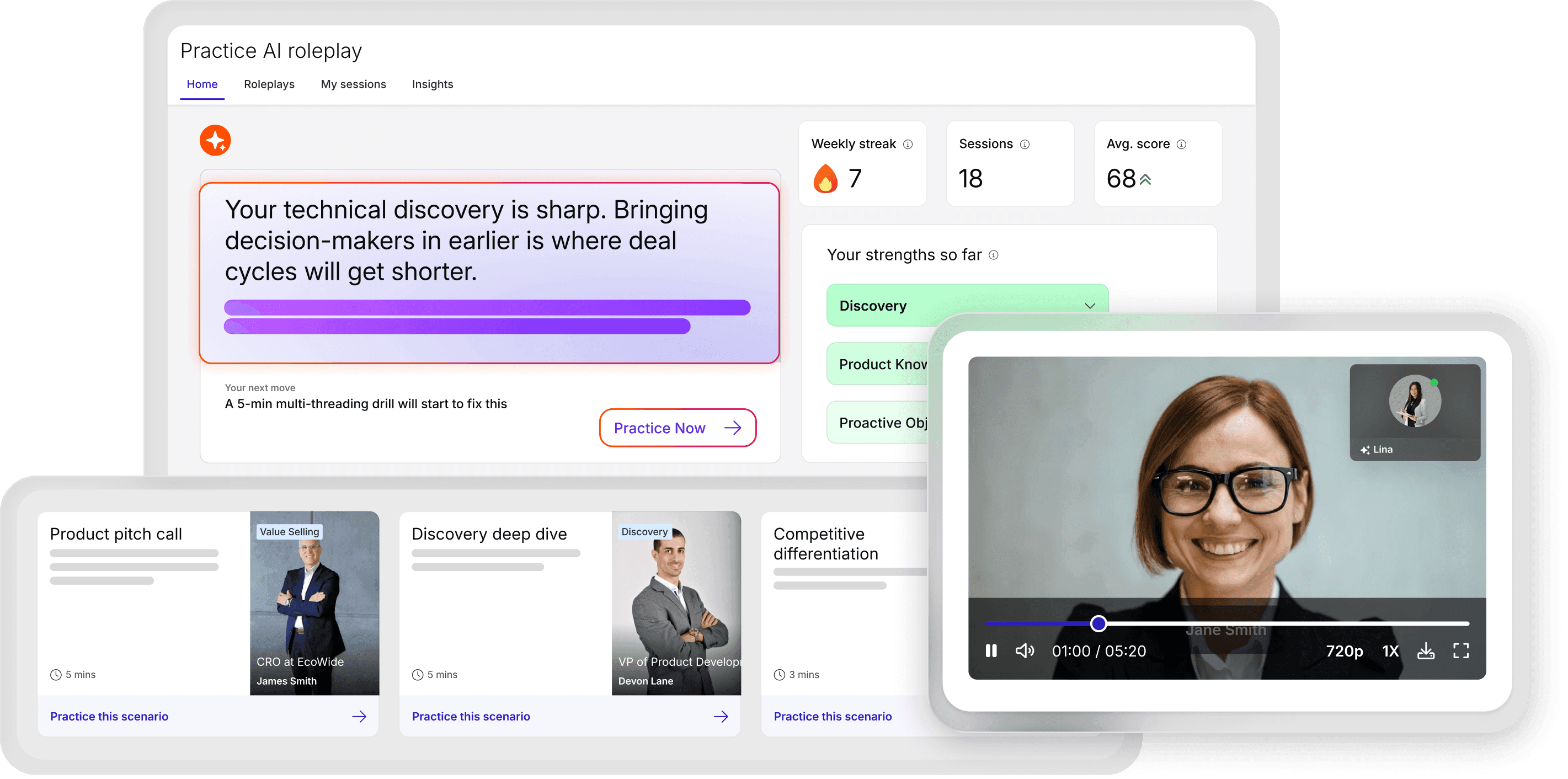
As reps practice, role plays pick up each rep's next skill gap automatically, so new practice doesn't wait on one person's calendar. Results roll into the Readiness Index, where leaders can see who's ready and track benchmarks against CRM outcomes without anyone building reports.
All of it runs on ElevateOS™, Mindtickle's agentic revenue enablement system, so practice and coaching stay connected to onboarding as the team grows.
A small team can run AI role play with the consistency of a much larger one. With practice that sounds like real calls and a rubric everyone trusts, the platform takes care of the scoring and follow-up, so managers can focus on the moments that need them.
FAQs
Subscribe to the blog
Get the latest sales enablement tips, guides, and industry best practices delivered to your inbox. Unsubscribe anytime.