




AI Role Play vs Call Analysis for Sales Training



When your sales team struggles to close deals because of pricing pushback or tough objections, the instinct is often to throw more training at the problem. But which approach actually builds the skills reps need?
Two categories have emerged as go-to solutions: AI role play simulations that let reps practice before high-stakes conversations, and call analysis tools that review recordings after conversations happen. Each serves a distinct purpose in developing pricing negotiation and objection handling skills.
This comparison breaks down when to use AI role play simulations versus call analysis tools, which scenarios favor each approach, and how leading revenue enablement platforms combine both methods. By the end, you will understand which training approach aligns with your team's goals for improving objection handling and pricing discussions.
Key takeaways
- AI role play simulations build confidence through practice before reps face real buyers with pricing objections.
- Call analysis tools identify patterns from actual customer conversations but cannot prevent mistakes on live calls.
- Mindtickle combines AI role play with conversation intelligence for a complete training approach.
- Pricing negotiation skills improve faster when reps can repeat difficult scenarios without deal risk.
- The most effective enablement programs use both approaches at different stages of skill development.
AI role play vs Call analysis: Overview
What is AI sales role play?
AI sales role play uses artificial intelligence to simulate realistic buyer conversations where sales reps can practice objection handling, pricing discussions, and discovery calls. The AI acts as a dynamic buyer persona that responds contextually to what the rep says, creating a safe environment for repeated practice without risking real deals.
AI role play key features
- Dynamic buyer simulations: AI responds to rep inputs with realistic objections, pushback, and follow-up questions.
- Immediate feedback: Reps receive instant coaching on their responses, tone, and conversation flow.
- Customizable scenarios: Teams create practice situations that mirror their specific deal types and buyer personas.
- Scalable practice: Every rep gets unlimited practice time without requiring manager availability.
- Methodology reinforcement: Scenarios can be designed to test adherence to frameworks like MEDDPICC or SPICED.
AI Role Play Pros and Cons
Pros:
- Builds confidence through repetition before high-stakes conversations with real prospects.
- Enables practice at scale without consuming manager time for every rep coaching session.
- Reduces new hire ramp time by accelerating skill development during onboarding.
Cons:
- Requires initial setup to configure buyer personas and scenarios that match your sales motion.
- Teams need to maintain and update scenarios as products, messaging, and competitors evolve.
- Most effective when combined with feedback from real conversation data to identify where practice is needed.
What is Call analysis?
Call analysis tools, often called conversation intelligence, record and transcribe customer calls, then use AI to identify patterns, coaching opportunities, and conversation quality metrics. These platforms review what already happened to surface insights about rep performance and deal health.
Call analysis key features
- Automatic transcription: Calls are recorded and converted to searchable text for review.
- Keyword and topic detection: AI identifies when competitors, objections, or pricing topics appear in calls.
- Talk ratio tracking: Metrics show how much the rep spoke versus listened during conversations.
- Coaching recommendations: Tools flag specific moments where managers should provide feedback.
- Deal intelligence: Conversation signals are used to assess deal health and forecast accuracy.
Call analysis Pros and Cons
Pros:
- Delivers insights from actual customer conversations and real-world selling conditions.
- Helps managers identify patterns across the team without listening to every call.
- Connects conversation data to deal outcomes for performance correlation.
Cons:
- Analyzes conversations after they happen, so mistakes have already occurred with real prospects.
- Cannot prevent poor objection handling or pricing mistakes on live calls.
- Reviews can feel evaluative rather than developmental if not positioned carefully with reps.
AI role play vs. Call analysis: How they support different parts of sales readiness
AI role play and call analysis address different parts of the sales readiness cycle. The distinction matters because sales teams need both practice and evidence to change rep behavior at scale. Role play helps reps build response fluency and confidence before the stakes are real. Call analysis shows whether those skills are actually showing up in customer conversations.
Skill development approach
AI role play creates a safe environment for deliberate practice. Reps can work through challenging scenarios repeatedly, experiment with different approaches, receive feedback, and try again without putting a live customer interaction at risk.
Consider pricing negotiations. A rep preparing for a procurement conversation can practice responding to a discount request, defending value, and probing the underlying concern. They can make mistakes, adjust their approach, and repeat the scenario until the response becomes more natural.
Call analysis approaches the same development challenge from the other direction. It examines real conversations to identify behaviors that may require coaching, such as premature discounting, weak discovery, missed buying signals, or ineffective objection handling. The learning happens after the interaction, but the insight can shape what the rep practices next.
This makes the two capabilities complementary: role play builds and rehearses the behavior; call analysis provides evidence of how that behavior is being applied in the field. Also Read: What is Behavior Intelligence — and Why is it the Future of Sales Coaching
Time to impact and practice velocity
The biggest advantage of AI role play is practice velocity. Reps do not have to wait for the right customer conversation to occur before they can work on a specific skill. They can practice multiple scenarios in a single session and revisit them as their skills develop.
That is particularly valuable during onboarding, product launches, competitive initiatives, or periods when reps need to prepare for a new sales motion. A new hire learning to handle pricing objections, for example, can begin practicing immediately rather than waiting for enough live conversations to reveal a pattern.
Call analysis operates on a different timeline. It depends on real customer interactions to generate the evidence needed to identify behavioral patterns. Once those patterns emerge, managers and enablement teams can use them to target coaching and determine where additional practice is needed.
The result is a continuous cycle rather than a choice between the two:
Practice → apply in the field → analyze real conversations → identify gaps → practice again.
Scalability for large teams
AI role play can increase the amount of practice a sales organization delivers without requiring managers to participate in every session. Hundreds of reps can practice the same strategic scenario independently, whether the goal is preparing for a competitive objection, launching a new product, or reinforcing a sales methodology.
Call analysis also scales effectively, particularly for collecting and analyzing large volumes of customer conversations. Modern conversation intelligence software can surface recurring behaviors and conversation patterns across teams without requiring managers to manually review every call.
The potential bottleneck comes later: turning those insights into behavior change. Someone still needs to determine which patterns matter, translate them into coaching priorities, and give reps opportunities to improve.
😊 Good to know
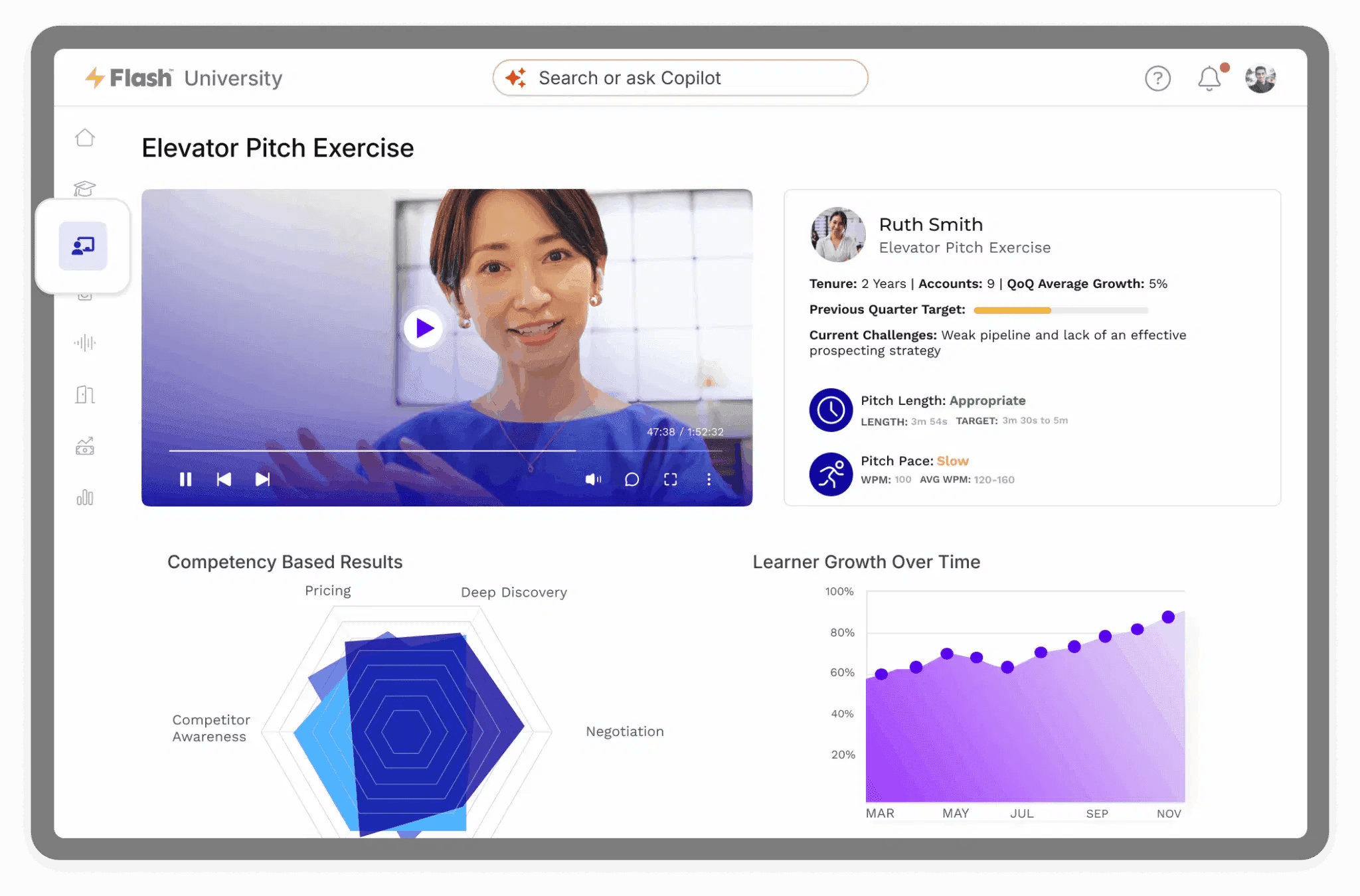
AI can help reduce that burden when it automatically evaluates role play performance and provides structured feedback. For example, Mindtickle Sales Coaching software can help automate the evaluation process, allowing managers to spend more time on higher-value coaching rather than reviewing every practice submission.
Specificity of training
AI role play is particularly effective when an enablement team knows the situations reps need to prepare for. Scenarios can be designed around specific moments in the sales process, such as:
- A procurement buyer demanding a 20% discount
- A technical evaluator questioning a product's capabilities against a competitor
- An executive challenging the business case during a renewal
- A skeptical prospect pushing back on implementation complexity
That specificity allows enablement teams to turn business priorities into practice opportunities.
Call analysis provides a different kind of value because real conversations can reveal problems the enablement team did not anticipate. Reps may consistently struggle with an objection that was absent from existing training. A particular competitor may be appearing more frequently in deals. Or reps may be following the formal sales methodology but failing to execute a critical behavior consistently in live conversations.
In that sense, call analysis can help inform what should be trained next, while AI role play provides the environment to train it.
This creates an important feedback loop for enablement teams. Real customer conversations generate new evidence, that evidence informs future training scenarios, and reps can practice those scenarios before encountering them again in the field.
Integration with sales methodology
Both capabilities can reinforce a sales methodology, but they answer different questions.
AI role play can test whether reps can demonstrate the methodology in a simulated conversation. A scenario can evaluate whether a rep asks the right sales discovery questions, uncovers business impact, handles an objection appropriately, or articulates value according to your organization's framework.
Call analysis can then examine whether those behaviors are actually appearing in customer conversations.
That distinction is important. Your rep may know the methodology well enough to perform successfully in a training environment but struggle to apply it when a real buyer introduces pressure, ambiguity, or an unexpected objection. Conversely, call analysis may identify a recurring execution gap without giving the rep enough opportunities to practice correcting it.
Used together, the capabilities create a stronger readiness loop:
Teach the methodology → practice it in AI role play → apply it with customers → analyze real conversations → identify gaps → coach and practice again.
💡Did you know
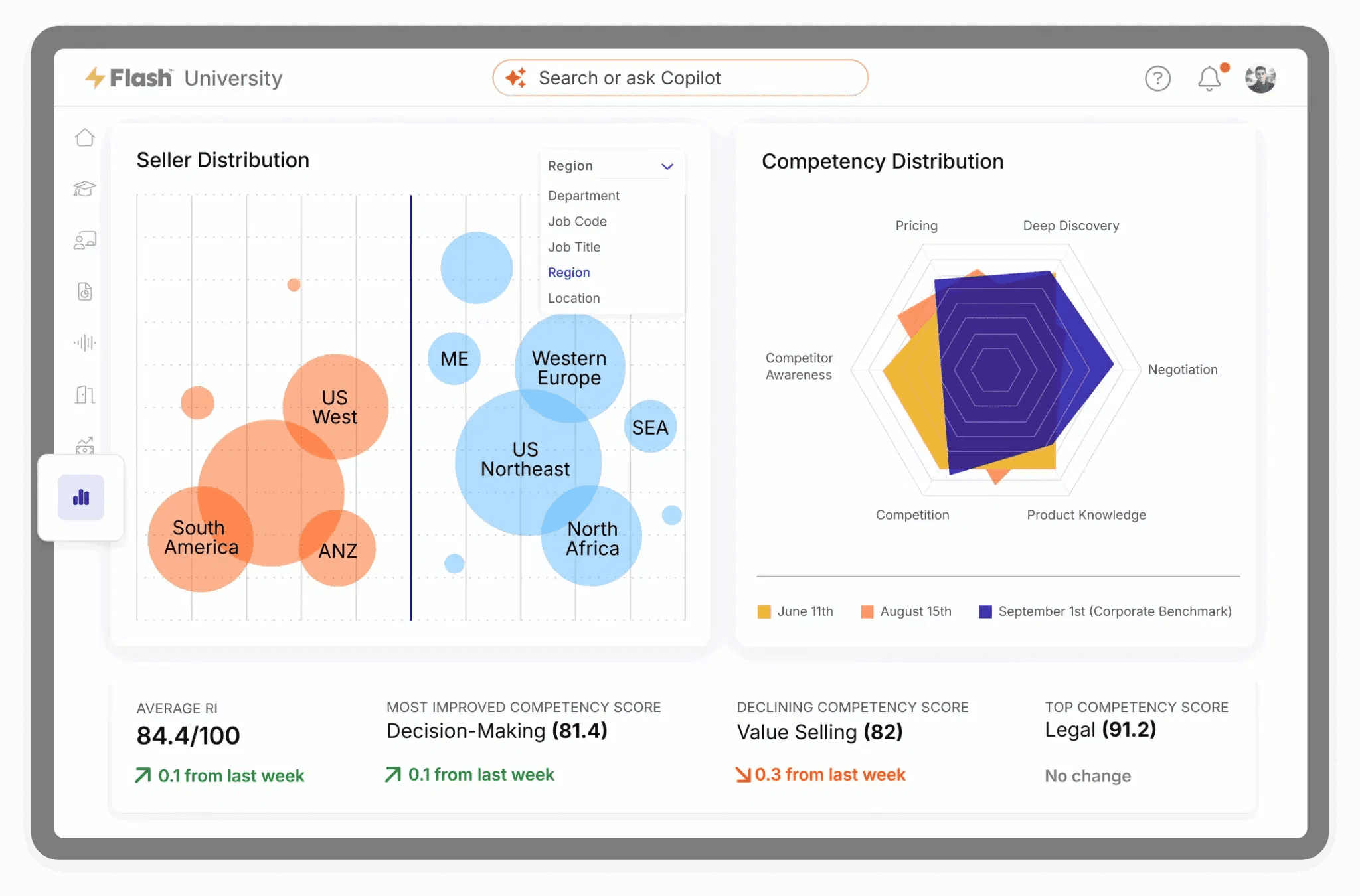
Platforms such as Mindtickle's Readiness Index are designed to connect readiness signals with sales performance, helping organizations examine the relationship between what reps know, how they practice, and how they perform.
AI role play and call analysis work better together
AI role play and call analysis address different stages of the same readiness cycle. Role play gives reps a controlled environment to practice critical selling skills before they encounter similar situations with customers. Conversation intelligence shows how those skills translate to real customer conversations and where additional coaching or practice may be needed.
Mindtickle brings both capabilities together in a unified revenue enablement platform. Its AI Sales Role Play gives reps realistic scenarios to practice pricing negotiations, objection handling, discovery, and other critical selling skills. Conversation Intelligence then analyzes customer interactions to surface behaviors, patterns, and coaching opportunities that can inform what reps practice next.
The result is a continuous loop between practice, field execution, analysis, and reinforcement. Rather than treating training and coaching as separate activities, enablement teams can use real customer conversations to identify gaps, turn those gaps into targeted practice, and measure whether the resulting behaviors show up in the field.
Mindtickle customers have also reported measurable business outcomes. For example, Cisco reported a 31% increase in deal size after implementing Mindtickle's AI role play, according to Mindtickle's customer story.
For sales enablement and revenue operations teams evaluating how to improve rep readiness, the opportunity is to connect preparation with what actually happens in the field. Request a demo to see how Mindtickle brings AI role play, conversation intelligence, and other readiness capabilities together.
FAQs: AI Role Play vs Call Analysis for Sales Training
About the Author
Senior Content Manager
Ruchi Madan leads content marketing at Mindtickle. She has spent her career in enterprise SaaS, building content programs that span product, demand, and customer marketing.
Her work sits at the intersection of brand and pipeline, producing content that demand gen teams can use and that moves buyers through the funnel. She directs external agencies and freelancers, sets editorial standards, and works closely with product marketing and sales enablement to keep messaging consistent across campaigns and channels.
Subscribe to the blog
Get the latest sales enablement tips, guides, and industry best practices delivered to your inbox. Unsubscribe anytime.